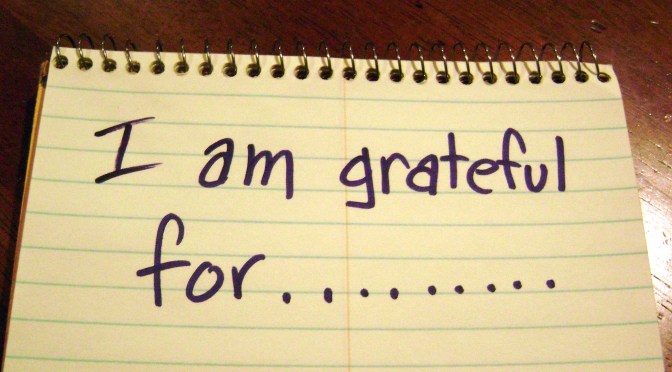
Today, I’m so grateful for sisterhood. What a blessing it is to be able to call your sister at 11 pm, and have her to confide in, laugh with and cry with. My little sister is absolutely wonderful, and I am absolutely amazed by her ability to help me through a rough day without EVER having talk about the problem. For some reason, a conversation about the specific issues bothering us is never needed. We end up talking about random things, like weird horror characters that can unhinge their jaws and swallow humans whole, and somehow that makes everything better. (I know, you’d be surprised). I’m thankful for friendships and all the love I have in my life, but I simultaneously can attest to the fact that there is no friend like a sister. How lucky I feel that somewhere along the way, God blessed me with her and now, I can call her my friend eternally.
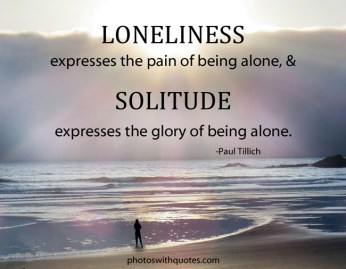
I’m also surprisingly thankful for moments of loneliness. They have a way of stimulating you to turn inwards, and reflect on what really matters. Somehow, taking a walk alone at midnight in the shivering cold, alone with your thoughts is a really liberating, and empowering experience. You quickly realize that YOU not only are all that you have, but that you are also all that you need and that you are ENOUGH. By spending time with myself, I come to see a transformation from misery in loneliness to enjoyment in solitude; would you imagine that I’m not too awful of a company to have? Yes, my mind can be frantic, and I can be overly sentimental but my intentions are usually pretty noble. And, I think that’s pretty laudable. Perhaps, my own companionship will enrich me beyond measure.
I’m also really thankful for waking up and finding a warm, friendly, fuzzy Nemo next to me! Seriously, pets are angels disguised in fur! Seeing his sweet face in the middle of the night when I’m awakened by the baby’s kicks is such a soothing experience.
Hi beautiful beings! ❤ It’s so wonderful writing to you again 🙂 Eeep. I love you!
Okay, So! I am so flipping excited about this blog series because it is near and dear to my heart! If you haven’t figured it out already, I LOVE CARDIO!!!!!! I’m not kidding, “the runners high” is a real thing. It’s the closest thing I get to meditation 🙂 If you are wanting to get into cardiovascular exercise, this extended blog post is going to be your best friend! I have twenty-two total tips for ways to enhance cardiovascular endurance, so…without further adieu, here are the first eleven 🙂
1. No stretching before working out: Contrary to popular belief, I recommend that you do not stretch before you embark on your endurance endeavor. Eee! You see what I did there? I used lots of words that started with an “e.” Yay for alliteration. Okay. So little things amuse me. Prior studies have shown that acute static stretching impairs muscle force and torque. In simpler terms, this means that that muscle strength is decreased when it is lengthened. Notice how they said static stretching.
Dynamic stretching- means movement stretching (like taking a walk before you’re going on a run) or warming up slowly on a bike before you’re about to go finish a spin class.
Static: the traditional type of stretching “ex: sit and reach”
Thank God for such a thing as muscle memory! The term refers to a common phenomenon in which various muscle-related tasks seem to become easier to perform after previous practice. When you train in a specific way for elongated periods of time, your body will adapt to the stress so that the task is easier to perform next time. There is some consensus among the runners I’ve spoken to in that some amount of “tightness” in muscles is actually beneficial. Retained tightness is necessary for proper alignment. With that being said, trust your body. If you want to reduce the risk of injury, I do highly recommend dynamic stretching.
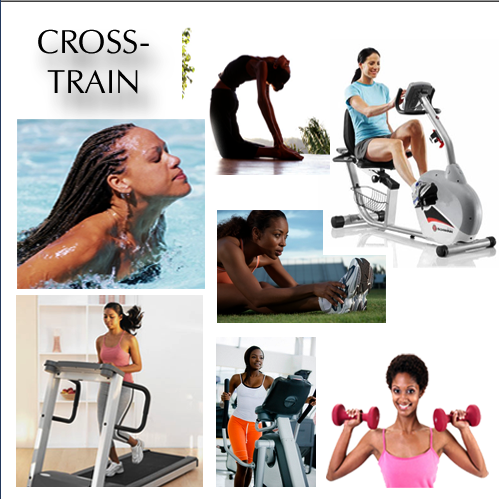
2. Cross-training! I cannot emphasize this enough especially for beginners! When we, as impatient human beings, want to do something, we want to go all into it. But that’s a sure way to disaster. Seriously, I’ve experienced this myself so many times. I call myself an “endurance athlete” and not exclusively a “runner” because I train in several different ways to enhance my cardiovascular strength. I swim; I do elliptical training; I take spin classes; I do plyometric movements and I also run. Cross-training not only reduces the risk of injury and over-training but it also allows us to diversify training. Through cross-training, we are able to work out different various muscle groups so that we remain beautifully symmetrical and proportionate.
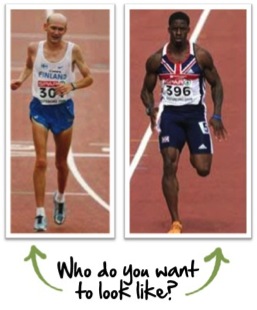
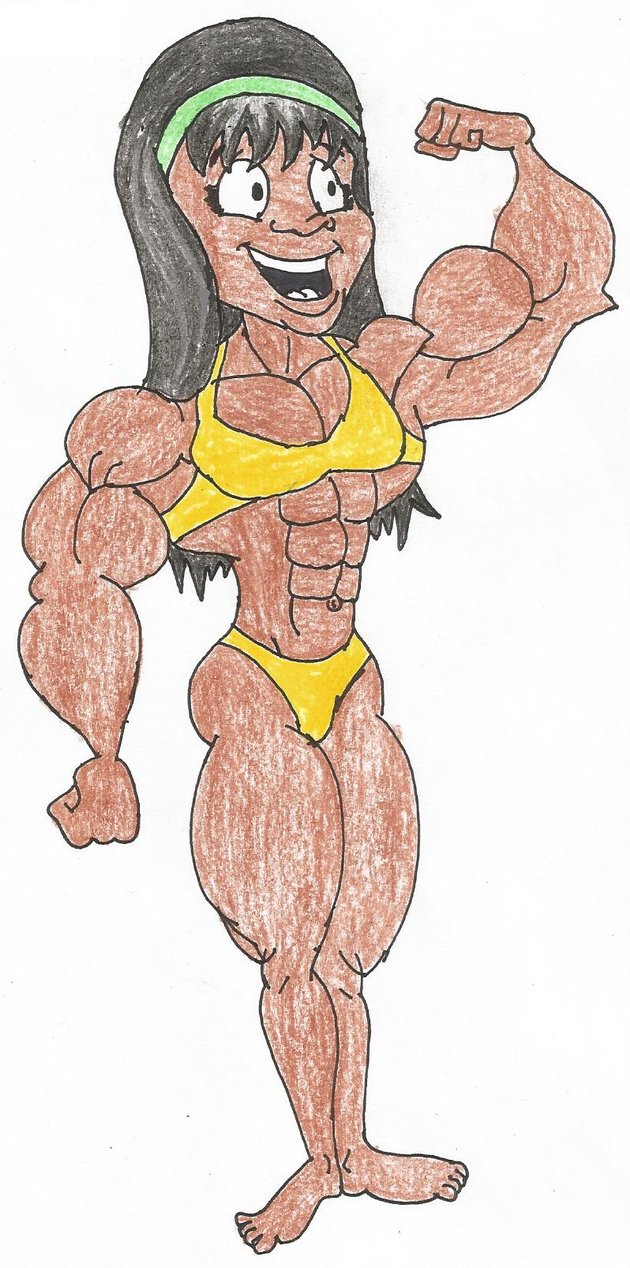
I think both bodies, and all bodies are beautiful. It really is up to personal preference.
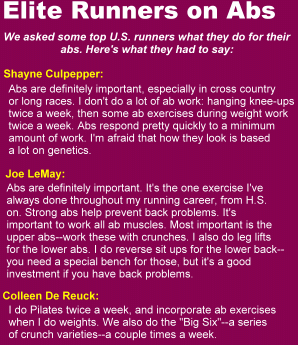
3. So this one is going to be a little controversial: I would advise NOT to “bodybuild” or strength-train areas you don’t need excess mass on. The reason for this is that when you’re running longer periods of time, you don’t need excess mass to slow you down. The lesser the mass, the lesser the impact of the surface on your joints, J as an endurance athlete, I find that the only muscle groups I really NEED strength in are my legs and abdominal/back muscles. I don’t like strength training my legs because I find that my cardiovascular exercise already provides them with adequate tone. I do strength train my abdominals/back muscles to help with balance and alignment throughout the exercise.
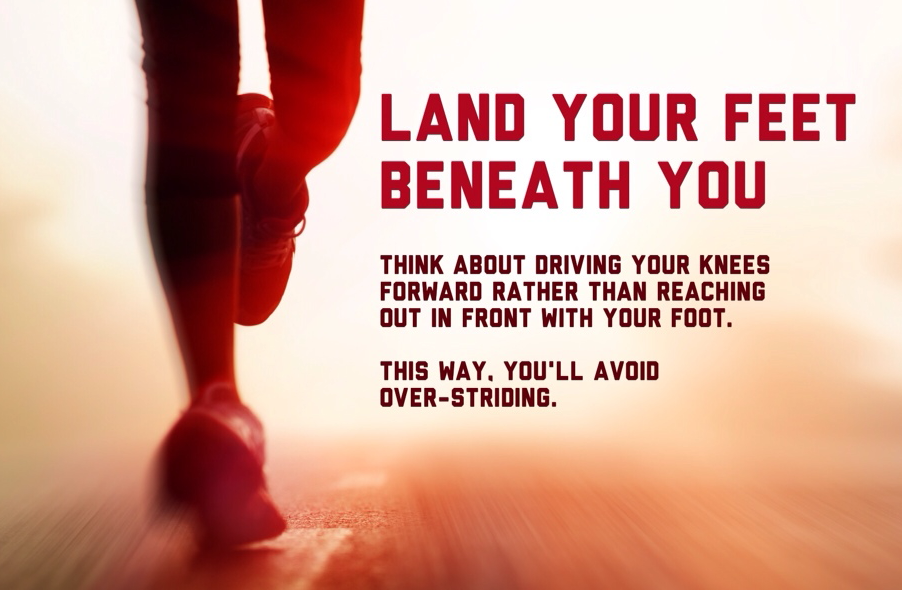
4. Shorten your stride! Research From Dr. Bryan Heiderscheit of the University of Wisconsin (and others) demonstrates that a shorter, quicker stride reduces impact on knees and hips. This is greatly beneficial especially if you’re wanting to do long-duration endurance work. There is a tip I’d like to share with you: when you’re landing, try to put your foot down BEHIND you. Of course, this is not actually what’s going to happen, but it will help make you conscious of shortening your stride as much as possible.
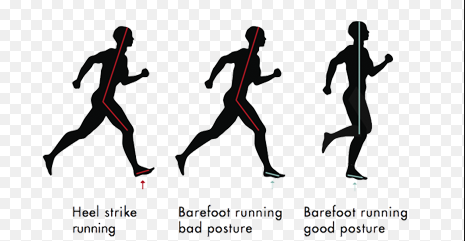
5. STAY AS ERECT AS POSSIBLE. Do you think you’re standing AS tall as possible? Good. Now, stand even taller! Seriously. This is one tip that I think can apply to EVERYONE. It is so important!!!! Probably the most important one that I have to offer. If you are on the elliptical, or if you are running, STAND as TALL as possible. You should be able to draw a straight line throughout your body. Here’s my tips for ensuring that your posture is correct:
Your shoulders should be relaxed, slightly pushing down away from your head. Chest should be expanded and raised (think proud Tarzan!) Your abs should be contracted and almost pushing your ribcage UP so that the weight of your upper body is being supported by the back/abdominal muscles instead of the legs, which are already doing their share of work!
6. Arms and legs should be loose and as relaxed as possible! “So my abs are supposed to be completely tight, but my legs are supposed to be loose?” Yes. I won’t lie. This is going to feel super awkward at first. But, I promise with time, you will get better at “isolating” certain muscle groups. This will help you contract/relax different parts of your muscle groups more easily.
7. Run on an even surface. There is a reason that treadmills and running track were created the way they are! They provide an extra “bounciness” so that the overall surface impact on the knees and joints decreases. This is exactly what we need if we want to run longer periods of time!
8. Do have a speed day! This is commonly known as HIIT training. HIIT training will help strengthen the major muscle groups in the lower body. It also burns a ton of calories and adds variety to the fitness regimen
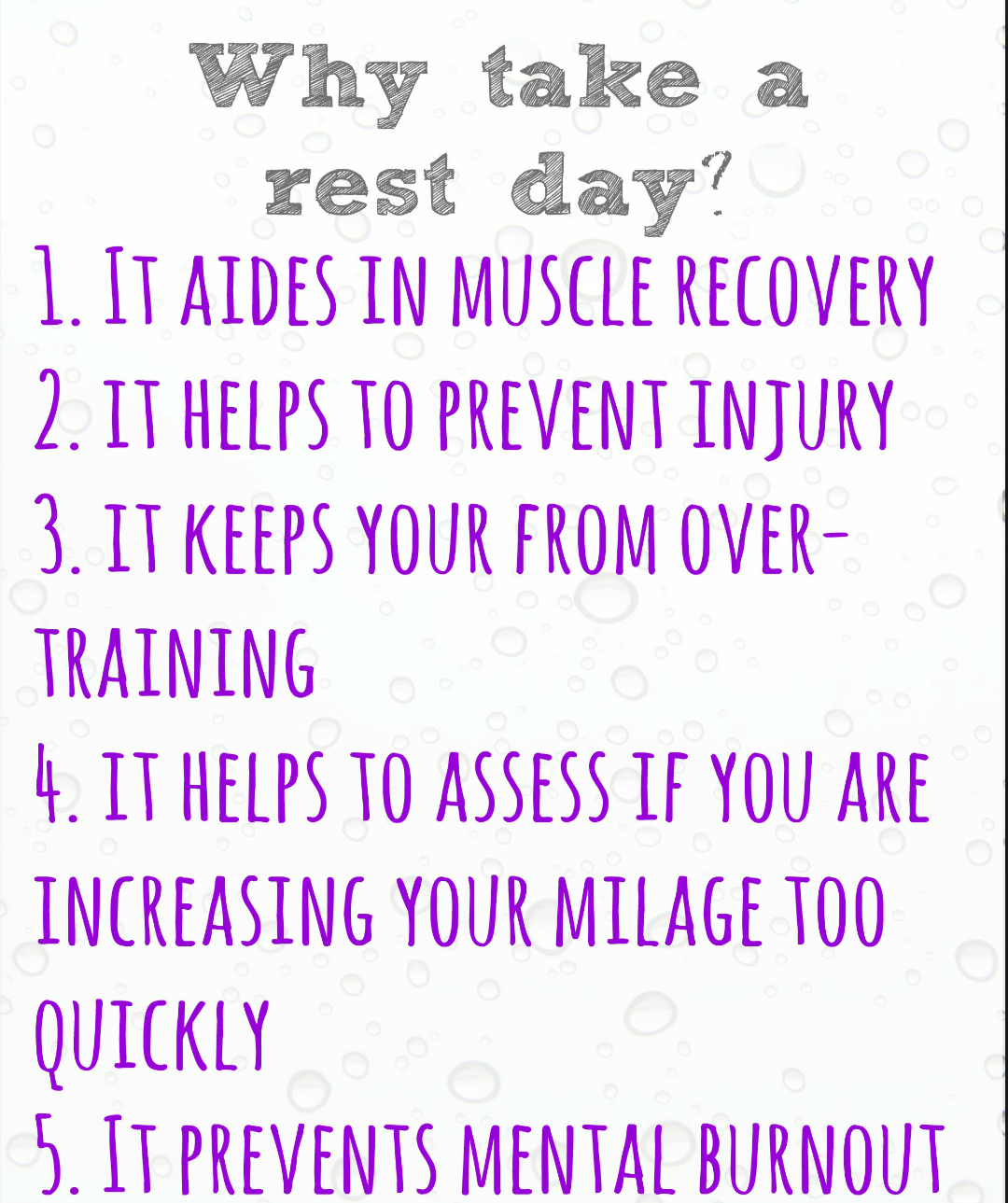
9. Do have ONE day of full rest (not active rest). Please take a day off from endurance training altogether. I promise; it helps out so much!!!! When you’re doing endurance work, rest is essential to recovery and prevention of burnout.
10. Have yourself a cool-down. No! Cool-down does not equal stretching. I take at least 5-10 minutes to cool down. When you are working out and have your heartrate elevated, your blood vessels are dilated, and your heart is pumping blood rapidly. Having an adequate cool down allows your body to return to a state of homeostasis or balance. This will ensure that you don’t get that weird jittery/ “I’m going to pass out” feeling after working out. 🙂
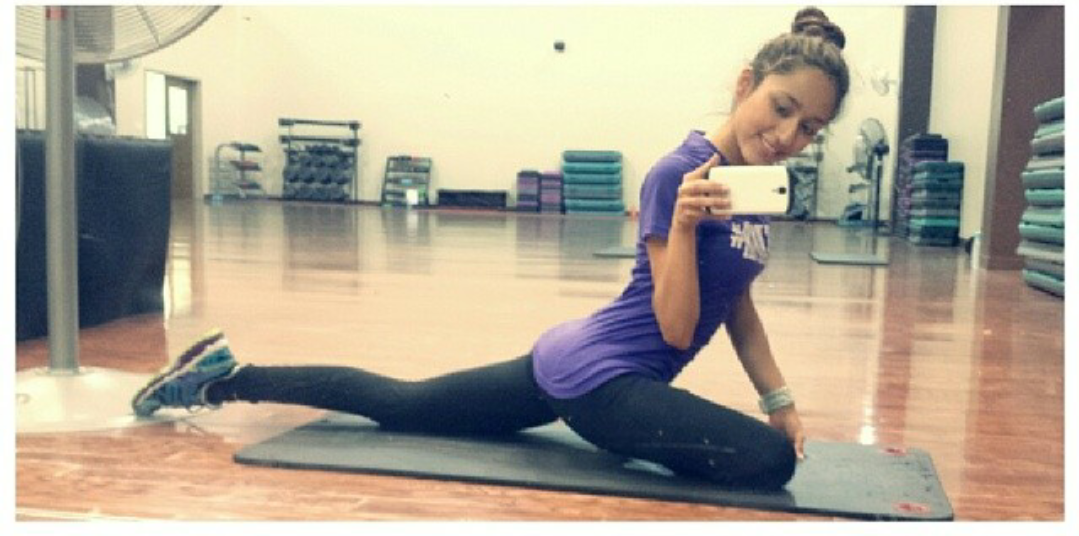
11. Avoid (or USE caution with) hip openers and pigeon poses in yoga: Like I mentioned before, there is an element of tightness that is necessary for hip/body alignment when it comes to endurance work (especially running/and elliptical training). Be very careful in hip opening poses because we don’t want to get “too open” or “too loose” to wear we will be at a greater risk for injury the next time we run!
I hope these were somewhat helpful to you! And, I hope that you know how loved and cared for you are 🙂
And don’t forget, tips 12-22 will be coming soon in Part II: Tips for Endurance Athletes ❤
I had planned for this post to be about foam-rolling, and though that will be coming soon, it will not be coming today. As I sat down to write this blog post, I found that my heart was somewhere else. So, I decided to loosely follow the direction of my heart, as writing about anything that is not my raw, unfiltered experience would be a disservice to both you and I.
Today, I want to talk about nothingness.
I have a really hard time being still. And no, I promise its not because I have attention deficit disorder. My fear resides in a more philosophical dwelling. The fear of “being” has plagued me for as long as I can remember. As a child, most of my nightmares consisted of not doing anything. And not doing anything consisted of not being “seen”, heard, or noticed. If others did not notice me, would I even exist? Furthermore, if I ceased to exist, what would I be? Would I be nothing?
To this day, my mind responds with silence.
And, I’m fearful of its silence too.
As a result, I have found safety and comfort in “doing.” Whether it’s going to school, maintaining activity at the gym, or simply attempting to keep up with the springing dynamic thoughts in my mind, I am always moving.
I have built a tenuous home in chaotic motion. I suppose, “doing” something all the time grants me some degree of disillusionment from my deepest and darkest fears; mobility serves as a relieving distraction from my ultimate fear of being still. Upon reflection, I suppose that I have equated “being” with nothingness. I am not exactly sure how, when or why that association was made, but somehow my neurons fired enough times to solidify the link between the two concepts.
Is “being” nothingness? If I am still, am I still there?
Stillness.
My mind does not care to respond.
I feel that ever-familiar gulp climbing up my throat; the nervous butterflies in my stomach are beginning to commence their anxious waltz. I am afraid. I don’t want to go there.
As a teenager, I invented drama where there was none. I thrived on intensity. I was never just “unhappy”, I was in painful anguish. I was never simply “satisfied”, I was in exuberant delight! Even ephemeral colds and flu’s seemed like cancer. I lived in great swoops of emotion. Up and down. Down and up. It made me feel something! It was a reminder that I was alive. I fretted that if I were simply “unhappy,” people wouldn’t notice or care. I had to create commotion to attain validation!
Only the stuff of soap operas gains attention, care and concern. Right?
Wrong.
At 19, I met my husband and we began the process of an arranged marriage. Don’t let our current state of contentment fool you. Our first 6 months felt like “misery” to me. In retrospect, I can identify that they were normalized and necessary adjustment points, but, of course, to me, Maham, the soap opera star, they felt like unadulterated agony. For those of you that don’t know, my husband is one of the most stable and satisfied people I have ever met. If I were a leaf blowing around with whichever direction of the wind, my husband was and is a sturdy boulder.
I remember the early parts of our relationship. Oh! I wanted him to love me with urgency and passion. I wanted our relationship to be a fabulous theatrical love story. I wanted all the elements of “The Notebook”, I wanted rage, grief, hope, ecstasy, longing—and I wanted all that every single day, for forever and always. Isn’t that what love is?
Isn’t love chaotic movement? If we are not wanting, longing, fighting and craving, what is left? What is left underneath all of that? Will love still be there? Or will it be nothing?
Do you see a common theme yet?
Once more, my fear of nothingness and stillness peeks its maniacal head out. And to some degree, it always will.
Contentment is unimaginable. Satisfaction is frightening. If our deepest selves are afraid of being still we will find a way to suffer being with another person, regardless of the nobility of their character.
But, here’s a troubling concept to ponder: Have I confused longing with love? Is love characterized by aching, wanting, and craving? Or are those characteristics of fleeting passion?
In terms of fitness, life, and relationships, I find that I, often, long for what I don’t have. I want more. I set goals, and I want to achieve them. After I’ve achieved them, I want to set more goals, and work towards achieving them. Though “wanting” is a necessary motivator for change and growth, is it also the birthplace of dissatisfaction and distress?
There is no rest in “wanting.” Craving does not allow room to foster love and acceptance. It cleverly avoids the existential fear of stillness—of NOT craving, of NOT wanting for things that we don’t have.
So what if we were to step back from our endless cycles of doing and overdoing, and doing again? What if we were to look at all that we do have, and love what we have accomplished thus far? What if we were to look at ourselves as whole beings, without wanting to change a thing—even if its just for a fleeting moment? How would that look like? How would that feel?
Dangerous.
Though my “ups” and “downs” are not as fierce and agonizing as they once were, I still struggle with the idea of stillness. I wrote this post because tonight, at 6:30 pm EST, I am taking my first yoga class after a dry spell of a few months.
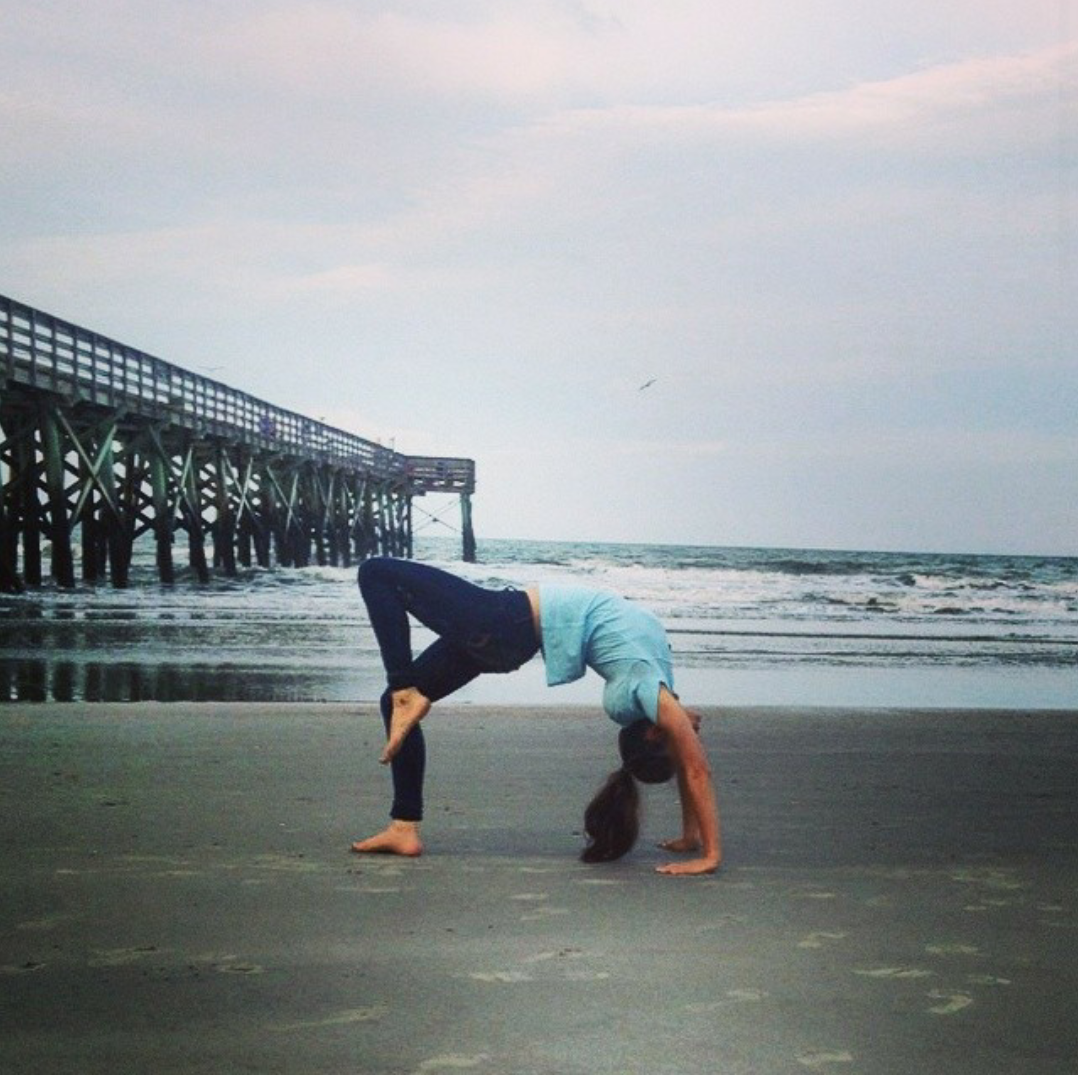
Me doing a modified wheel pose at the beach
I ceased my practice, as I became more and more afraid of what the mat brings out in me. It brings out comfort in being, it brings out acceptance for the present moment; it brings out satisfaction and contentment with simply being. But isn’t that exactly what I want?
Yes, and no.
It is exactly what I need. However, parts of me are still frightened of the concept of simply being. What I have learned is that peace and contentment are states of being that require practice. They don’t just come when you graduate college, get to your goal weight, or finish a workout regimen. They don’t magically appear in your new office, your new car, or your new job. They are feelings that require consistent practice to achieve.
I have come a long way since I was a teenager, and though, I still have heaps of room left for improvement, I want to take the time to truly appreciate how far I’ve come. I am thankful for my health, for my legs that can support me from one adventure to the next. I am thankful for my body and my heart; they adapt so beautifully to all the stressful changes life places on them. I am even thankful for my consistently fretting, and worrying mind; its desire to protect me is indomitable and truly admirable! I am thankful for all the little oddities, and imperfections in my soul and appearance. I know that weaknesses are just strengths in the wrong environment.
And, just like that, I’m a little less scared.
Because what if I’m wrong?
What if, behind all that wanting, doing, craving, longing, fighting, dieting, exercising, studying, analyzing, and criticizing, there issomething. Perhaps, behind the endless “doing”, there is EVERYTHING. Perhaps, underneath stillness, there is a place that is truly ALIVE with peaceful satisfying gratitude.
Perhaps, you and I can find endless freedom there.
❤
PS- I would love it if you commented and let me know that I’m not the only one who feels this way or share your biggest fears with me ;P
I have had numerous questions regarding which types of cardio to do, when to do it, how to do it, etc. But, the most FREQUENTLY ASKED question I have been asked is some form of the following:
Will cardio bulk me up/pack on excessive muscle in the legs/help me lose muscle/help me lose fat/help me lose weight?
The answer is: yes and no. It depends.
Before getting into further discussion, please note that I am not a nutritionist or physical trainer. I do have a degree in biological sciences (pre-med track), so I can pull on from things I’ve learned regarding human muscular anatomy and physiology.
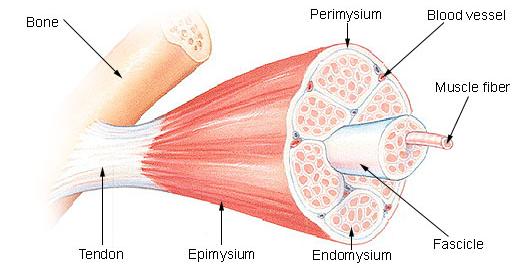
Alright, let’s first talk about what “bulk” is. When we talk about “bulking up”, we’re talking about gaining muscle. In human anatomy and physiology, we had several opportunities to observe cross-sections of muscles. What we found, in simple terms, is that there is far more to muscle than just protein. There is also water stored in muscles, as well as some carbohydrate (preserved in the form of glycogen).
So, simply put:
MUSCLE = protein + glycogen + water + other stuff.
What does this mean in terms of muscle loss/muscle gain?
If you have just started doing low-moderate intensity cardio, and simultaneously reduced your caloric intake, you may notice changes in just a few weeks. HOWEVER, you are probably not losing true muscle, or the protein part of the muscle. You are losing the other stuff by depleting glycogen stores, and water. These can be easily restored once refeeding begins. Consequently, this weight loss is not permanent.
If you have been doing HIIT, sprints, and/or participating in a strength training regimen, and you find that you are rapidly “gaining” muscle, you are most likely not gaining true muscle. It is probably due to these two things: 1) water retention, as water can leak through microtears within the muscle fibers or 2) Inflammation.
In summary, true muscle (protein) loss/ gain takes closer to a month to few months 😉
Alright, alright! So now onto some of the most common questions asked:
What type of cardio do I do to lose muscle?
What type of cardio do I do to keep my lean muscle but lose fat?
What type of cardio do I do to lose errything?
Question #3
Alright, FIRST, lets start by answering the last question. In order to LOSE anything, you need to have a caloric deficit. This means, that you should be consuming less than you are burning. The caloric deficit can be small-large. It can also be created via exercise alone, and diet alone, however, the largest deficits are created through a combination of exercise and watchfulness in diet. That is why they say that weight loss is most effective when you eat less, and exercise more.
Calories In – Calories Out = -(number) for weight loss.
In terms of losing “things”, our body loses both fat and muscle when we are on a caloric deficit. We cannot exclusively choose losses from one or the other; I’m sorry but anyone that tells you otherwise needs to take a basic physiology/anatomy course. Combined with a deficit, there ARE, however, certain forms of exercises that promote fat loss while maintaining muscle mass. There are also certain forms of exercise that promote an overall weight loss (both fat and muscle).
the only type of “spot training” that exists is on dalmations 😉
Question #2
The answer to this question is going to be the most confusing, so please read closely! You want to keep your lean muscle mass, but you want to lose fat?
If you read the answer to the question before, you will know that it is not possible to lose ONLY fat. There will be muscle loss, but there are ways to minimize it. In another words, there are certain exercises that help preserve muscle mass, while allowing for fat loss.
Let’s begin by talking about the makeup of the muscle. I’m sure that most of you have probably heard the terms Type I and Type II fibers. Our muscles are made up of certain ratios of both types of fibers.
I think both bodies, and all bodies are beautiful. It really is up to personal preference.
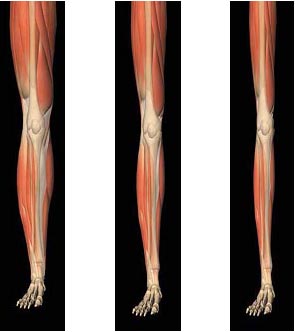
Type 1 Fibers (Left)
Type 1 fibers are called “slow-twitch” fibers. These fibers contain more mitochondria than the Type II ones. They produce energy for us to do our workouts by a process known as oxidative phosphorylation. What does this mean? Basically, it means that these types of fibers NEED a consistent stream of OXYGEN in order to efficiently provide energy for movement.
Aerobic = presence of oxygen
These are the types of fibers we use when we are, let’s say, standing up for long periods of time, when we are walking in a park for an hour, when we are moving around the house etc. These fibers are fatigue resistant because there is tons of oxygen present for them to utilize. When we train these types of fibers, we gain stamina and endurance WITHOUT necessarily gaining the size. (esthetically petite look, the picture on the left)
So what does this mean in terms of exercises? Low-moderate intensity cardio such as walking, jogging, and doing the elliptical trainer promotes the growth of these types of slow-twitch fibers. Because doing these types of exercises is not as strenuous on the body, you are not huffing and puffing for air, and you are not out of breath. If you are not out of breath, there should be more or less, a steady stream of oxygen going in through your nose, and eventually through your blood stream allowing the oxygen to be utilized in producing energy for movement.
Type II fibers (right)
Type II fibers are called fast twitch fibers. These are the ones that do not contain nearly as many mitochondria as the Type I’s. Because they don’t possess as many mitochondria, they do not utilize as much oxygen for producing movement. These types of fibers are able to produce energy WITHOUT using oxygen.
Anaerobic = without oxygen
But don’t we need oxygen to live? Um yes. So how long do you think you can train these muscles without oxygen? NOT LONG. They produce short-duration contractions because they cannot sustain activity without oxygen forever. They also fatigue easily because they are being forced to contract in the presence of LITTLE oxygen. Think rapid JUMPING movements and body-builder strength training. These get you out of breath really fast, and you are dead tired after a few reps. When we train these types of fibers, while
eating at maintenance(calories in = calories out): we are more likely to preserve lean mass and have some fat loss.
eating at a surplus (calories in > calories out): we are likely to gain strength and size in mass.
eating at a deficit (calories in < calories out) : we are likely to get injured!
So, in short, if you are WANTING to preserve or gain lean muscle mass, and enhance fat loss, you should try HIIT.
High intensity interval training or HIIT for short, is a great way to add cardio into your routine and not spend 30 minutes-hours at the gym. The main goal of HIIT is to give you the benefits of traditional cardio without sacrificing muscle mass. Studies have shown an increase in anaerobic activity using HIIT when compared to traditional steady state cardio.
Remember anaerobic = without oxygen = activate Type II fibers = are responsible for gains in muscle mass, in the presence of a caloric surplus, and are responsible for muscle MAINTENANCE, in the presence of caloric maintenance.
To maximize muscle growth, exercise must stimulate fast-twitch fibers (picture on the right).
Question #1
What about if you have put on more muscle than you like, and would like to reduce muscle size? I’m going to really emphasize this point again. We cannot “lose muscle” only. We lose weight.
So, the better question is “How can we MAXIMIZE muscle loss?”
Well, lets go back to what we were talking about at the beginning of this blog post.
MUSCLE = protein + glycogen + water + other stuff.
So, it takes TIME (months) to lose TRUE MUSCLE (ie; the protein part). The first few drops on the scale are flukes because they are losses in glycogen/water/other stuff. These can easily be restored. Now, in order to lose muscle, we need to reduce strength training, and INCREASE long duration low-moderate intensity cardio!
It is VERY very VERY hard for our bodies to lose muscle. They do not want to do this naturally, and that is why it is so essential that we do LONG DURATION cardio (30-45 minutes, 4-5x a week).
When we aredoing aerobic cardio (in the presence of oxygen), we first burn through the local carbohydrate stores (the glycogen part of the muscle). Only AFTER these stores are depleted, do we start to burn some of the true muscle, or protein. The liver begins to release glucose into the blood stream for the muscles to burn through. It takes the average person about 2 HOURS OF exercise to reach a state of total glycogen depletion.
Yeah. That’s a long time. Do you have time to spend two hours at the gym a day? Yeah. Me neither. That is why having a caloric deficit is SO important! it is very tough to lose muscle through changes in excercise alone.
If you are trying to lose muscle, I recommend doing moderate intensity excercise instead of low intensity, because it burns more calories (ie; uses MORE of the energy that the body would use to build muscle, in the first place). This could include jogging elliptical trainer and a cycle (without incline or resistance). Jump roping is good, however, it has to be done for greater than 20 minutes. I personally recommend a combo of these excercises.
I want to end this blog post with something that I found helpful. A study found that if we took two people, one with high levels of body fat, and one with low levels of body fat, and fed them the same low-calorie diet, a greater proportion of the total weight lost in the leaner individual would come from muscle!! So the leaner you are, the more muscle you will lose as weight.
Citation: Hall KD. (2008). What is the required energy deficit per unit weight loss? International Journal of Obesity, 32, 573-576
I hope that this clarifies some of your confusion regarding the relationship between cardio and muscle gain/loss. ❤ Overall, I recommend that everyone performs some sort of cardio most days of the week, because it has great health benefits ❤
God I have so much shame. I am ugly, disgusting, bad, and dirty. I am worthless. I wish I had nothing to do with me. How is it that I am the creator and receptor of all my hate, mistrust and anger! I feel doomed by myself. God! I cannot believe that I am stuck with me forever. This must be what hell feels like. My permanent doom lies in the fact that I’m destined to share residence with this awful, disgusting repellant of my being.
– An old journal entry of mine
Well, there is some truth to the above passage.
Yes. This is exactly what hell feels like.
Ever feel absolutely disgusted with yourself, and then even more repelled by your own thoughts about yourself? Me too.
I want us to go visit that dark, demeaning place of self-hate again. I’m hoping that if we go back together, it won’t be as scary. So will you take my hand, so I won’t be so alone?
Are you ready? 1-2-3-JUMP.
God. I’m burning in this inferno!!! It feels like a million nails are peeling away my burning skin over and over again. Let’s hurry past this layer! I want to go deeper—beyond the self-loathing, because the nauseating abhorrence we feel is actually an illusion. It is a disguise. It is masking the intensely painful feelings of shame and fear that, so often, take over my life–that take over your life.
Oh god. I thought that burning wrathful inferno was the worst zone, but this–god, this is far more painful. Why is there so much darkness? I feel so empty in this desolate, lonely, and ominously silent substratum. I’m absolutely frightened. I’m so thankful that you are by my side.
What is this place? Welcome to fear.
We all set these never-ending goals for ourselves—“if I am able to do this by this date and within this time frame, then, and only then, will I be successful. Then, and only then will I love, and accept myself.” I must be __________________ (fill in the blank). I must be a successfully certified counselor; I must get all A’s this semester; I must eat 800 calories a day; I must lose this amount of weight in 3 weeks; I must be able to graduate medical school at the top of my class; My thighs must not touch; I must friends with the “popular” kids; I must be able to speak in public without getting nervous. I must be able to wrestle with a shark in the deepest part of the ocean, while I’m drowning, and still WIN. Might as well add that one on the list, right?
We put so much pressure on ourselves, and then, we wonder why we feel overworked, exhausted, and overwhelmed. And the most confusing part of all? We still don’t see results. “Wait, wait, wait. So why the heck are we not achieving our goals even though we are working so damn hard!?”
When we don’t “reach” our goals, we swiftly move onto more planning, goal-setting– more calculating. We take out our whips and try to beat some motivation into ourselves—hoping, that this time, it will be different. Yes, yes. This time we will finally get what we desire.
“I’m gonna make it, because this time, I will accept no failure!” we assertively swear to ourselves!
How motivating.
In actuality, what’s happening, there, is a foolproof, surefire way to get yourself to fail, yet again. Seriously, I’ve lost count of how many times I’ve been through that cycle. I’m guessing a lot of you have too.
As we cruelly “goal-set”, we simultaneously give ourselves a debilitating subconscious message: “you MUST do this, and if you don’t do it, YOU are a FAILURE.”
Can you imagine trying to operate under such an overbearing presence? We place crippling, paralyzing pressure on ourselves; we try to cheat ourselves out self-love.
“Shut up, Maham! Nobody’s got time to sit in a cave and work on cultivating self-love. Okay? I have stuff to do. Don’t you get it? I have to lose this weight before my wedding/before summer/before the world ends.”
I hear you. So, we return to our least favorite, but oh-so-familiar statement.
I will love myself when_________
Don’t you see, my sweet friend? We are all stuck in trying to accomplish our life goals in reverse order! And, it never works out. You know this. You’ve experienced this. It’s like trying to build a skyscraper, without taking the time to establish a proper and durable foundation. Would you like to test climb that building? Yeah, me neither.
So, we whip ourselves into getting back up, and we try again—only to fall harder and further this time. “OMG! I AM SUCH A FAILURE! WHAT THE HELL IS WRONG WITH ME!? All these other people can accomplish the same thing in 0.00002 minutes and I haven’t been able to do it in a freaking year!”
We are back in that familiar raging inferno of self-hate. Hey, at least it’s better than that dark fearful layer under it right?
Sweetheart, you’ll be back there again too. It’s a vicious cycle.
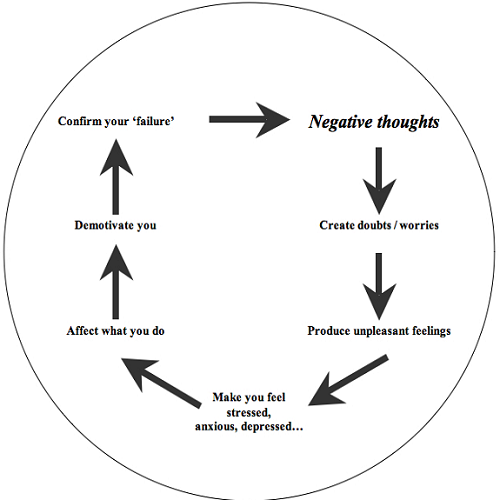
We don’t see results that we want–>we panic–> so we put even more pressure on ourselves–> which leads us to fail harder–>the results are still nowhere to be seen.
How’s that working out for you?
I’m not mocking you, or looking down on you in any way. I’m not even asking you to become “less uncomfortable” with where you’re at. I know where you’re at; it is really hard. It is gruelingly painful. It may be sucking the very “life” out of your life. I understand because I’ve been there too; I know shame like the back of my hand. I know what it feels like to be in a place where you’re unable to give or receive love; it is impossible to believe people when they say nice things about you because you are so isolated and ashamed.
What if we try something different? What if we attempt to operate from a place of loving and positive motivation? What if, instead of brutally bludgeoning ourselves for everything we “do wrong”, we make a commitment to appreciate, and pat ourselves on the back for “the few things” we do “right?”
Will that lead to a better chance for success? Will that cause less suffering for you? And for others? I can’t answer those questions for you. I guess you’ll just have to see. I can tell you, however, that trying this changed my life.
Are you willing to give this a chance?
ACTIVITY: Think of a goal that you haven’t been able to achieve because you’ve been trapped in the self-hating and fearful cycle we just talked about. Got it? Okay. Now, I want you to commit to writing down 5 things you do “right”, in terms of achieving that goal, every single day. It does not matter how small or big those things are; all that matters is that you physically record them on a sheet of paper, or on a computer. Do this for 10 days and comment below to tell me about your experience ❤
Here’s a little background on my journey. Prior to getting married, I had always been in the 110-115 lb range at my near 5’5 frame. I was living at home, eating home-cooked food, and consequently, had some regularity in my meals and, therefore, my weight.
Pre-marriage pictureRecent picture in the same outfit (different jean size of course)
After getting married and moving to a bigger city, I was introduced to drive-thru krispy kreme’s and smoothie places. Needless to say, it was lust at first sight.
My wedding day ❤
Another thing working against me was that I did not know how to cook especially well; this meant going out to eat a lot. And, frankly, come on! I moved to New Orleans- the city of Cajun friend food! So, I ate. And I ate. And I ate.
A few months after getting married, I went back to my hometown and started getting a few remarks about how “chubby” I had gotten. This was a new thing for me, as my whole life, I had never been told that I was “chunky” or “chubby.” I became especially self-conscious, and decided to step on a scale for the first time in months. 131 lbs stared back at me. I had gained 15-20 lbs in just three months! WHAT????????
Me at my heaviest
Yeah, Okay! I know that’s not overweight. I realize that its not “too much.” But, I didn’t like the way I looked, and more so, I didn’t like the way I felt. So, I set out to make a few changes.
Over the next year, I went from 131 lbs to a fragile 96 lbs. I didn’t realize that I had plummeted to such an unhealthy weight range, until I visited my primary care physician for my annual check up. I was unaware of my weight loss, because I had stopped weighing myself. I was only tracking my progress based on measurements and the way my clothes fit.
Me at 96 lbsAnother picture of me at 96 lbs
Needless to say, after that doctors visit, I kinda freaked out. (shoutout to my patient husband, who picked me up and calmed my bawling self down 😉 ). I, then, set out to return to a state of balance, remaining careful in my journey, as I wanted to gain the weight back in muscle mass. I did not want to pack on lbs of fat as I had done before. Consequently, I added weight training into my predominantly cardio regimen, and began to incorporate more protein sources into my diet. I steadily gained muscle over the course of the next 6 months.
This brings us to current times :). I haven’t weighed myself in a few months. However, the last time I was keeping track, my weight seemed to stay between 104-108 lbs (this was in late April 2014). I don’t like weighing myself anymore, as that is a slippery slope for someone like me, who tends to get trapped in the “perfectionism” cycle easily.
Notice that my pre-wedding weight was around 110-115 lbs; this is close to the 104-108 lb range I was in a few months ago.
Look at how different the recent pictures look from the very first pictures in this post. That should be a testament to the fact that weight isn’t everything. 110 lbs of predominantly muscle looks starkly different from 110 lbs of predominantly fat.
Recent pictureRecent picture #2
I wasn’t always able to jump around from bench to bench like a lemur. I wasn’t always able to do pushups, or chin ups. I was not always able to run for an hour. So what is my secret? What did I do? Well, read on!
Change #1
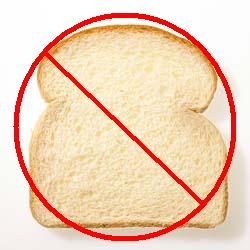
I cut out almost 60% of refined, processed WHITE carbohydrates. This was probably one of the biggest, and initially one of the HARDEST changes I made. Don’t you love how those two things usually go together? Anyway, I stopped eating white rice, white bread, doughnuts, cookies, etc. Please note that this did not happen overnight. I did not go “cold-turkey” or shift to an all-or-nothing sort of mindset. In fact, I am munching on Lorna Doone shortbread cookies as I write this. PS- they are delicious.
Personally speaking, I do not think quitting something entirely is sustainable, or even “healthy”. It may be more healthful for the body, however, I don’t see this restrictive type of thinking as beneficial to the mind. As someone who already struggles with perfectionism, it is extremely important for me to steer away from the “nevers”,”always” and “forevers”; It is truly a minute-to-minute struggle to remind myself to live in moderation.
Anyway, I simply began to reduce my intake of “white carbohydrates.” I remember that, at first, I replaced them with brown rice and wheat bread. As time went on, I replaced the brown rice with quinoa and I actually stopped craving bread altogether. If I had to choose, most of my weight reduction was a result of this change.
Change #2
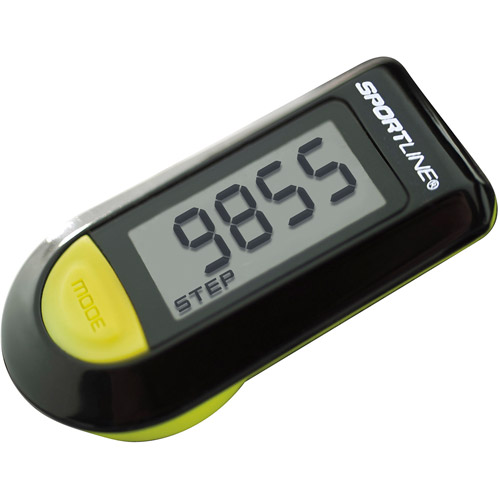
The first “excercise tool” I purchased was not some fancy sportswatch; instead, it was a $5 pedometer. For those of you who are unfamiliar with what that is, it is a simple tool that counts the steps you take each day. I began by tracking how many steps I walk in a typical day, and started to increase that number the next day. So, each day I was walking more than the day before. The key to this is holding yourself accountable. I remember that some days,I had to drag myself out of bed to go walk around the house one more time, so that the number of steps I took was at least 1 step greater than the day before. Since this was an active goal, it inadvertently led me to park further in parking lots and to take the stairs instead of the elevator.
Change #3
I started a food journal! I started recording the calories in the foods I was eating. Since weight loss, at its basis, results from a caloric deficit (taking in less than you burn), food logging was very helpful. Now, I do have to say that this can easily become obsessive, so I have a tip for you. I want you to to start thinking of caloric deficits on a weekly instead of daily basis. How many calories are you eating per week? How many calories are you burning per week? After you’ve answered these questions, try to create a deficit of at 1300-2500 calories in the number every proceeding week. Continue this, till you have reached your target body type. The reason I recommend doing this on a weekly basis is for enhanced sustainability. It becomes really hard not to beat yourself about having a “bad day” if you focus too much on daily calories. There will be days where you eat more. There will be days where you eat less. Consequently, it is more sustainable and healthy to assess your nutrition progress weekly.
Change #4
Oh this is going to be a kicker for so many of you–guess what? I stopped weighing myself. Take your measuring tapes, and cameras out, and throw your scale out the window (don’t do this if you live on the 2nd or 3rd floor lol). Weigh-ins can become really depleting, and may lead you to feel dejected. Sustainable weight loss is slow. The reason I said “sustainable” is because people can starve themselves for a few weeks, and drop tons of weight, however, once they start re-feeding, the gains will be back. True, lasting, weight loss is slow and steady, especially if you are trying to maintain it. If you weigh yourself, and don’t see that “magical number” we all create in our heads, it can become sadly easy to give up, and return to old habits.
Change #5
Only after making the above-mentioned changes, did I get a membership to the gym, and make any active attempts towards exercising. The first exercise program I ever tried in attempt to lose weight was Sean T’s Insanity. Yes, I did lose weight on it, however, it is an extremely challenging fitness program. I felt like I was going to die during the WARMUP. I finished Sean T’s insanity, and joined the local gym. There, I began to walk on the treadmill for an hour a day. This also assisted in further weight loss. As I felt more comfortable , I started venturing out to the elliptical machines, and began to take spin classes. These were all very helpful. I will say this, however: if you decide to take spin classes, please be careful about raising the resistance too high, as this may cause your quads/thighs to bulk up.
Important Point: Long-duration cardio (>25 minutes) is going to be your main arsenal when it comes to weight loss. This is predominantly all I did when I first started my fitness journey. The thing with cardio is that it will initiate you losing “weight”; this means that you’re going to be losing fat but also some muscle.
Important Point: Spot reduction is not possible. We cannot say: “doughnuts go to my butt, and cardio, subtract from my belly.” It simply does not work that way. When the body loses weight, it loses weight evenly. You can do ab excercises all day and night, and have a 6-pack. You will not be able to see that 6 pack, unless you employ cardio to help decrease the layer of adipose tissue, or fat, that covers that muscle group.
Change #6
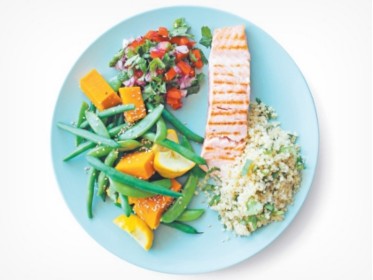
My heaviest “carb” meal, to this day, is still breakfast, or my “pre-workout meal”. This way, I utilize most of the food that I eat throughout the day. For dinner, I have mostly protein and vegetables. I don’t need heavy carbs during the night, as my activity level is going to be low.
Change #7
Portion sizing goes a long way! Simply reduce the portions you take- even if it is just by a little bit. Subtracting a ton of “little bits” eventually add up to a lot of weight loss. Rule of thumb: the amount of grainy carbs you eat in one meal should be, at max, the size of one fist.
Change #8
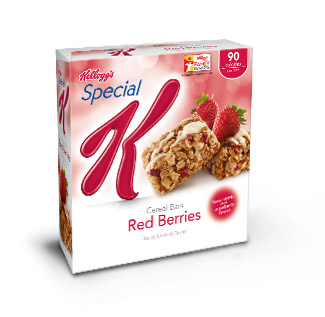
Alright, alright. Warning! if you are a healthnut reading this, you are not going to like this change. When I first started on my fitness journey, I started “replacing” foods solely based on the caloric value. I didn’t care if the replacement was all natural, organic, vegan, gluten free etc. Since my initial goal was weight loss, I was only concerned about taking in a lower amount of calories. Consequently, I started replacing normal cookies with 100-calorie Lorna doone packets or 90 calorie special k cereal bars. I started replacing whole milk with unsweetened almond milk. I replaced sugar with stevia, and white bread with low calorie multigrain crackers. I’ve gotten more health-oriented now, however, this post is not about me now, it is about when I first started.
So, here you go. This highly-requested blog post is almost done. I haven’t told you guys my #1 secret though.
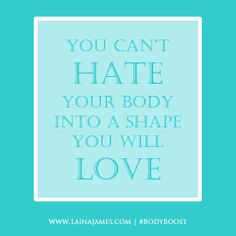
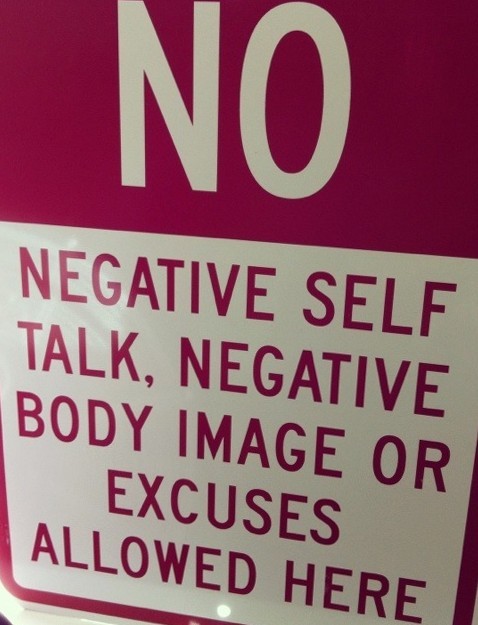
So, here goes: There is no way that I would have been able to do this if I had come from a place of extreme self-loathing. It is one thing to WANT to change; it is another thing to hate yourself through the whole journey.
You will NEVER be able to accomplish anything if your motivation is from a hateful, critical place. It is not sustainable. How far can a horse run if you keep whipping it harshly across the back? It may run faster, at first, out of fear and shock. In the long run, however, it will slow down, and eventually, fall to the crippling pressure. So, please, don’t set yourself up for failure.












































 abidmaham