Tag Archives: love

The Tiny Oks Are Hope

On repair, motherhood, and the words we did not erase.

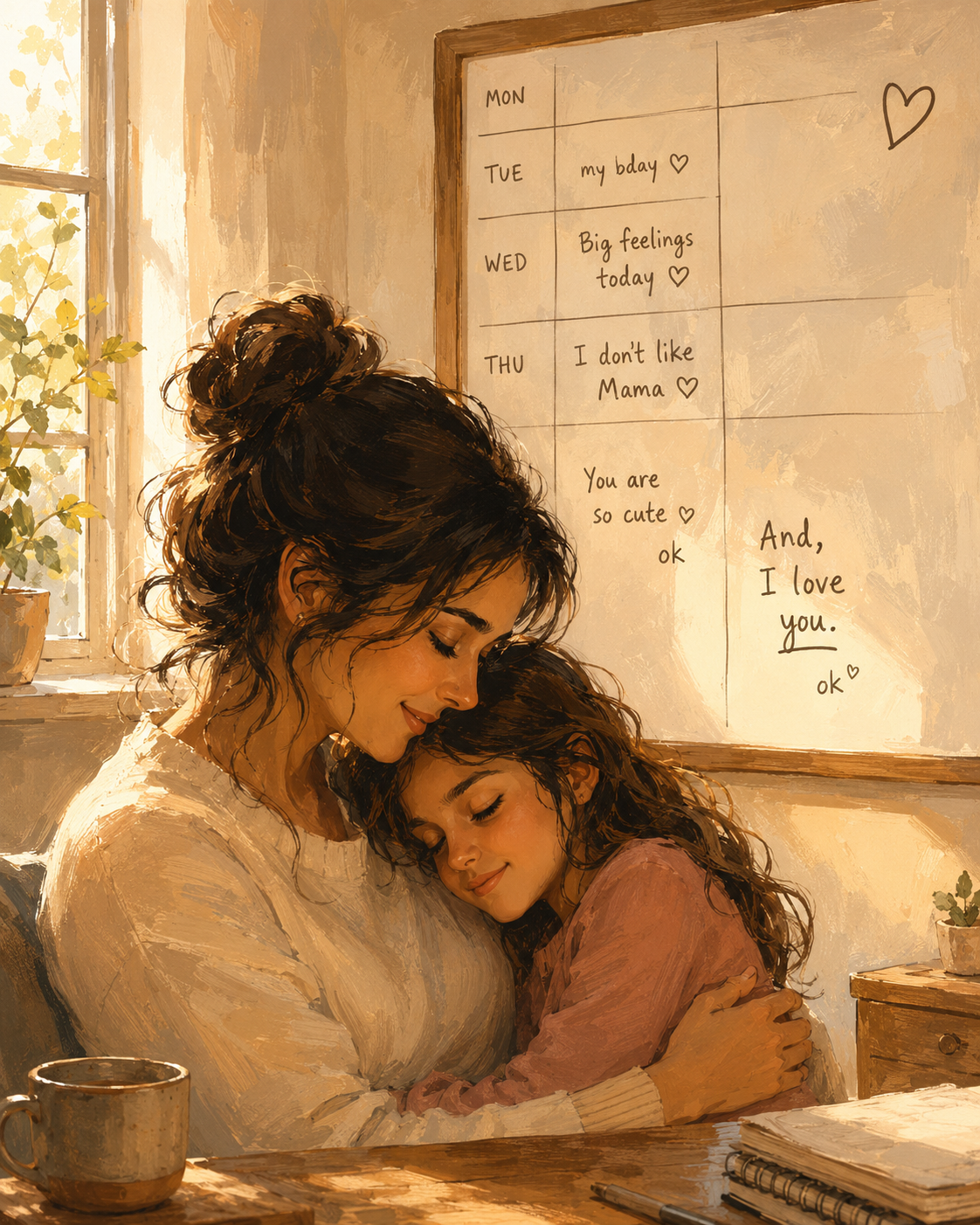
My daughter wrote “I don’t like Mama” on our weekly planner.

Then, a little later, I wrote:

“And I love you.”

By the end of the day, underneath my repair words, she had added the smallest possible offering:

ok.

Not a grand apology.

Not a cinematic hug with swelling music and one tasteful tear.

Not one of those soft-focus parenting moments where everyone wears linen and speaks in nervous-system-approved whispers.

Just dry-erase marker.

A hard day.

A rupture that did not become the ending.

And two tiny letters that felt like hope.

Because here is what I am learning: repair does not always look beautiful while it is happening.

Sometimes repair looks like a child writing the thing she feels before she knows how to say it gently.

Sometimes repair looks like a mother feeling the sting of those words and choosing not to make the child responsible for that sting.

Sometimes repair looks like writing back:

“You are so cute.”

“I’m sorry today felt so big.”

“And I still love you”

And sometimes, after all of that, repair looks like a tiny ok written underneath your words.

The tiny oks are hope because they prove something quietly revolutionary:

Rupture happened, and love still had somewhere to land.

For a long time, I thought good mothering meant preventing rupture.

If my child was upset with me, I had failed.

If I reacted, I was becoming everything I feared.

If repair was not immediate, eloquent, complete, and preferably witnessed by a small panel of experts confirming I had not ruined my child forever, it probably did not count.

But motherhood is teaching me something much less glamorous and much more holy:

Repair is not the absence of rupture.

Repair is what happens when rupture is allowed to be real, but not allowed to write the whole story.

Repair, I am learning, is not asking my child to reassure me.

It is showing her that I can stay present without making her feelings dangerous.

If my first post was about “The Girl With the List”, this one might be about what happens when List Girl has to mother.

“The Girl With the List” likes preparation. She likes structure. She likes the fantasy that if she can plan enough, anticipate enough, understand enough, and make the correct emotional spreadsheet, then no one will get hurt.

She is not bad.

She is trying to love through planning.

But motherhood does not always honor the list.

Children have feelings on their own timeline.

Repair does not arrive color-coded.

And some of the most important moments in a relationship cannot be controlled into safety.

They can only be met.

The list can stay.

But it cannot mother for me.

My daughter does not live with me year-round. She comes to visit in the summers, and that time is deeply precious to me. It is also a transition.

Each summer is a kind of re-entry: a new rhythm, a beloved disruption of routine, a closeness I ache for and still have to adjust to.

For someone with a very active inner world — a whole inner cast ready to offer commentary at any given moment — it can take my nervous system a beat to catch up.

Not because she is too much.

Because she matters so much.

Love raises the stakes.

And sometimes my nervous system is still catching up to what my heart already knows.

We did not erase her words.

We did not write over them.

We did not pretend “I don’t like Mama” had not been written.

We also did not let those words become the final sentence.

We let them exist.

We let them breathe.

And then, underneath them, around them, beside them, we made room for something else too:

Love.

Apology.

Connection.

A tiny ok.

I think that is what feels so different to me.

So much pain gets passed down through erasure:

That did not happen.

You are too sensitive.

You are fine.

And so much pain also gets passed down through writing over someone else’s experience:

Here is what you should feel.

Here is why your hurt is inconvenient.

Here is why my shame matters more than your truth.

But this time, we did something else.

We left the words on the board.

We let the feeling have a place.

And then we practiced coming back.

This is also complicated for me because I have spent years working with children. I have been a teacher, a nanny and a counselor. With other children, I can often access patience and curiosity more easily. I can observe. I can regulate. I can remember that behavior is communication.

But with my own daughter, more of “me” enters the room.

Not less skill.

More history.

More longing.

More fear.

More grief.

More hope.

More old wounds whispering, “Don’t mess this up,” while holding a clipboard and several pieces of unsolicited evidence.

Mothering is not harder because I know less.

Mothering is harder because more of me shows up.

And that is the part I am learning how to meet: the part of me that panics when my daughter is upset, thinks one hard moment means I have ruined everything, and forgets children do not need perfect parents.

They need parents who can come back.

So this week, I am trying to let the tiny oks count — to let repair be evidence that a hard moment is not the whole story.

Because there is proof all around me, if I look toward the light, that love finds us even after mistakes.

A child can write “I don’t like Mama” and still love her.

A mother can feel hurt and still stay soft enough to repair.

A rupture can happen, and the relationship can survive it.

A tiny ok can become a doorway.

Maybe healing does not always arrive loudly.

Maybe it does not look like a breakthrough.

Maybe sometimes healing is just two small letters written underneath an apology.

Maybe sometimes it is both of us saying, in the smallest handwriting possible:

This is not how our story will end.
<3, List Girl: Mothering Edition
The Girl With the List

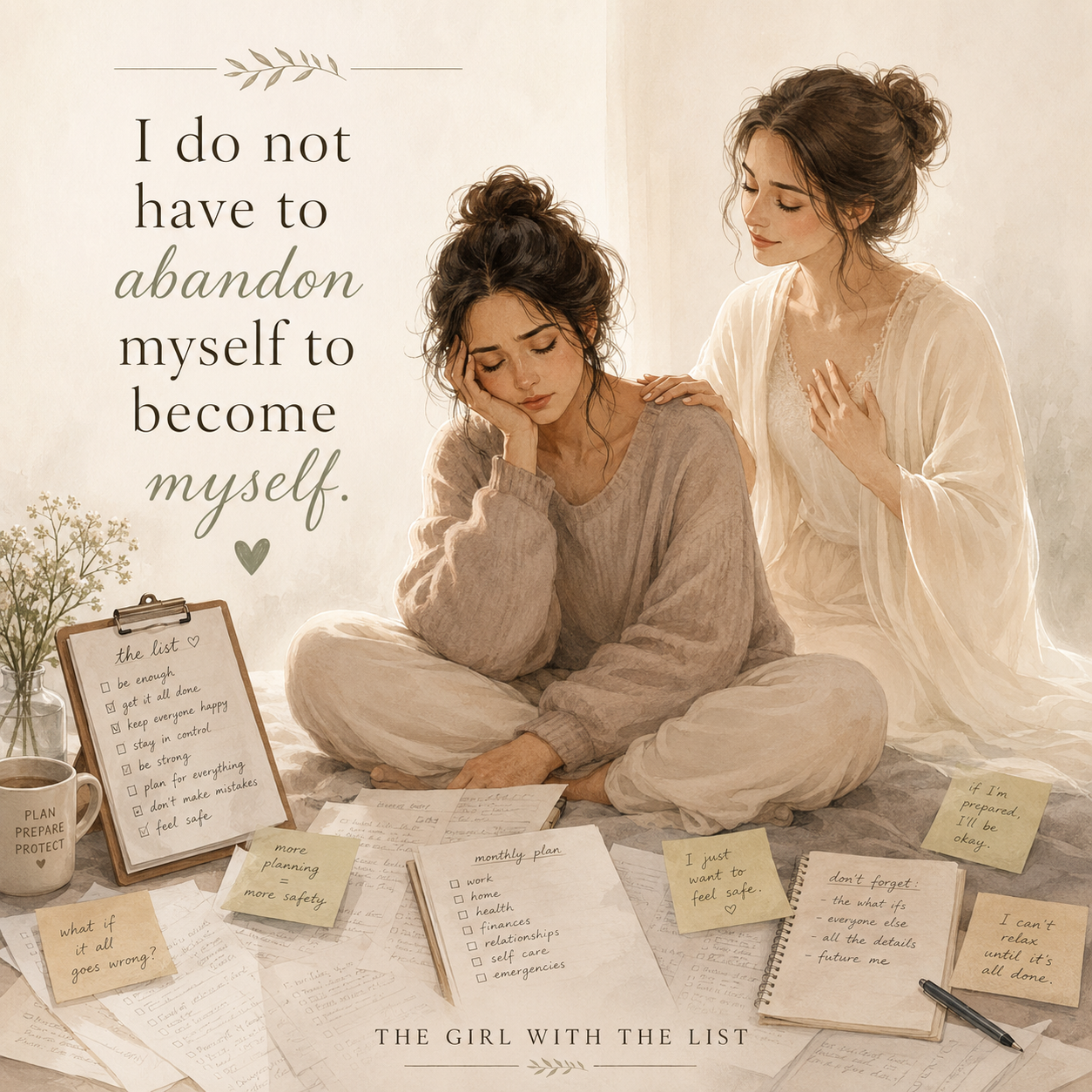
There is a girl inside me who believes that if she can make a good enough list, she can finally feel safe.

Not a normal list.

A sacred list.
A survival list.
An “if I can just get all of this out of my head and onto paper, maybe my body will stop acting like there is a lion in the kitchen” list.

📝

She writes down everything.

The appointments.
The errands.
The texts she needs to answer.
The people she might have disappointed.
The gifts she still needs to wrap.
The book she wants to write.
The blog she wants to start.
The life she is trying to build.
The version of herself she is trying very hard to become.

A casual Tuesday, basically.

She is efficient, this girl.

She is also exhausted.

And dramatic.

Not just regular dramatic. More like, “If we don’t reorganize our entire life before 11:43 a.m., we may never fulfill our destiny” dramatic.

For a long time, I mistook her for discipline. I thought she was ambition. I thought she was proof that I was trying, growing, healing, becoming.

And she is trying.

But she is also (so) afraid.

🕯️

Afraid that if she slows down, everything will fall apart.
Afraid that if she forgets one thing, she will become one thing: unreliable.
Afraid that rest will be mistaken for failure.
Afraid that if she stops managing the whole universe, the whole universe will finally have the audacity to manage itself without her.

Rude, honestly 😒

Sometimes I catch her in the act.

There I am, allegedly “taking a break,” except my break has somehow become a 17-step plan for emotional liberation, financial stability, spiritual enlightenment, and possibly reorganizing the pantry.

Because why simply drink water when you could also create a five-year plan? 🤦‍♀️

Why feel one feeling when you could build a comprehensive nervous system operating manual and assign it subheadings?

🌿

But lately, through EMDR, IFS, motherhood, and the deeply humbling experience of being human, I am beginning to understand something:

The list is not the problem.

The list is a part.

A protector.

A little clipboard-holding manager inside me who learned a long time ago that being prepared was safer than being present.

She does not need to be shamed.
She does not need to be fired.
She needs to be witnessed.

Because underneath the list is usually a feeling.

Grief.
Fear.
Shame.
The ache of wanting to be held.
The terror of being needed when I already feel empty.
The old belief that I have to earn my right to rest.

And when I only add more tasks, I never reach the feeling. I just create a more organized form of avoidance.

A very color-coded dissociation, if you will.

🤍

There is another part of me now, though. A quieter one. A slower one.

She does not hate the girl with the list.

She actually kind of respects the hustle.

But she also gently asks:

What are we afraid will happen if we pause?
What feeling are we trying to outrun?
What if the next right thing is not the most productive thing, but the most honest one?

This question is deeply inconvenient.

I would personally prefer a spreadsheet.

I used to think healing meant finally becoming the kind of person who could do everything.

Now I wonder if healing means becoming the kind of person who no longer needs to.

The list can stay.

But it cannot be God.

It cannot be my worth.
It cannot be my mothering.
It cannot be my authorship.
It cannot be the measure of whether I am becoming who I am meant to be.

Sometimes the bravest thing I can do is not cross off another task.

Sometimes it is to put the pen down, place one hand on my chest, and say:

I am here.
I am not behind.
I do not have to abandon myself to become myself.

And yes, the list girl may still whisper, “Okay, but should we make a list about how to stop making lists?”

Bless her.

We love her.

We are not letting her drive.

Maybe that is where the real list begins.

Not with everything I have to do.

But with everything I am finally allowed to feel.

Till next week…

<3,

List Girl

I Was Wrong

For the last few months, I have taken a deep plunge into healing. After years of therapy from all different modalities, I found very little difference. My life would be fine and “functional” for a few years, only to be followed by an inevitable crash. I’ve been through this cycle for most of teens and all of 20s. Each time, I picked myself back up only to white-knuckle my way through “functionality”–until, the inevitable crash.

For so long, these “crashes”—long periods of depression, psychosomatic symptoms, and lapses of complete dysfunction–seemed unrelated. I would excel in work, friendship, and relationships only to lose all of them. Time and time again, I felt dejected, humiliated and utterly worthless.

Why do I keep messing it up? What is wrong with me!?

In the aftermath, I sought out help–only to help me get back on my feet again and once I felt “ready” enough, I plunged in headfirst into work, relationships and life with even more resolve and stubbornness.

I can’t let him win. I can’t let trauma win. I HAVE to do it right, this time!

Yet, I couldn’t. I couldn’t do it in a sustainable manner.

For decades, I deluded myself into thinking that I could “white-knuckle” it through life. I danced between diagnoses, swapped out medications, changed therapists, implemented new strategies from the self-help book of the season; yet, every single intervention yielded minimal results.

This year, I was forced to face the lingering effects of unaddressed trauma; my body gave me no choice. The unprecedented seizures, fainting episodes, and gaping lapses of memory loss jilted me to my very core. I was desperate, in more ways than one. Some days, I was more scared of the seizures and syncope episodes; other days, I found myself begging God that they take my life.

I found myself in an impossible situation where I was equally scared of death and of life

It was this very predicament that finally brought me to the doorstep of surrender. I didn’t know what more to do; every willful intervention of mine had not worked. I didn’t want to die and I certainly was not living. I thought if I was just strong enough, stubborn enough, knowledgeable enough…I would be able to “beat it”. In my case, knowledge was not power. I went to school to get a masters degree in psychology; I studied the ins and outs of different modalities & dissected the interventions of esteemed theorists. As a counselor, I became adept in helping others navigate through their own hardship and grief–but I could do nothing for myself.

Knowledge, in my case, was my Achilles. It brought me hubris, and an unhelpful sense of intellectual arrogance. My training in counseling and psychology bred an avid resistance to be treated. I thought I knew better, so I refused the treatment prescribed for me by other mental health professionals.

But, knowing better doesn’t always lead to doing better.

There is a reason that mental health professionals and doctors cannot treat themselves or their loved ones. Sometimes, we are just too close to the subject. In my case, I was the subject and could do very little to help. There is a reason “blind spots” are called just that. We cannot pinpoint them using our own biased way of thinking.

The problem cannot be solved using the same mind creating it.

In June of this year, I finally got to a point where I could no longer tolerate the suffering. Now, I have come to realize that the suffering was being perpetuated by my relentless need to be in control.

We must let go of the need to control to gain it.

Five months ago, I begrudgingly started the process of EMDR. Despite years of others suggesting it for me, I resisted it at all costs–all because, I simply did not know how it would work. I had no faith in the process. How could moving my eyes a certain way help unpack layers of complex trauma? It honestly sounded laughable.

Yet, here we are.

I am no where close to being “healed”, but the beautiful paradox is that I’ve let go of the idea of being “healed.” It is no longer some faraway, unachievable destination that torments me; it is here, and now. Throughout the EMDR process, my healing has been anything but linear; it has ebbed and flowed with life itself, and there is infinite beauty in that. I no longer find myself fantasizing of a perfectly “healed Maham”; I no longer torture myself by comparing my “now” to that preconceived ideal.

My suffocating grip on the rigid definition of “healing” has loosened.
Day by day, I’m learning to experience myself as I am. And, dare I say, life would not be intolerable if I remain who I am today, for all of my days. The rigid parameters I placed around creating “a good life” are slowly dissolving. These days, progress seems far more promising than perfection; I find myself welcoming minor setbacks as necessary precursors to growth and “healing”.

I am starting to assess “healing” by my ability to tolerate feeling.

Bit by bit, I am starting to work through unspeakable pain. In doing so, I’m finding acquaintances in connection, love, and even ephemeral joy.

Nowadays, I find that even gratitude chooses to sit by me sometimes.

Thank God, I don’t have all the answers. Thank God, I don’t understand everything. Thank God for the realization that I never had to.

Thank God, I finally had the courage to be wrong.

— because of it, I’m finally being led to what feels right.

The Body Keeps Score

And track of your bullshit too (unfortunately)

Ya’ll I started reading again. I immediately regretted it. I came across this rattle snake quote:

“The greatest source of our suffering is the lies we tell to ourselves.”

Dr. Kolk, you nearly gave me a heart attack with that quote.

And then…you used it twice?

To make sure repressed memories had not just one–but two chances to pester me?

I see your subliminal messages, Kolk, I see you. Lol.

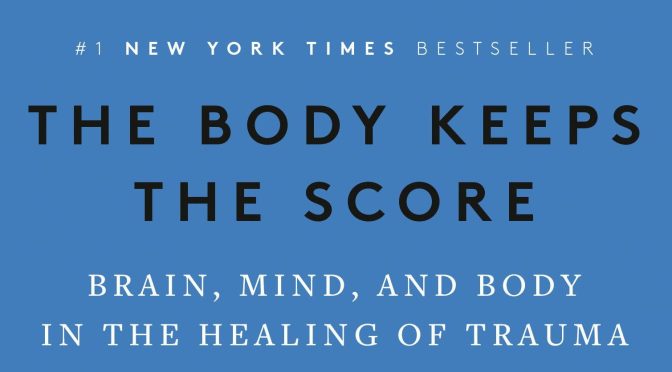
Anyway, I started re-reading “The Body Keeps Score”, a book by Dr. Kolk (MD) who offers sturdy evidence supporting the psychosomatic model of wellness. I admire how the book reminds us to view the human being through a wholesome, holistic lens– especially when tailoring treatment and interventions from a psychological, spiritual and physical standpoint. Furthermore, in his book, he manages to brilliantly unpack trauma in a way that is accessible to the touchy population that struggles with it, day in and day out. It is easy to follow, written objectively, and therefore, most importantly, explains and “unpacks” trauma and its effects in a a way that is NOT retraumatizing.

THE FIRST YUCKY EXPERIENCE

So anyway, back to my first re-stab at figuring out why this quote elicited such a disharmonious yet congruent feeling from deep within a crevice of my soul?

“The greatest source of our suffering is the lies we tell to ourselves.”

In this revered book, “The Body Keeps Score”, Dr. Kolk refers to the preceding quote, not once–but twice. I wish I could say that the first time I saw it, I just glazed over it, giving it no attention; I truly wish I could tell you my mind’s ability to repress sh*t was stronger than my body’s ability to react to the sensation it evoked. I think that I would have found some solace is NOT being able to relate to the quote, despite how abstractly I did. It would have confirmed my bias because I could use my detachment as “proof” to myself that it really is “mind over matter” and in this case, “mind over body and trauma.” But…that would keep me in denial (which is an area I apparently love hanging out in)… and it would also kinda go against the very premises of the book he wrote 🙄
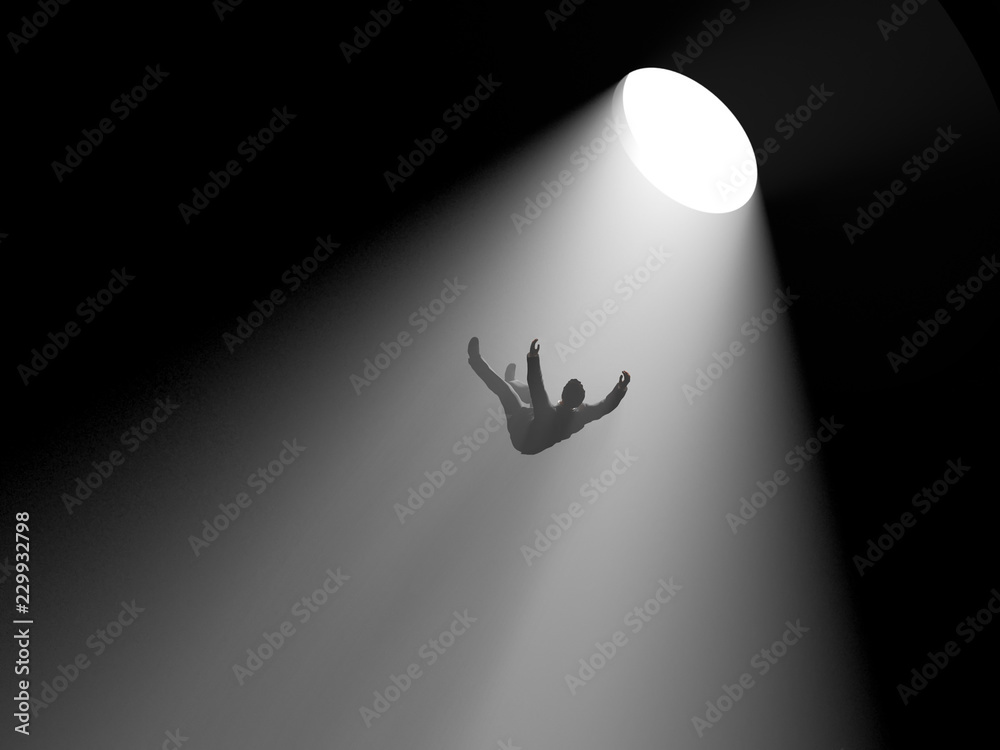
Dr Kolk’s very research builds its case on an overarching and (most likely true) assumption. Like many other social scientists and neurobiologists, Kolk implies that no matter how arduously the mind tries to make us forget about big feelings, the body doesn’t just simply follow suit and “forget” too. This phenomenon is so evident in the recollections of relentless flashbacks experienced by so many PTSD warriors. It is such an odd feeling. One second, our day can be going fine and dandy then one flipping sensory cue later–like a certain quote, a phrase, a sound, someone’s voice, a fragrance, a temperature fluctuation, a visual cue, the cadence with which one talks… any sensory “trigger”– which may seem miniscule and relatively insignificant has the capacity to bring with it a torrential tsunami of sensory and affective overload that is so typical to trauma.

So…. long story short–no. I can’t, with full honesty, say that I was able to simply skim over that quote without feeling any connection to it, regardless of how distant it felt at first. The truth is the words literally caught my attention. The first time I saw the quote was on page 11.

“The greatest source of our suffering is the lies we tell to ourselves.”

I read it, it made me stop. That means a lot to me.

I also know that when it comes to quantifying something, phrases like “a lot” and “a little” are subjective measurements of that are so variable and therefore unhelpful. So let me rephrase– for me, having a random “quote” elicit some abstract “sensation/feeling” out of me that I couldn’t even pinpoint long enough to make me cranky was pretty remarkable.

I don’t think you realize how severe my inattentive subbrand of neurodivergence is.

On that topic, for something to really stop my inattentive, million mph mind in its tracks, even for a few seconds--it means a lot. It was the first sentence in this book that made me truly pause. It left me speechless.

The first time I came across the quote, it simply resonated with a repressed subconscious part of me. It’s almost as if when I read it, a deeply buried part of myself echoed back out, noting, “hmm…how peculiar–I wonder what parts Maham’s brain is hellbent on hiding from her…and why?”

The quote read me. I didn’t read the quote. 

I swear, I’m not trying to sound like Yoda; I’m trying to use words and language to effectively capture and hopefully, convey the eerie experience of association i had with that quote. Reading it…reminded me of something very familiar–like deja vu. Okay, so most of ya’ll will understand this example–its the same, unexplainable, intuitive feeling that you get when you meet an absolute stranger–and in that moment, you don’t know how and no reason to logically think why, but you FEEL and KNOW that this person is going to come to mean something so important to you one day. Maybe the experience is a result of Carl Jung’s “collective unconscious” giving us a kick in the behind saying we’ve experienced their energy in a past life…or maybe the experience is to activate our fight or flight reflexes to run because we are running into the next Ted Bundy reincarnated–I don’t know. I deflect. 

THE SECOND, EVEN YUCKIER EXPERIENCE

Anyway, the SECOND time I happened to “stumble” upon Dr. Kolk’s accidental use of the same eerie quote on page 27, it came together. I felt, understood, and remembered why the quote struck such a deep discordant chord within me. My thoughts, feelings, and sensorimotor recall reintegrated to form a cohesive memory that I could call upon.

That’s the irony in trauma–the very experience of it impairs our prefrontal cortex functioning, which is responsible for a lot of higher order thinking skills. Sometimes I feel like trauma created this weird delay between my right and left brain conversations. Anyway, on page 27, the second time I read the quote, had given my right brain sufficient time to get in contact with its left counterpart, very temporarily turning on my and my executive functioning skills.

What the pedantic jibberjabber above pretty much says, is that my mind finally caught up to my body, and I understood why the same quote had evoked a disconcerting and gut-wrenching feeling when I first read it on page 11.

“The greatest source of our suffering is the lies we tell to ourselves.”

“Well,” I had initially thought, “what lies am I telling myself?”

“Um…none–” is what my my frantic flight-or-flight response had impulsively interjected, fearing that we may be getting “warmer” to the truth.

The book talks about how since the greatest sources of our suffering are the lies we tell ourselves, then healing must essentially lie in us becoming rigorously honest with ALL parts of ourselves. That can be particularly hard in individuals whose chronic struggle with cPTSD has resulted in large degrees of dissociative episodes that are sprinkled with larger and larger time periods they have no recollection of. Because, to be completely honest, I feel like I have realized the “lies I’m telling myself” before in therapy…I just think, they are too painful to sit with. We are all strong enough to face our demons for a brief period, until the human brain launches its super power of self-preservation power and despite realizing what’s holding you back, you also simultaneously know that you WILL MOST CERTAINLY FORGET any truth that can help you make true progress very SOON.

So, putting my judgement aside, I reread the quote, and thought about it. “Seriously, all bull**** aside, Maham,” I asked myself, “What is going on?” What am I hiding from myself? I mean, clearly knowing me, if I’m hiding it that strongly from myself, it probably has something to do with a lot of shame–like a crippling amount of shame that I can’t psychologically handle without the possibility of fracture. Dr. Kolk talks about this agonizing shame as a hallmark among most PTSD survivors, despite the inherent variability seen in their respective traumas. The complex nature of trauma does not help, as oftentimes, survivors snap and react in ways that are not characteristic of themselves immediately after a trauma; it is usually the aftermath of the moment in which the psyche fractures. (Yall, there is a great Tyler Perry movie on Netflix about this called “Straw”–>Watch it!)

Shame could come from the actions one did/did not do to protect themselves in their situation, and yet shame could also come from dealing with with isolating stigmas, and ostracizing cultural narratives. The sources for the tormenting shame felt by trauma survivors are myriad in nature, however, the palpable presence of the dementor that is shame in all those who have experienced PTSD is a great starting point for further research.

As I sat with the quote longer, my stomach dropped.

Why do I refuse to eat? Why do I not want to live? What am I not forgiving myself for?– so much so that I want to punish myself by barely getting by?

The intrusive thought/s just popped into my head, and gave birth to a million other equally disturbing tangential thoughts. Because clearly, the one thing all my doctors, despite their specialty, can agree on is that:

I am slowly killing myself by depriving myself nutritionally in a chronic manner; it is not suicide that is imminent. It is a confounding and tragic type of slow existential death.

And it is a painful and slow death.

It looks like a period of it “just staying all in your head”, until it isn’t. Then, much like it happened for me, cute new little symptoms start emerging as physiological manifestations–but they are just psychosomatic manifestations of the same age-old psychological struggles I’ve been going through for the last three decades.

Maybe my shame lies in knowing how avidly I pursued higher education grasping at any information about trauma and its insidious impacts. I think I did in this in an attempt to “get ahead of it” and not let the trauma I felt brimming under the surface affect me. Perhaps the source of my shame results from KNOWING better and yet choosing not TO DO better…even though I think some part of me always knew there was a different way…. one that had worked for many before me.

Accumulating all the “academic knowledge” about human behavior and life after trauma, my mind still remains just as hellbent on unseeing the fact that I am literally the textbook case of the subjects we read about in our graduate courses who presented with CPTSD!

My stubborn mind refuses to believe that yes–trauma can even catch up to me, Maham Abid. My comprehension about it on a “cognitive” level does not imply that my knowledge of trauma ever translated into wisdom.

If it had, I would’ve been able to help myself from repeating the same agonizing cycles that have left me crippled with shame. “Insanity is doing the same thing, over and over again, expecting a different result,” right?

So when I read the quote on page 27 again, I tried delving past that initial recognition, and tried to connect to it more intimately. Leaning into it was not fun. It created that nasty, “crawling out of my body” sensation whose origin my mind couldn’t quite connect to or trace. I think the sensation highlighted the stark difference between how “well” I convince myself I am handling my trauma versus how “unwell” I’m actually coping with it… like, at any given moment of time. I mean, a lie I definitely perpetuate is that I, unlike all the other people I have studied about, can somehow magically go through years and years of jarring trauma and come out of it, unlike everyone else, completely unscathed.

The assumption I’m trying to highlight is the inaccurate notion that knowing better or cognitively understanding something better results in doing better. I always tend to underestimate how deeply pervasive the effects of my own residual trauma are. Likewise, I tend to overestimate how “fast” I can have recovered from some really horrific things–while in actuality, I’m only ever really putting band-aids over a gaping wound.

My amazing psychiatrist (yall, she’s put up with me for almost a decade), has told me before, so eloquently and concisely what the problem is. Years ago, she told me:

“Maham, I can keep your body alive (to some extent) using these medicinal interventions…but that’s not saying much. The rest is up to you.”

Alright, brain = explode

More deep dives into the dearth of dreary discordant dissonance later.

Hasta luego,

More bones to pick with you later, Dr. Kolk 😋

Softness

By: Maham Abid Written: 04/21/2025

Perhaps, it’s finally time to let my guards down.

When you’re hurting alone, it doesn’t matter if you have a crown. 

How can I easily fool myself this well?

I can easily camouflage as “sunshine” to those going through hell.

It’s all a facade, and I know you can see right through.

It’s me who has been unwilling to look at the pain that’s clearly true.

The type of strife that you will get to hear, 

might bring even the “strongest ones” of you to tears. 

Some may think this isn’t an appropriate story to share.

But selfishly, sharing with you all makes me feel a little less scared.

The parts of my story that seem too daunting to bear–

Suddenly don’t appear clouded with fear, all because I dared to share.

Maybe doing it “alone” is not the way to go…

It’s equal parts petrifying to let the real “me” finally show.

Rejection, and judgement are not at all what I need right now.

I need a place to process this grief, to feel, and let it all out.

But, being judged, ostracized, and the things I fear most—

—are ironically the ones I’ve experienced the most up-close.

It’s irrelevant because I already feel unworthy of belonging and love,

but maybe human connection is my “prayer answered” from above.

What if, little by little, I begin to let others in?

Perhaps, I won’t feel like such an unforgivable sin.

So when I begin to ponder about my roller-coaster of a life,

My assuming the role of the “black sheep” doesn’t come as a surprise.

Sure, there are benefits to being “big, bad, and bold..”

Yet, softness can warm up crumpled crevices

that fickle fear won’t ever have the privilege to hold.

Love you all ways, always ❤

IG: @mahamabidtalent

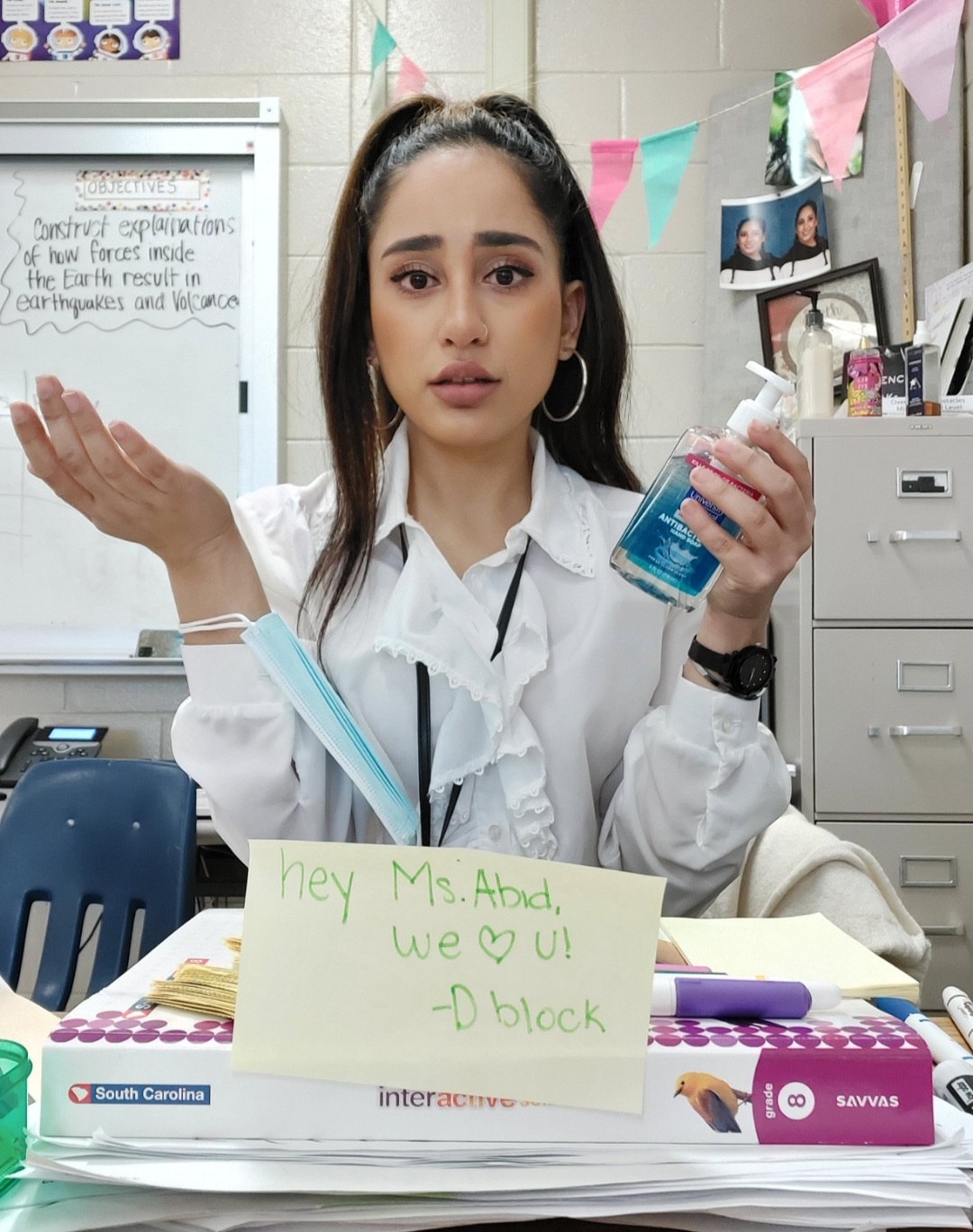
STEP 1: HOW TO REGAIN CONTROL OF A CLASSROOM

Hi there! Welcome to the first post of a new series!

Over the last month and a half, I have had to take on the grueling and intensely rewarding task of taking on a classroom full of fiercely independent toddlers. Any teacher (or parent, for that matter) knows that very few situations make us feel as utterly helpless as a defiant toddler screaming “NO!”—for the millionth time that second.

2 months ago, I would have told you I have a pretty solid hold on classroom management; after all, I’ve wrangled in headstrong middle schoolers for years.

Today, I can tell you that I had no idea what I was getting myself into when I decided to shift to teaching younger kids. Toddlers are no joke. Just when you think you’ve got them down, they change!

Being a Pre-K teacher has forced me to break out of my rigidity; It has caused me to become brutally honest with myself. I have had to construct, deconstruct, rebuild, and revise my strategies daily because my tiny humans change every hour!

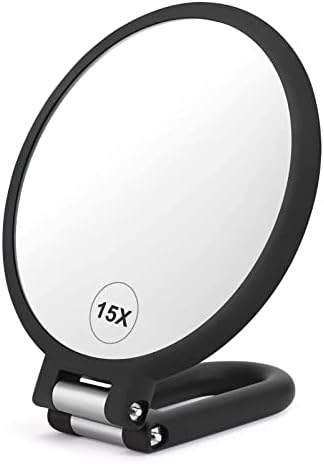
Teaching toddlers is like looking at myself in one of those magnified concave mirrors; every flaw–every insecurity–every mark I’ve ever tried to “conceal” becomes glaringly obvious.

It’s almost as if they possess this superhuman capability of detecting bullsh*t. With them, there is no “faking it”. Try as we may, we cannot fool these tactful tots. They just know. I don’t know how. I don’t know why–but, they just DO.

My toddlers have a peculiar and oddly reliable way of measuring our genuineness. Long before I utter a single word, they have already picked up on my energetic field. If I’m stressed, they know. If I’m happy, they know. If I’m in a “NOT TODAY” mood–they know.

It’s eerie.

So…..-drum-roll-

My first suggestion when interacting with this age group has nothing to do with them. It has to do with YOU.

Suggestion #1- Never EVER try to be anyone other than YOURSELF.

It is too easy and albeit natural to take on the “act” of being the “reasonable adult.” We want them to think we have it all together. In fact, sometimes, we get so stuck in this stoic facade that we forsake and ignore our true feelings.

Much like politicians, we become so focused on being diplomatic and societally “correct” that we forget to be human.

Because it is so important, let me reiterate this once more–

We CANNOT teach humans if we cannot own our own humanity.

And being human means we make mistakes–a lot of them.

Humans are not created to be sterile, or robotic; we are relational beings. We thrive off connection and a sense of belonging. As a result, we possess a wide variety of emotions. Human beings have the ability to feel sadness, joy, anger, love, jealousy, fear, excitement and so much more.

It is easy to own the lighter, happier emotions. But, what about the ones that can feel overwhelming? What about stress? What about anger?

It’s ironic because when I’m especially stressed, I tend to CLING even more to that “persona” of an “adult” who has everything “under control”. But… it’s a facade.

You know that.

And they know too.

Underneath my “cool and collected” front lies a torrential HURRICANE of panic, doubt, anxiety, and uncertainty.

And they feel it (sometimes, long before I do).

This leads me to my first (and most grave) error.

The biggest mistake I’ve made as a pre-school teacher is not sharing my “true self” with my students.

And honestly, in retrospect, I feel so silly about it. I wasted ample energy trying to conceal my more “difficult” emotions. As a result of my not expressing my true feelings, my classroom fell into a vicious negative feedback loop.

The more stressed I felt, the more my students acted out. The more my students acted out, the harder I tried to maintain the illusion of being an “unshakeable adult.” Despite how calmly I spoke, or how much I lowered my voice, my students picked up on the menacing angst brewing within me–

every. single. time.

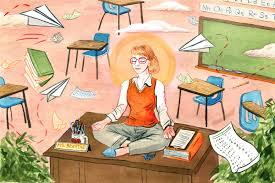
I felt like this lady all day, every day.

It’s honestly annoying.

They can sense FAKENESS from MILES away!


The truth is–they don’t need a”made-up” person who has it all under control. They didn’t need the teacher that I was desperately trying to be.

What my toddlers needed all along was…ME.

They craved to connect with the real ME.

Kids, at this age, NEED an adult to express difficult emotions such as anger, sadness, and anxiety. They want us to identify our feelings, own them, say them out loud, and normalize them.

When we express our emotions to them, we are helping them to make sense of their own jumbled-up feelings. Communicating “big” emotions such as anger and anxiety helps us demonstrate adaptive ways of handling them. In those moments, we show (not tell) them how to effectively handle overwhelming emotions. We model how to handle conflict.

They watch how we respond to our own feelings. That is where true learning happens.


The goal, I found, is not to be an adult who shows little to no emotion.

The goal is to become more mindful of our own emotions so that we can express them in a healthy way. By doing that, we create opportunities for children to learn how to handle their own feelings in an appropriate manner.

We can’t tell them how to do it. We must show them how to do it.

And it has to be genuine.

I learned this the hard way.

I tried arduously to keep up the “facade”, but one day, I broke. I could no longer remain “calm” and “serene” in a classroom full of running toddlers who refused to listen. They were throwing toys, grabbing one another, jumping off chairs, and ripping up activities that I had planned for them. I wasn’t okay with that. In fact, I was NEVER okay with that. So what changed?

That day, though, one major thing happened:

I SHOWED them I wasn’t okay with it.

“EXCUSE ME!” I yelled, “SIT DOWN, RIGHT NOW!”

Most of the class came to a screeching halt. They had not heard me yell or lose my cool before.

“ENOUGH!” I said, “WE are ALL DONE!

“no more,” I whispered.

Of course, I had the few that thought I didn’t mean what I was saying. So, I, physically, walked over to them, held their hands, and gently led them back to their seats.

When everyone was sitting, I took a few deep breaths in and out. I took my time to cool down. I let them see me inhale, and exhale loudly. As I stood in front of the class, there was utter silence. All eyes were glued to me.

When I finally spoke again, I lowered my voice so much that they struggled to hear what I was saying.

“Ms. Abid comes in here every SINGLE day–excited to see all of you,” I whispered.

“It makes me so angry and sad when you all do not listen to what I am saying.”

“It makes me think that you don’t like having me as your teacher.”

As expected, students quickly jumped into reaffirm me: “That’s not true.” “Look, Ms. Abid! I’m listening.” “I’m sitting down!”

I gave them the opportunity to express their feelings, and only proceeded to speak when they were all silent again.

“I hate yelling at you all. It doesn’t make me feel good,” I told them. And, I honestly meant it.

“BUT”, I emphasized, “if you continue to act like this, I will NOT tolerate it.” And this time, I honestly meant it.

For the first time ever, I felt like they all heard me.

“Do you understand?” I asked my class.

They all nodded.

“Are you SURE?” I inquired, one more time.

They all nodded.

I spent the next few minutes walking around the classroom, approaching each student, and kneeling down to their level. I gently touched their arm or shoulder to get their attention. When I saw them sustain direct eye contact, I asked each, and every student to rephrase what I had just said in their own words.

And they did.


I wish I could say that everything changed that day– that I had no more problems with students acting out and everyone lived happily ever after.

But, that’s unrealistic.

It’s even more unrealistic when working with toddlers.

What I CAN say, however, is that I have RARELY found myself yelling after that day.

My expression of anger certainly got their attention, however, I can’t say that it was what kept their attention.

I attribute their increased listening ability to my letting them see me for who I am. This single change allowed numerous opportunities for my students to connect with me. As people, we cannot connect with an “illusions.”

Every day after that dreaded day, I made it a point to show up as myself—just as myself—a fallible human who is trying to learn them just as much as they are trying to learn me.

The BEST thing I did was I dropped the facade.

When my students stressed me out, I told them. When they did something to make me happy, I told them. When I felt sick or drained, I told them. When I felt dissatisfied or disappointed with their actions, I told them.

My genuine communication has been the precursor to building strong relationships with each one of my kids.

What I’ve learned is…

Taking ownership of ALL of our emotions is the bravest thing we can do—

For ourselves, AND for our children.

When we forbid ourselves to feel and express complicated emotions, we take away the chance to successfully show our little friends how to REGULATE their feelings.


So much has changed since the day of my “outburst.”

Nowadays, if you were to walk into my classroom, you would find it to be far more lighthearted.

By letting them see me, I have allowed them to build authentic connections with me.

Connection is key; no one wants to learn from someone they cannot relate to.

These days, I don’t need to get so intense. When I see my students veering off expectations, I say things more sarcastically (yet, keeping firm)…

.”okay…ya’ll are doing too much now.”

“_________(student name), you’re being a little too extra today.”

“Dear lord, yall are stressin’ me out…I’m no fun to be around when I’m stressed.”

“Whoa! We have a lot of energy today! Would you like to go outside before we do circle time?” Giving them options has been immensely helpful in reducing power struggles.

When all else fails, I flat out ask them, “are you acting out because you want my attention?”, and you’d be surprised at how many times they answer “yes.”

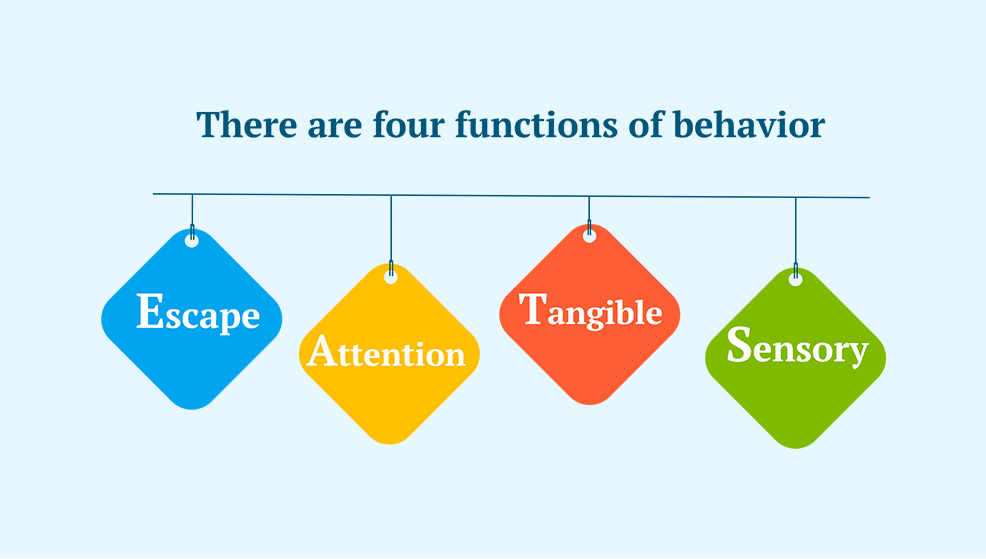
The thing is…all behavior is communication.

Being a teacher is all about getting more skilled at deciphering their behavior.

Getting to know each of my students has not only helped the classroom environment become less stressful, but also made it so much more fun…even for me!

Nowadays, I find myself dancing, singing, playing, building, and being silly with my kids. I get to celebrate their little victories and guide them through poor choices by offering them alternative solutions.

Most days, I would tell you that being a pre-K teacher is SO MUCH FUN!

And, if you have toddlers, you already know…if there is fun involved, our tiny humans will be the first ones there!

Stay tuned for more.

Love you, all ways, always.

Ms. Abid

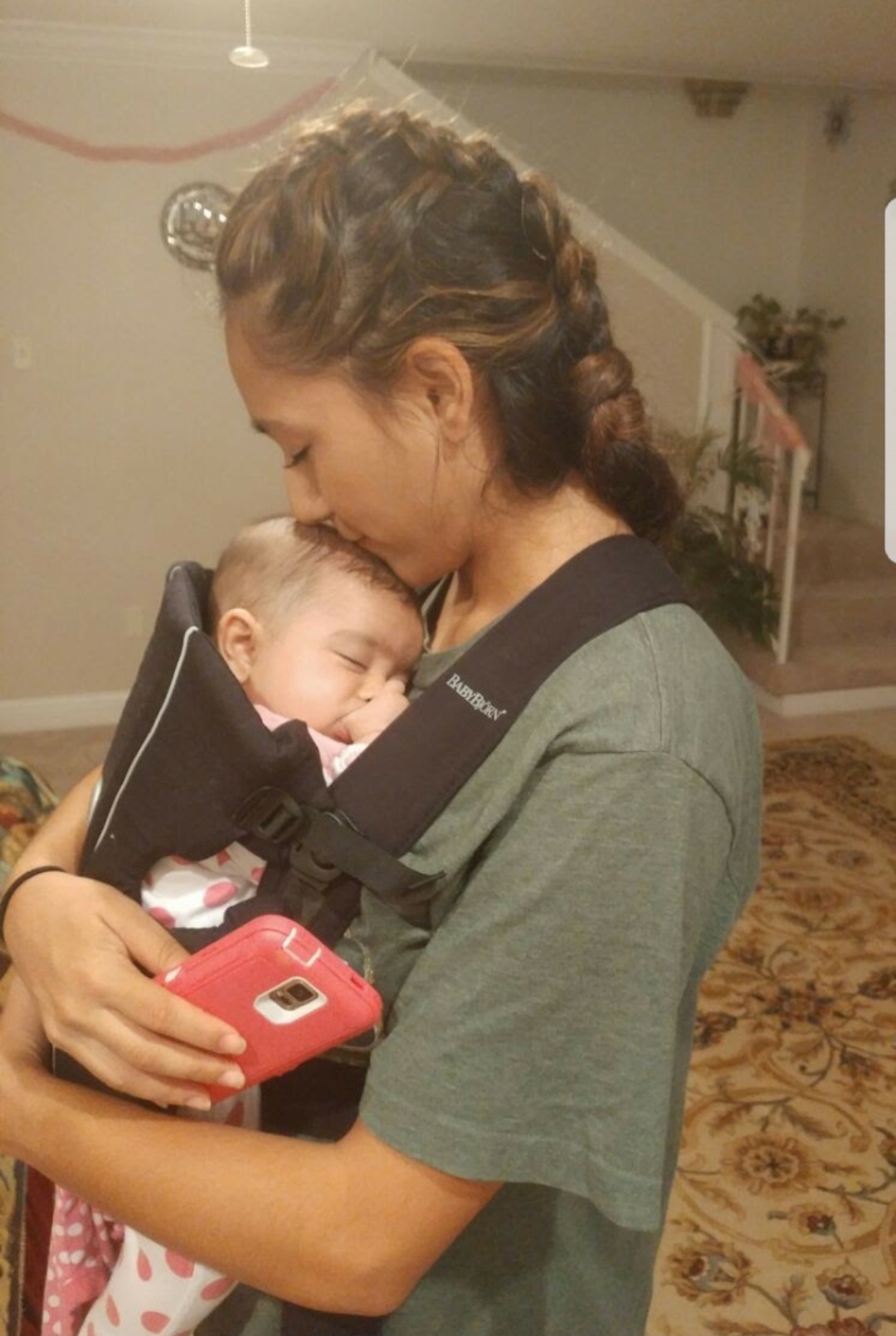
Ayrah Noor

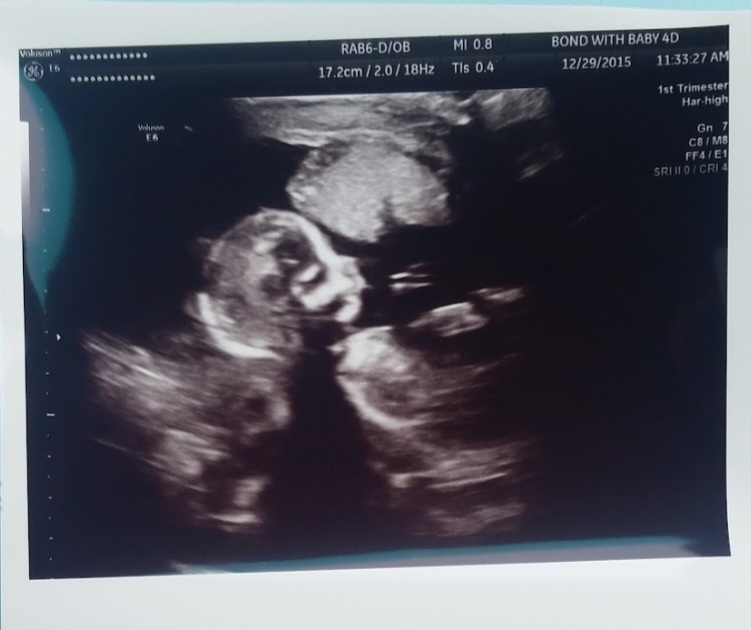
The day I first heard your heart beat,

I knew there would be no one that could ever compete…

“Childbirth”, they say, is the only blind date—

–which does not leave its results up to fate.

It’s guaranteed that, in the end, you’ll meet your one true love…

I concur; you’re my most cherished blessing from above!

Before you arrived, my life felt utterly incomplete—

Relishing you has certainly been God’s most delightful treat.

I know “happy tears” aren’t something you’ve felt quite yet…

Just believe when they come, they will put all your fears to rest.

No words can capture what you mean to me—

When you entered this world, you set my caged heart free;

And all of a sudden, my withering world came alive…

Where I once stumbled in the dark, I now only see light.

You truly have been my ray of sunshine…

The love I feel for you is undoubtedly divine.

Our love story is like the tale of the moon and the sun.

Though rarely together, they always await the other one.

I may not be there to watch each time your rise—

But remember that I’m loving you from right across the skies.

If there ever comes a day you feel misunderstood or alone,

Listen closely—and you’ll find my heart beating alongside your own.

And when God decides my work on Earth is finally done—

You MUST stay strong and fight on, my sweet little one.

Never lose sight of the fact that you are MY sun.

Rejoice! Because your reign has only begun.

So, release me in peace, when it’s finally my time.

Do not lose heart as I’ll be leaving you with mine.

Continue  to care for our hearts as I had carefully done,

Because, then, you’ll have two, and I’ll have none.

Love you, all ways, always…

🅜🅐🅗🅐🅜 🅐🅑🅘🅓

Why did the Moon go to therapy?

Because it was feeling a little LUNAtic!

HELLO my beautiful readers,

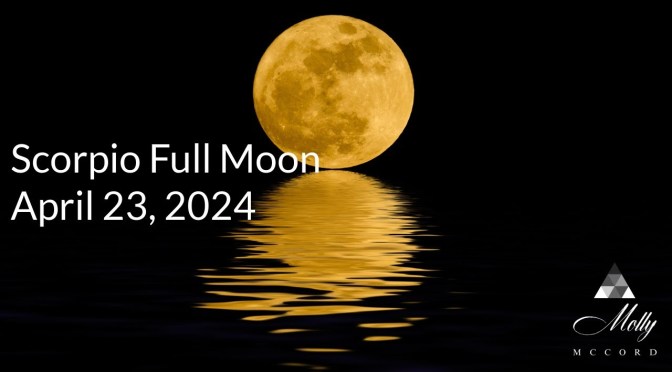
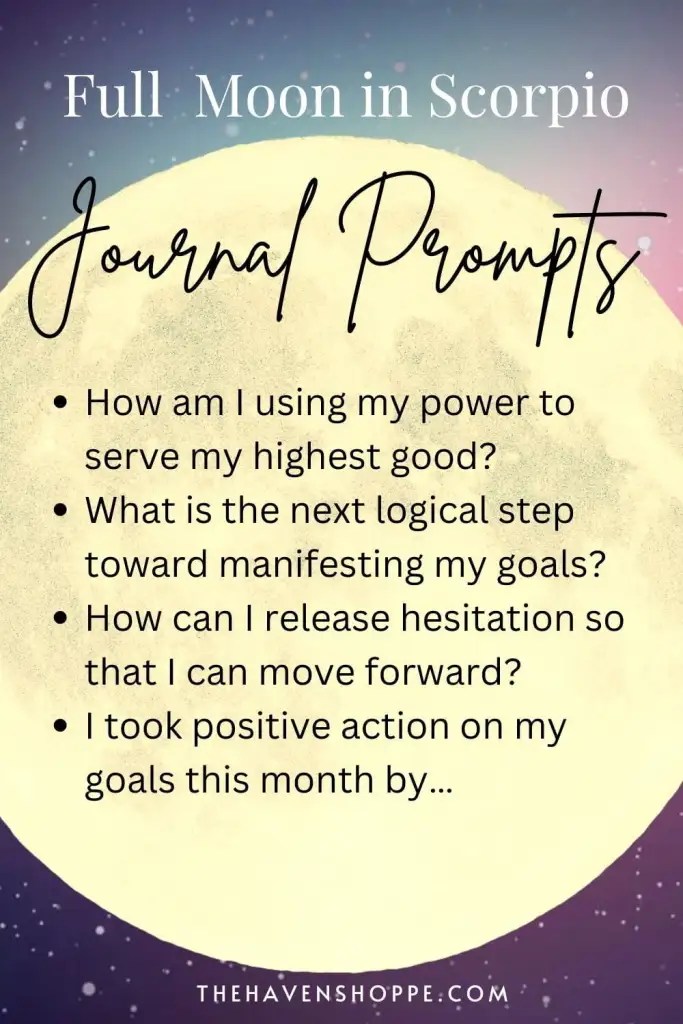
First and foremost, happy full moon in Scorpio! Yes it’s happening today!

April’s full moon rises on April 23 at 7:49 p.m. ET; it will stay true to its full shape for three days.

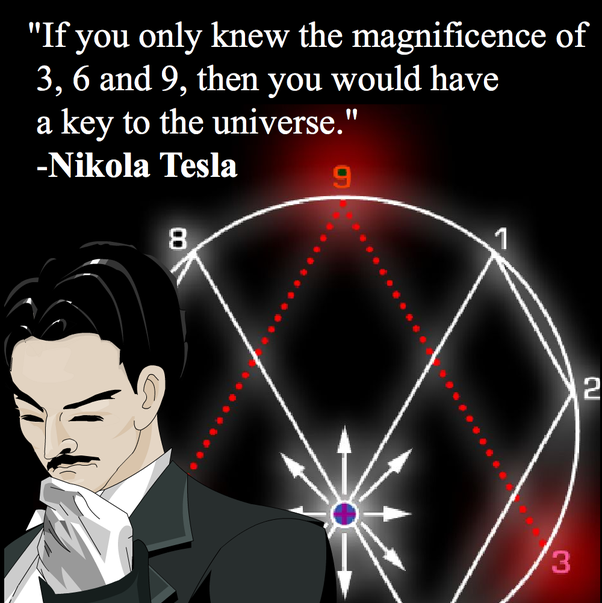
For those of you who are familiar with the significance of 3-6-9, take note of the fact that the full moon will reign the skies for three days.

Full moons have a tendency to illuminate the darker aspects of our selves that we usually tend to ignore. They are commonly associated with overwhelming feelings of upheaval, change and transformation. This full moon in Scorpio is no different; in fact, it is probably going to feel even MORE “heavy” for those of us who tend to be energetically sensitive; Scorpio full moons are especially known for their fervor and intensity.

Therefore, it is reasonable to expect heightened emotions during this time. My first suggestion is to please be gentle with yourself. It can feel disconcerting to lean into these amplified “darker” feelings; but, try not to be fearful of the shadows that emerge underneath this full moon. Offer yourself an overwhelming amount of compassion and grace as we all move through this astrological shift.

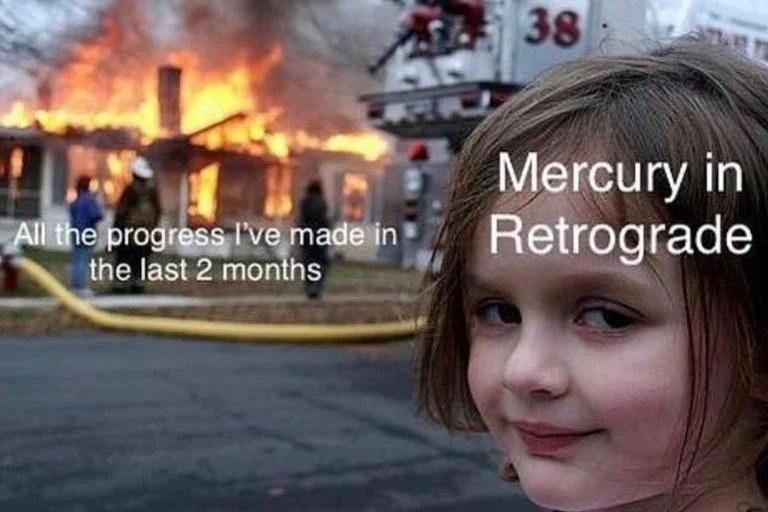
My second suggestion is to really allow yourself to FEEL the depth, height and width of your experience; immerse yourself wholly while challenging yourself not to REACT in spite of the discomfort. I’d like to remind us all that we are still amidst a Mercury retrograde in Aries that will wrap up on April 25th.

For those of you who aren’t familiar with the effects of Mercury retrogrades, I encourage you to do your own research in an attempt to tease out where your life may be affected. In general, retrogrades are associated with confusion, delays, and miscommunication. During these times, people are warned to NOT make any major life decisions or changes. Important decisions should be delayed till our deepest selves feel more astrologically aligned; that is because mercury retrogrades are linked to a jarring disruption in logic, rationality and effective interpersonal communication.

So what does this all mean for us?

It is wise to expect a proclivity towards impulsive outbursts, emotional upheavals and sudden changes of the mind and heart. If the combination of a mercury retrograde and full moon in Scorpio aren’t overwhelming enough, the fact that this full moon squares itself in Pluto makes it all the more engulfing. Pluto is the planetary ruler of Scorpio so the darker motifs associated with this scorpion moon are even more amplified.

Pluto aims to shatter existing constructs only to rebuild them in a way that is more conducive to our life path. The parts that feel really “bad” can be attributed to Pluto’s aggressive nature of intervention; shifts in Pluto are usually sudden, and piercing; They often leave us feeling like we are out of control.

Please remember though, this is all temporary; we are in the middle of a transition. In the moment, it may feel like things are “falling apart”, and that is okay. If we stay grounded, and practice patience, most of us will find that things are are actually coming together. The Universe is simply deconstructing unhelpful parts of our lives that are no longer serving us; in time, we will witness these constructs reassembled in a way that feels more congruent & aligned with our Highest Selves.

To reap the benefits of this transformative shift, we must refrain from reactivity; we must think (A LOT MORE than we usually do) before we act. Some would say inaction may be the best path for now. There is a time for potential growth and a time for kinetic growth. This full moon in Scorpio is definitely one that focuses more on increasing our potential energy. This feels like intense feelings brewing within–almost as if our psyches are in a pressure cooker. Oftentimes, panic and fear resurface–urging us to ACT, right then and there–just so we can reduce the discomfort in the “here and now”.

However, this is not the time to move or act. This is the time to let ourselves be moved by the Universe’s actions; it is about sitting back, and allowing the discordant sensations to move within us. It’s about tolerating stressful emotions without reacting impulsively.

Yes, the Universe is kind and loving, but ultimately our experience of its “goodness” is limited by how much space we create for it inside of ourselves. Oftentimes, we unknowingly keep parts of the Universe “out” because we WANT to portray ourselves in the best light; we do not want to uncover the darker, primal parts of our selves, and that is okay. It is completely natural for human beings to avoid painful realizations about themselves.

However, this does cause a “blindness” of sorts because “we” tend to recall memories & events in a way that makes us the “good guy”, freeing us of culpability. It is human nature to deflect blame on everyone else and anything else. It takes courage and time before we can acknowledge the “miniscule”, very “tiny” role we may have played in a destructive situation. The Universe, however, does not have a bias. It sees us for exactly what and who we are. It know all parts of us–even the ones we try to so desperately to repress. The cosmos never fails to rectify the skewed narratives we tell ourselves; It is not afraid to illuminate the parts of our stories that blind us to our own accountability.

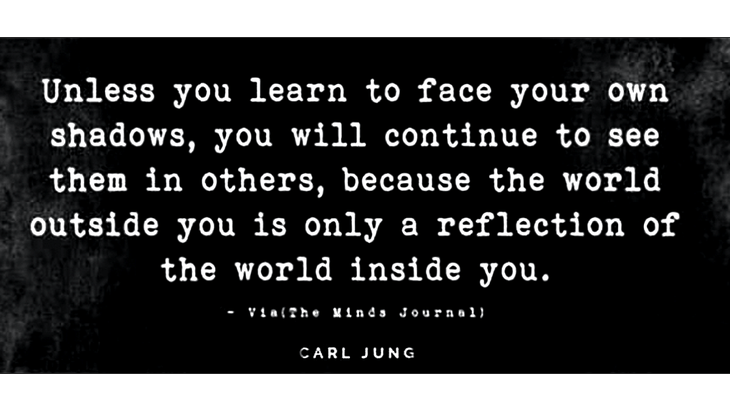
At this full moon, lean into the darker aspects of yourself; become willing and open to see those parts of you that haunt you–the parts of yourself that you fear, despise or want to damage. Try and LOOK at the obsessive patterns that keep manifesting the same undesired outcomes in your life.

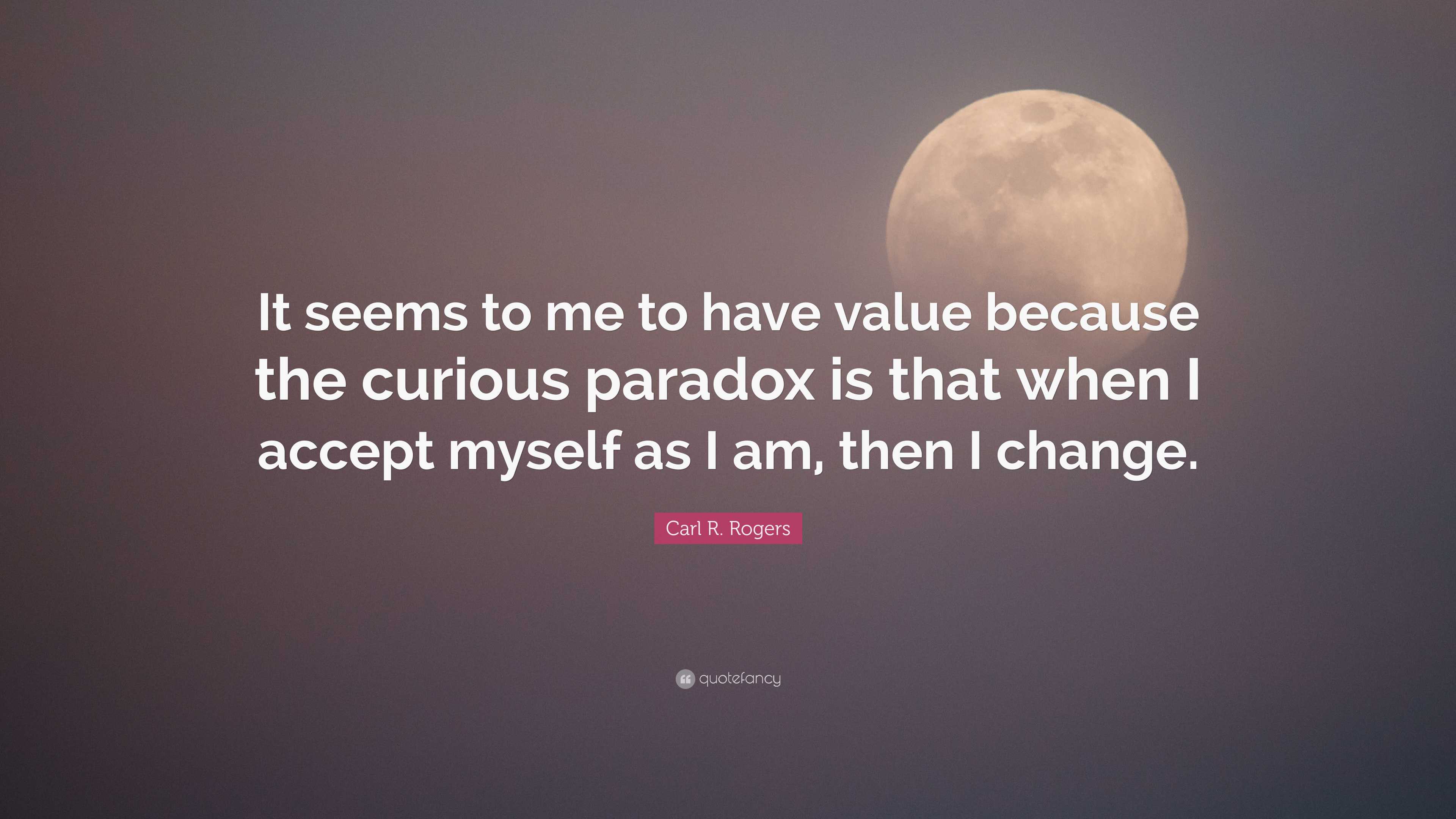
Avoid shame, and blame because both cripple us from objectively analyzing ourselves. This very introspection is what will ultimately help remove blocks to our growth. As Carl Rogers eloquently stated: “The curious paradox is that when I accept myself, just as I am, only, then I can change.”

Practice radical acceptance of all parts of yourself. Foster forgiveness for the parts that are not fully in alignment with your highest self. No matter the compulsion to do harm, practice non-maleficence. Let the darkness pass through, reminding yourself with each breath, that this is only temporary. All feelings are energetic “waves” that flow through us as if we are a medium. No emotion is there to take permanent residence.

So in the phase of this full moon, I dare you to endure the heavy emotional fog without trying to escape it.

Because you can.

You were genetically engineered to survive.

Let the Universe reveal to you where work needs to be done. Remain teachable. You don’t know it all. Instead of resisting it this time, I encourage you to join the Universe in this emotional journey. Walk with It–let it illuminate parts of you that have become estranged. What’s the worst that can happen? It’s just pain. You’ve experienced it a million times before.

Let’s allow this new moon in Scorpio to push us into the pilgrimage of processing, and purging our shadows so that we can contribute to creating a more loving, evolved world.

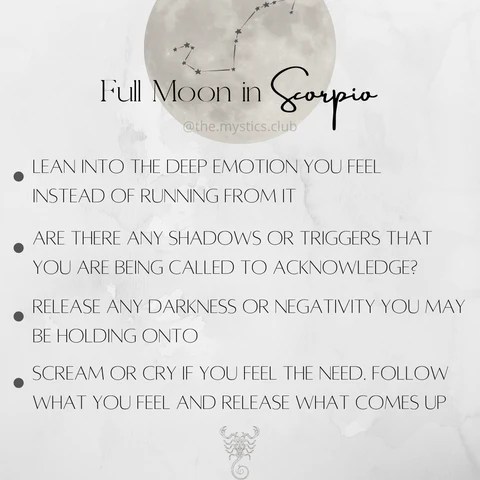
I encourage all of you to reflect on the following prompts!

Love you, all ways, always

Returning to Myself (Part II)


If you have found yourself stumbling on my blog, the first thing I want you to know is that I have no idea what I’m doing. The second thing I want to share with you, in an attempt to tease out my own narrative from others, is MY story.

After almost 3 decades of dissociation, I am exhausted.

It’s not a matter of whether or not I want to be the “bubbly, outgoing” Mrs. Sunshine anymore.

Because trust me, I do

—that “facet” of me is far more…personable. It’s more cheerful & loveable.

The problem is that no matter how hard I try, I simply CANNOT maintain it any longer.  I have lost my ability to dissociate.

I have been “too strong” for “too long”.

It’s ironic, though, because I’ve never felt weaker.

My “functionality” if measured by productivity and performance has plummeted severely, and yet–mental health professionals seem to agree that this is the “best” I’ve been doing in decades.

Why?

Because after decades, I have started to FEEL again.

“In my 40 years of practice,” an esteemed psychiatrist stated, “your case is one of the most compelling and confounding cases I’ve encountered.”

“With the intensity and frequency of traumas that you have experienced, I would expect you to be curled up in a mental health facility for life—probably, on the verge of psychosis.”  

To them, “these darker components” of me are completely congruent with the horrific experiences I’ve gone through.

The problem, they declare IS the façade.

That ditzy, bubbly, “happy-go-lucky” persona does not accurately reflect the life I’ve lived; It does not reveal the struggles I face or do justice in celebrating the adversities I’ve overcome.

For so long, I viewed my ability to get everything “done” in a tormenting environment as my greatest strength. Being able to “detach myself from my feelings” has been the key to all my successes.

Or so I thought.

When we cut ourselves off from our “feelings”, we aren’t just blocking out the negative emotions; We, inadvertently, also lock our hearts from experiencing joy, intimacy, love, and connection.

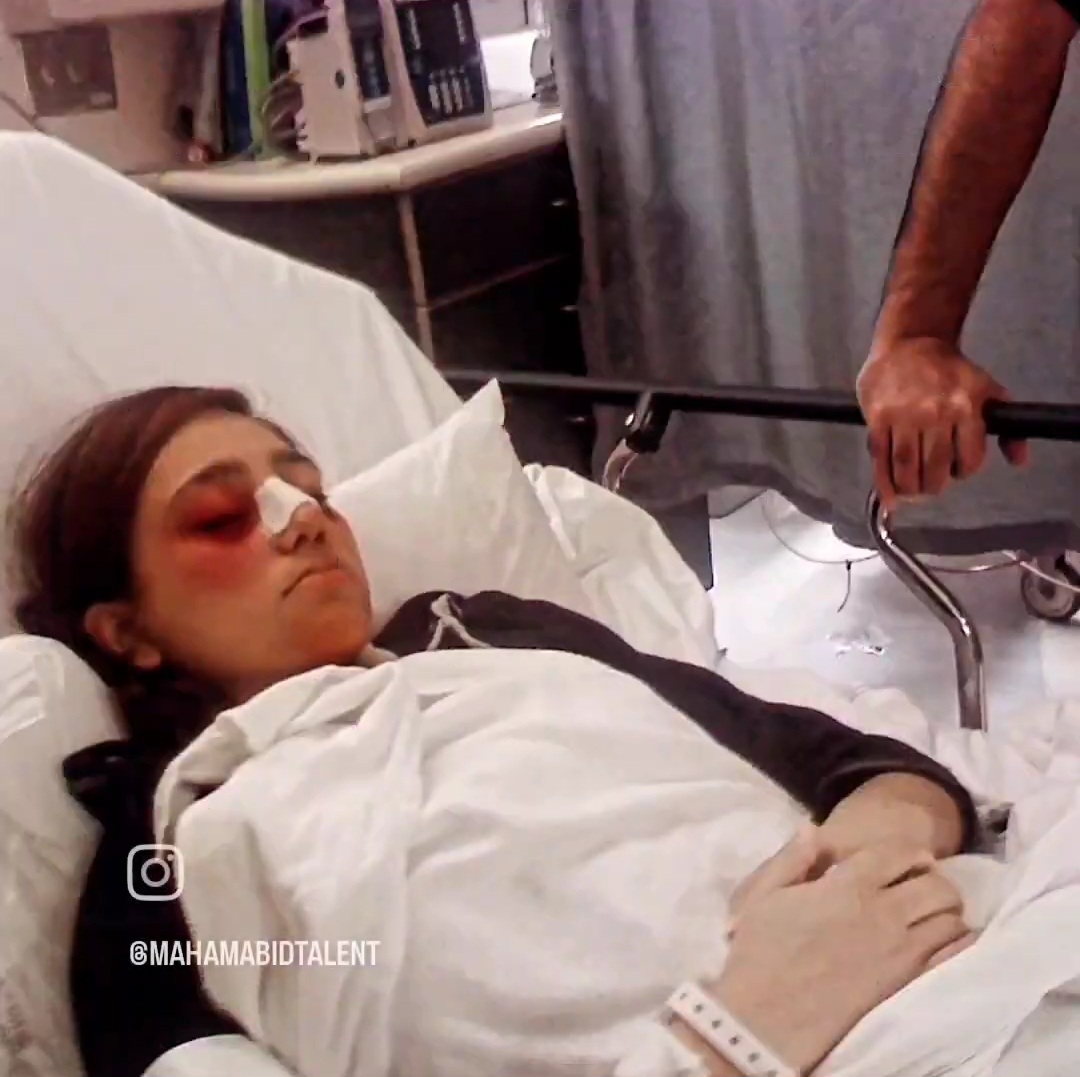
It isn’t normal to get beaten brutally at 5 am, letting myself cry for about 5 minutes, and then forcing myself to shut down and “get my sh*t together”.

I remember walking to the library in the early hours of the morning, completely numb–absolutely oblivious to what had just happened. I studied for a few hours—only to arrive at my 8 am organic chemistry class to ace exam after exam.

It’s as nothing even happened. I didn’t feel pain. I didn’t feel sad. I didn’t feel at all.

I remember noticing the odd glances, the hushed whispers, and the puzzled expressions of my classmates, as I pranced into the auditorium covered in bruises.

At the time, I thought there was something wrong with everyone else. Why were they staring at me?

The day of my final exam was no different. I walked in at 8 am; I recall my professor pulling me aside; I remember studying him curiously as he tried not to glare at the blue-black bruises that were now forming around my eye sockets.

He empathically offered to arrange for me to take the exam another day, however, just like every other time, I resisted his offer. Instead, I marched vehemently to my seat to ace the exam.

& I did. I graduated with summa cum laude; what i didn’t realize was that the cost of those “perfect 4.0’s” would eventually catch up to me.

You see…my professor had seen me throughout the year, pulling off these dissociative stunts nearly every week.

& as the semester continued, his growing suspicions became more and more plausible. It is saddening now as I think about it–

— because I know that he “knew” what was going on. His hands were tied because I denied everything.

Every week, it was a new excuse, “oh I ran into a blunt tree branch because I wasn’t looking”, “I accidentally fell and hit my cheekbones against the console”, “Besides, I have anemia and tend to bruise really easily..”

“It’s really nothing” I said over and over again–until I accidentally started believing it.

In retrospect, I think ANYONE with half a brain probably “knew” what was going on at the time.

The problem was that I had shunned that “half of MY brain” deep into ignorant oblivion.

Recently…I’ve realized I’m doing something similar again.

I’ve been utilizing my social media platforms as a way to convince MYSELF that I’m “okay”.

Maybe if I just manufacture a life that FEELS good on Instagram, I might feel “okay”….

However, the truth is… I am not okay.

I don’t think I’ve ever experienced what “okay” actually feels like…

 I haven’t been even close to being “okay” for the last 7 months.

 I haven’t driven my car in 7 months because I’m terrified.

I haven’t gone to a single modeling shoot in 7 months.

I haven’t applied to a single casting call in 7 months.

I’ve barely left the house for 7 months.

I haven’t hung out with anyone I consider a friend for 7 months.

I’ve finally crashed.

What I HAVE done in the last 7 months is hide behind my phone –

I’ve wasted countless hours laboring over Instagram algorithms, hashtags, and engagement strategies in an attempt to gain external validation from all of you because I loathe myself.

I dove headfirst into trying to portray a life that “looked good” on the surface because, in my heart of hearts, I felt so hopeless, sad, and repulsed by myself.

— but what I’ve noticed is…

…the more adamant I become about my attempts to “fake it”, the more drained, lost, and depleted I feel at the end of the day.   

And the vicious cycle of distracting myself from the self-hatred goes on and on.

The truth is…

that through social media, I was being inauthentic with myself…with God…and with all of you.

& it’s ironic because in my heart of hearts, I truly believe that connection and community are byproducts of authenticity and vulnerability—two things I am fatally afraid of actually practicing.

Despite how much I crave connection and belonging, I haven’t allowed myself to be vulnerable or authentic—in a very long time.

In my adolescent days, when I did practice vulnerability–when I did truly let someone in— I nearly lost my life to their abuse.

However, advanced medicine and meticulously trained doctors helped revive & restore my physical body to health.

But who do you go to help you revive your soul? How do you restore someone’s sense of safety in the world after it’s been taken away?

The truth is…I had stopped “living” long before my heart ever gave out.

I don’t know where to begin my story.

I haven’t come up with a strategy to tell it. There is no rhyme or reason.

& for the first time, there are no angles.

I don’t even know if sharing the ENTIRETY of all the horrific details surrounding these incidents is even helpful to me or you.  

I don’t want to trigger you or re-traumatize me.

& these blog posts take a lot out of me.

Honestly, I don’t know much at all right now.

What I DO know is—I have to start somewhere.

I have to start— because I want to live.

I want to connect.

I want to move and be moved by people.

I want to feel like I’m worthy enough to take space in this world.

I want to feel like I’m worthy of being Ayrah’s mother.

I know that I eventually want to use my experiences to help elucidate the hope, resilience, and relentless will to survive that lies dormant within each of us.

How curious it is that the words of a stranger online—some that I’ve never even met—help to feel more understood than some of my closest confidantes.

I posted, authentically, for the first time on Instagram a few days ago—

& the responses I received from you all—your messages glowing with genuine care—

I cant disregard or downplay how much they meant to me.

They bring me to tears even now.

How is it that mere acquaintances and even strangers can communicate such a piercingly deep empathy for another?

And what’s more confounding is that they can do it over an impersonal digital platform.

What a puzzling and powerful world we live in…

So…for those of you who are willing to walk alongside me in this journey…

Please know that it is going to be the furthest thing from perfect; In fact, it’s probably going to be a very messy ride.

I wanted to thank YOU

For caring. For existing. For reaching out.

–for helping me get to a point where I am willing to myself be seen.

If there is one thing I want to make abundantly clear through my blog, it’s this—

The EFFECT that even ONE person, like you, can have on another’s life is immeasurable.

Your responses led me to question the unchallenged abusive & demeaning narratives I’ve been repeating to myself for years.

Because…

WHAT IF those people were wrong?

What if I do share myself openly with you—with the world—and I discover that I AM actually worthy of love and belonging?

What if I hush the voices that tell me that I will be rejected, ostracized, and ridiculed again just long enough to be seen for who I am?

Even though, this may be the scariest endeavor of my life—

What if, to my surprise, I find that the world loves me back just as deeply as I love it?

What if all the “sunshine” I’ve tried to sprinkle in the lives of so many is finally returned to me?

What if I’m not a waste of space? Or a burden to this earth?

What if I’m not “damaged goods” that no one will want after being raped?

And the biggest “What if?”

What if there ISN’T anything inherently wrong with me?

Or even better—

What if there is SO much wrong with me…

— & yet still, I am met with acceptance & love despite my numerous imperfections.

Here is to having enough courage to wonder….

What if…?