Tag Archives: hope

One Sentence, No Bouquets

Last time, I wrote about the tiny oks.

The small replies that told me connection had not disappeared entirely. The quiet evidence that even after rupture, love still had somewhere to land.

I called them hope.

I still believe that.

But repair has layers.

Sometimes repair is a tiny “ok”.

Sometimes it is an apology.

And sometimes, before an apology can become honest, we have to learn the difference between taking responsibility and disappearing.

Which, honestly, is deeply inconvenient, because disappearing has historically been one of my more efficient skill sets >__<

Not healthy.

But efficient.

For a long time, apology felt less like accountability and more like an emergency evacuation.

I am sorry.
Please do not leave.
I am sorry.
Please stop being angry.
I am sorry.
I will become whatever version of me makes this moment end.

Trauma can teach us to confuse apology with safety.

It can teach us that the fastest way back into connection is to absorb the entire rupture — to become the mistake, the hurt, and the solution all at once.

So we apologize quickly.

Beautifully, even.

We explain ourselves with trembling precision. We search the other person’s face for evidence that the danger has passed. We offer context, remorse, reassurance, and sometimes far more of ourselves than the moment asked us to give.

Some of us do not arrive with an apology.

We arrive with a full floral arrangement.

A tasteful one, obviously. 💐

Every flower carefully selected to prove that we are good, sorry, harmless, lovable, self-aware, emotionally evolved, and safe to keep.

A very humble bouquet.

But an apology is not a bouquet.

It is not a performance of pain.

It is not a public relations campaign for our own goodness.

It is not self-erasure dressed as maturity.

And it is not the promise that I will never inconvenience another nervous system again.

Which is unfortunate, because that would be a very tempting contract to sign.

A real apology is quieter.

It says:

I see what happened.

I care about the impact.

I understand what belonged to me.

I want to become safer.

No bouquet required.

🕯️

I am learning that accountability can contain an “and.”

I am sorry, and I am still here.

You are allowed to be angry, and I do not have to abandon myself to survive your anger.

The “and” is where truth becomes large enough to hold more than one person at a time.

That sounds simple when I write it.

Alas, it does not always feel simple inside my body.

Recently, during a hard moment with my daughter, I felt the familiar pull to do too much.

To explain too quickly.

To soften every edge.

To make the discomfort disappear before either of us had understood what happened.

I wanted to repair immediately, but beneath that urgency was something less noble and more human:

I wanted relief.

I wanted the room to stop feeling difficult.

I wanted reassurance that I was still a “good mother” before I had fully listened to the child in front of me.

That is humbling to admit.

Rude, even.

But true.

So instead, I tried one sentence:

“You are allowed to be mad and I love you; we will talk when we are both in our calm bodies.”

It was not yet an apology.

It was not the full repair.

It was a boundary, a reassurance, and a pause.

It was me refusing to choose between connection and steadiness.

Later, when I could speak without trying to escape the feeling in the room, I apologized for what was mine.

Not for having a limit.

Not for needing time.

Not for being human.

But, for my tone.

For the way my overwhelm had entered the room before my words did.

For the part of the moment I could genuinely repair.

That distinction still feels new to me.

I can apologize for how I spoke and keep the boundary I was trying to communicate.

I can regret my impact and remain curious about what overwhelmed me.

I can say, “I was wrong,” without saying, “I am wrong.”

This is not an argument for partial accountability.

It is an argument for honest accountability.

The kind that changes behavior because it is rooted in truth, not panic.

The kind that asks:

  • What happened inside me?
  • What did the other person experience?
  • What belongs to me now?

Because if we aren’t careful, an apology can become another way to rush past rupture….and straight into the theatrics.

We say sorry. Everyone exhales.

The emotional smoke alarm quiets down. Whew.

And….then we rebuild the same moment again because no one stayed long enough to understand what made it possible.

Sometimes, the apology is the sentence.

Sometimes, I wonder if the deeper apology is what happens afterward.

The pause.

The changed pattern.

The willingness to notice sooner.

The refusal to make another person carry the full weight of what we have not yet learned how to hold.

But changed behavior cannot grow from self-hatred forever.

Eventually, shame becomes too small a room for transformation.

And, I have spent enough time trying to renovate that room.

🤍

I am still learning how to apologize without disappearing.

How to let another person have their hurt without making their hurt the final definition of “me”.

How to say:

I see what happened.
I care about the impact.
I will repair what is mine.
And I am still here.

That last sentence may be the hardest one.

I am still here.

Not hiding inside shame.

Not arranging an emotional bouquet large enough to earn my way back into love.

Not promising to become so careful, useful, or good that no one will ever feel pain near me again.

Just here.

Human.

Accountable.

Loved.

Learning.

For much of my life, I thought repair meant restoring everything to the way it was before the rupture.

Now I wonder whether real repair sometimes creates something entirely new.

A little more truth.

A little more room.

A relationship capable of staying present after something hard has happened.

Maybe that is why the tiny oks mattered so much.

They were not evidence that nothing had happened.

They were evidence that something could happen and connection could remain.

That rupture did not always have to become abandonment.

That love could be disappointed and still stay.

That accountability did not require annihilation.

And perhaps, after a lifetime of preparing for what might go wrong, that is how the nervous system first begins to consider another possibility:

What if something goes right?

What if love stays?

What if repair is not only the end of rupture, but the beginning of our capacity to receive?

One sentence.

No grand performance.

No bouquets.

Just enough room for hope to enter without being chased away.

Till next time

I Was Wrong

For the last few months, I have taken a deep plunge into healing. After years of therapy from all different modalities, I found very little difference. My life would be fine and “functional” for a few years, only to be followed by an inevitable crash. I’ve been through this cycle for most of teens and all of 20s. Each time, I picked myself back up only to white-knuckle my way through “functionality”–until, the inevitable crash.

For so long, these “crashes”—long periods of depression, psychosomatic symptoms, and lapses of complete dysfunction–seemed unrelated. I would excel in work, friendship, and relationships only to lose all of them. Time and time again, I felt dejected, humiliated and utterly worthless.

Why do I keep messing it up? What is wrong with me!?

In the aftermath, I sought out help–only to help me get back on my feet again and once I felt “ready” enough, I plunged in headfirst into work, relationships and life with even more resolve and stubbornness.

I can’t let him win. I can’t let trauma win. I HAVE to do it right, this time!

Yet, I couldn’t. I couldn’t do it in a sustainable manner.

For decades, I deluded myself into thinking that I could “white-knuckle” it through life. I danced between diagnoses, swapped out medications, changed therapists, implemented new strategies from the self-help book of the season; yet, every single intervention yielded minimal results.

This year, I was forced to face the lingering effects of unaddressed trauma; my body gave me no choice. The unprecedented seizures, fainting episodes, and gaping lapses of memory loss jilted me to my very core. I was desperate, in more ways than one. Some days, I was more scared of the seizures and syncope episodes; other days, I found myself begging God that they take my life.

I found myself in an impossible situation where I was equally scared of death and of life

It was this very predicament that finally brought me to the doorstep of surrender. I didn’t know what more to do; every willful intervention of mine had not worked. I didn’t want to die and I certainly was not living. I thought if I was just strong enough, stubborn enough, knowledgeable enough…I would be able to “beat it”. In my case, knowledge was not power. I went to school to get a masters degree in psychology; I studied the ins and outs of different modalities & dissected the interventions of esteemed theorists. As a counselor, I became adept in helping others navigate through their own hardship and grief–but I could do nothing for myself.

Knowledge, in my case, was my Achilles. It brought me hubris, and an unhelpful sense of intellectual arrogance. My training in counseling and psychology bred an avid resistance to be treated. I thought I knew better, so I refused the treatment prescribed for me by other mental health professionals.

But, knowing better doesn’t always lead to doing better.

There is a reason that mental health professionals and doctors cannot treat themselves or their loved ones. Sometimes, we are just too close to the subject. In my case, I was the subject and could do very little to help. There is a reason “blind spots” are called just that. We cannot pinpoint them using our own biased way of thinking.

The problem cannot be solved using the same mind creating it.

In June of this year, I finally got to a point where I could no longer tolerate the suffering. Now, I have come to realize that the suffering was being perpetuated by my relentless need to be in control.

We must let go of the need to control to gain it.

Five months ago, I begrudgingly started the process of EMDR. Despite years of others suggesting it for me, I resisted it at all costs–all because, I simply did not know how it would work. I had no faith in the process. How could moving my eyes a certain way help unpack layers of complex trauma? It honestly sounded laughable.

Yet, here we are.

I am no where close to being “healed”, but the beautiful paradox is that I’ve let go of the idea of being “healed.” It is no longer some faraway, unachievable destination that torments me; it is here, and now. Throughout the EMDR process, my healing has been anything but linear; it has ebbed and flowed with life itself, and there is infinite beauty in that. I no longer find myself fantasizing of a perfectly “healed Maham”; I no longer torture myself by comparing my “now” to that preconceived ideal.

My suffocating grip on the rigid definition of “healing” has loosened.

Day by day, I’m learning to experience myself as I am. And, dare I say, life would not be intolerable if I remain who I am today, for all of my days. The rigid parameters I placed around creating “a good life” are slowly dissolving. These days, progress seems far more promising than perfection; I find myself welcoming minor setbacks as necessary precursors to growth and “healing”.

I am starting to assess “healing” by my ability to tolerate feeling.

Bit by bit, I am starting to work through unspeakable pain. In doing so, I’m finding acquaintances in connection, love, and even ephemeral joy.

Nowadays, I find that even gratitude chooses to sit by me sometimes.

Thank God, I don’t have all the answers. Thank God, I don’t understand everything. Thank God for the realization that I never had to.

Thank God, I finally had the courage to be wrong.

— because of it, I’m finally being led to what feels right.

Chrysalis

By: Maham Abid

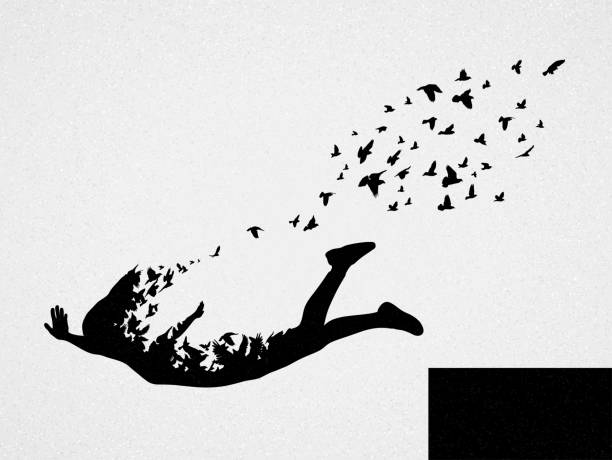
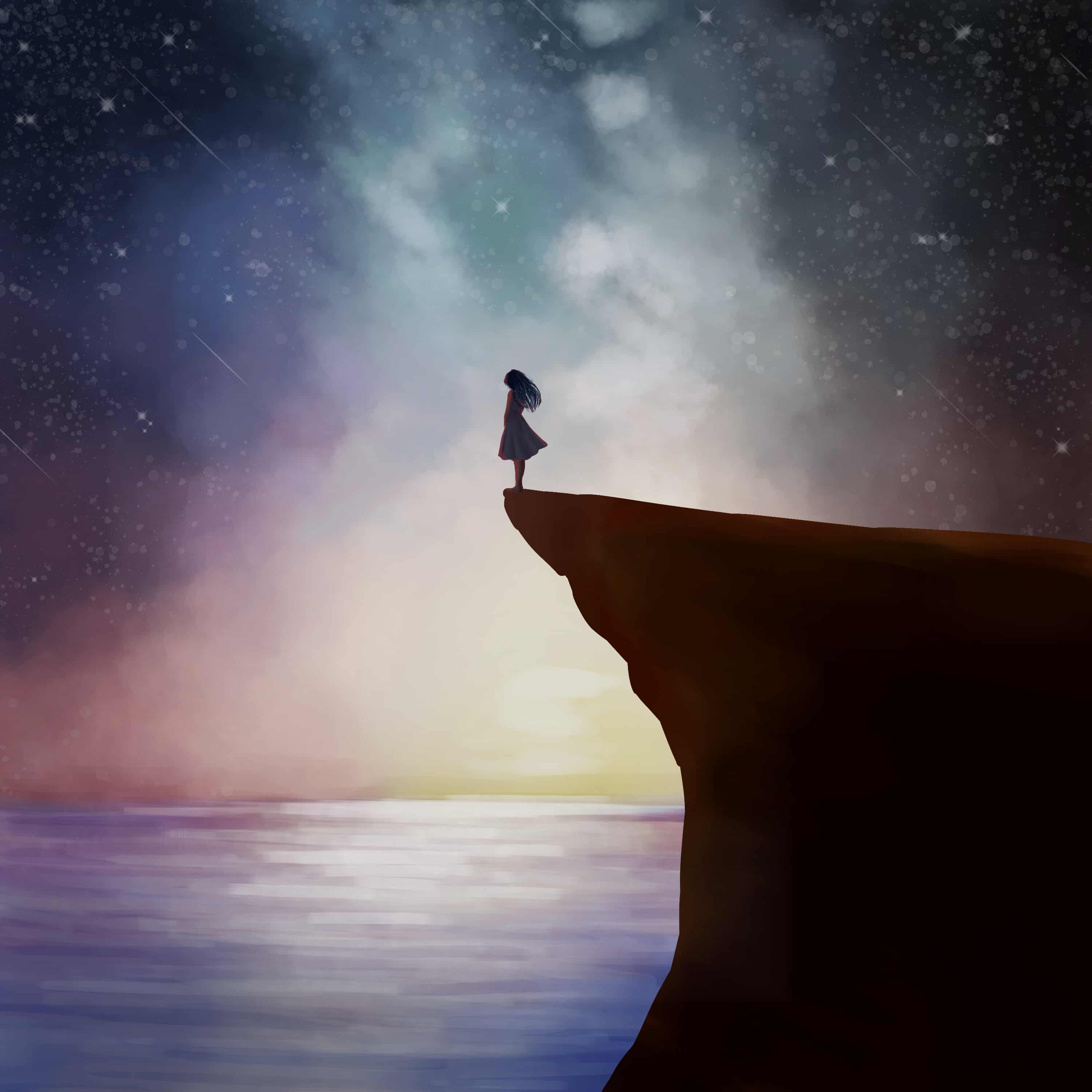
She stood near the edge- pretending to fall-

Imagining her landing- losing it all.

A “graceful flight” to death she’d take–

Maybe then, her soul would finally wake.

For years she’d floated away, anyway–

Pretending– barely making it, day-by-day.

She knew there was more–there HAD to be!

She romanticized descending ever so delicately.

Perhaps, she’d find her wings at last?

Would she fall slow? Would she fall fast?

Would it really take her breath away?

Should this, after all, be her final day?

Nothing to live for–nothing at all.

Reasons to give up, reasons to fall.

Inch-by-inch, she reached the end.

Her back formed an arch–a lovely bend.

She was not afraid in the least–

Her destination was awaiting her ominously beneath.

A rippling river, smoothing the rocks–

–wind whipping through her caramel locks.

She took a breath, and finally made her choice.

The air inhaled her quivering voice.

She stepped further and further–away from the ledge.

Never again–not THIS way, she pledged.

She collapsed in a heap on the cold, cracked ground.

Her sobbing and the river intermingled their synchronized sounds.

How had she gotten to her wits end?

I think, too many years of playing pretend…

“I’ve got you; you’re safe,” whispered a Voice in the night.

Comforting and warm–she knew it was right.

“I’ve wanted to talk and finally be heard.”

“Now is the time; here are the words.”

She listened intently, instead of wondering Who it was.

A fullness enveloped her with Love in each pause.

“You don’t have to hide; it is not your time to die.”

“I’m here with you, now, to lull and to guide.”

“Trust me and follow all that I say…”

“I promise to be beside you, forever and a day.”

The stars up above her twinkled brilliantly with delight.

Still as could be, she nestled into the Voice of the night.

“Are you an angel? Who are you?” she asked,

“Tell me! Are you God? Have I found You at last?”

This voice seemed closer– it came from within.

“You see, ” it smiled, “I am all of those things.”

“I am a friend, you could say– I am you in a Higher Form.”

“I’ll keep you safe and promise to keep you warm.”

“Just listen and feel, I’ll help you through…”

“Now you’ll know just what to do.”

“Tomorrow’s a new day–a second chance…”

“Now dry your tears; life is just a dazed dance.”

“I love you and know you love Me too.”

“…and now you know JUST what you have to do.”

Somehow, as vague as it was, the girl understood.

She would make it. There was no doubt; she really would!

No more dreams of dying and death–

–no more longing for her final breath.

She wasn’t alone–she never had been.

Its come time to live and throw caution to the wind!

________

Love you always, all ways.

IG: @mahamabidtalent

Returning to Myself (Part II)


If you have found yourself stumbling on my blog, the first thing I want you to know is that I have no idea what I’m doing. The second thing I want to share with you, in an attempt to tease out my own narrative from others, is MY story.

After almost 3 decades of dissociation, I am exhausted.

It’s not a matter of whether or not I want to be the “bubbly, outgoing” Mrs. Sunshine anymore.

Because trust me, I do

—that “facet” of me is far more…personable. It’s more cheerful & loveable.

The problem is that no matter how hard I try, I simply CANNOT maintain it any longer.  I have lost my ability to dissociate.

I have been “too strong” for “too long”.

It’s ironic, though, because I’ve never felt weaker.

My “functionality” if measured by productivity and performance has plummeted severely, and yet–mental health professionals seem to agree that this is the “best” I’ve been doing in decades.

Why?

Because after decades, I have started to FEEL again.

“In my 40 years of practice,” an esteemed psychiatrist stated, “your case is one of the most compelling and confounding cases I’ve encountered.”

“With the intensity and frequency of traumas that you have experienced, I would expect you to be curled up in a mental health facility for life—probably, on the verge of psychosis.”  

To them, “these darker components” of me are completely congruent with the horrific experiences I’ve gone through.

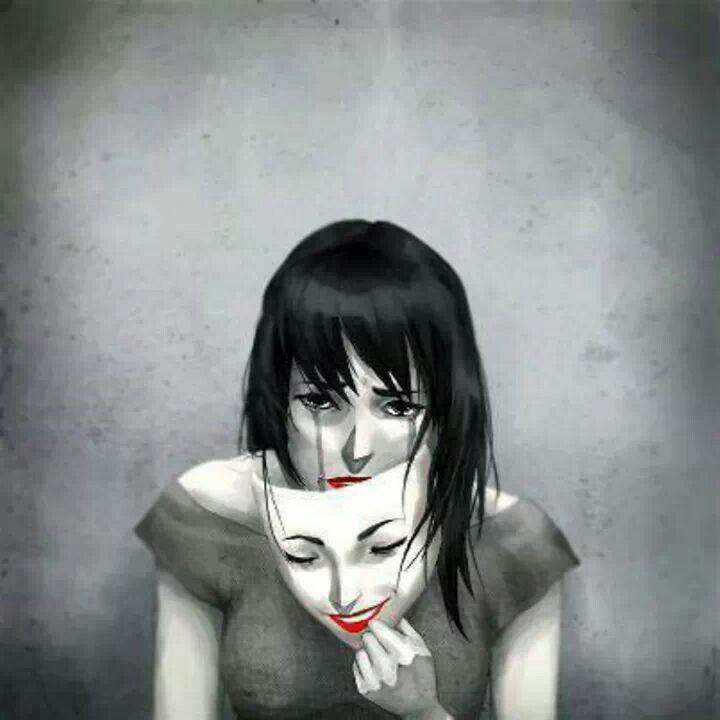
The problem, they declare IS the façade.

That ditzy, bubbly, “happy-go-lucky” persona does not accurately reflect the life I’ve lived; It does not reveal the struggles I face or do justice in celebrating the adversities I’ve overcome.

For so long, I viewed my ability to get everything “done” in a tormenting environment as my greatest strength. Being able to “detach myself from my feelings” has been the key to all my successes.

Or so I thought.

When we cut ourselves off from our “feelings”, we aren’t just blocking out the negative emotions; We, inadvertently, also lock our hearts from experiencing joy, intimacy, love, and connection.

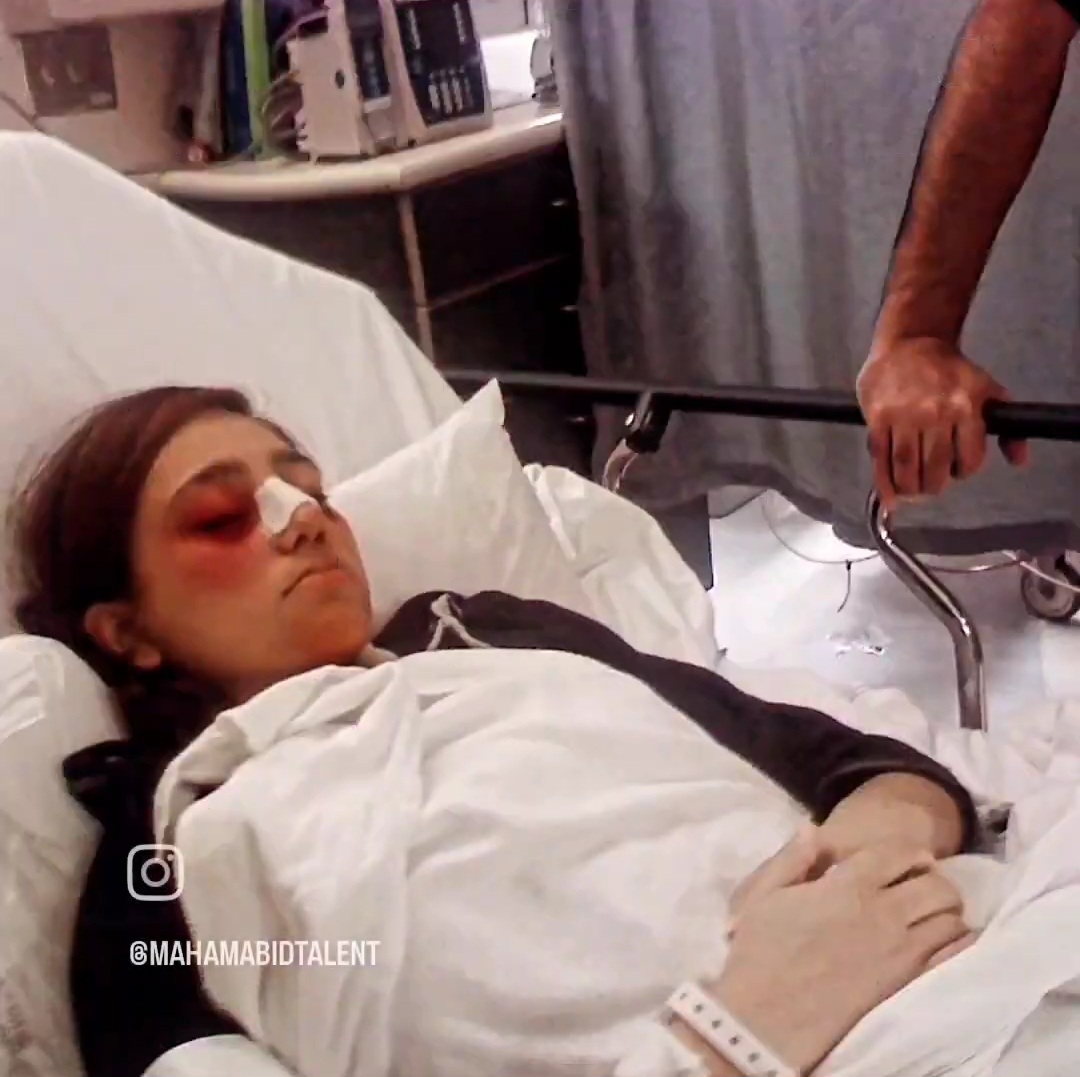
It isn’t normal to get beaten brutally at 5 am, letting myself cry for about 5 minutes, and then forcing myself to shut down and “get my sh*t together”.

I remember walking to the library in the early hours of the morning, completely numb–absolutely oblivious to what had just happened. I studied for a few hours—only to arrive at my 8 am organic chemistry class to ace exam after exam.

It’s as nothing even happened. I didn’t feel pain. I didn’t feel sad. I didn’t feel at all.

I remember noticing the odd glances, the hushed whispers, and the puzzled expressions of my classmates, as I pranced into the auditorium covered in bruises.

At the time, I thought there was something wrong with everyone else. Why were they staring at me?

The day of my final exam was no different. I walked in at 8 am; I recall my professor pulling me aside; I remember studying him curiously as he tried not to glare at the blue-black bruises that were now forming around my eye sockets.

He empathically offered to arrange for me to take the exam another day, however, just like every other time, I resisted his offer. Instead, I marched vehemently to my seat to ace the exam.

& I did. I graduated with summa cum laude; what i didn’t realize was that the cost of those “perfect 4.0’s” would eventually catch up to me.

You see…my professor had seen me throughout the year, pulling off these dissociative stunts nearly every week.

& as the semester continued, his growing suspicions became more and more plausible. It is saddening now as I think about it–

— because I know that he “knew” what was going on. His hands were tied because I denied everything.

Every week, it was a new excuse, “oh I ran into a blunt tree branch because I wasn’t looking”, “I accidentally fell and hit my cheekbones against the console”, “Besides, I have anemia and tend to bruise really easily..”

“It’s really nothing” I said over and over again–until I accidentally started believing it.

In retrospect, I think ANYONE with half a brain probably “knew” what was going on at the time.

The problem was that I had shunned that “half of MY brain” deep into ignorant oblivion.

Recently…I’ve realized I’m doing something similar again.

I’ve been utilizing my social media platforms as a way to convince MYSELF that I’m “okay”.

Maybe if I just manufacture a life that FEELS good on Instagram, I might feel “okay”….

However, the truth is… I am not okay.

I don’t think I’ve ever experienced what “okay” actually feels like…

 I haven’t been even close to being “okay” for the last 7 months.

 I haven’t driven my car in 7 months because I’m terrified.

I haven’t gone to a single modeling shoot in 7 months.

I haven’t applied to a single casting call in 7 months.

I’ve barely left the house for 7 months.

I haven’t hung out with anyone I consider a friend for 7 months.

I’ve finally crashed.

What I HAVE done in the last 7 months is hide behind my phone –

I’ve wasted countless hours laboring over Instagram algorithms, hashtags, and engagement strategies in an attempt to gain external validation from all of you because I loathe myself.

I dove headfirst into trying to portray a life that “looked good” on the surface because, in my heart of hearts, I felt so hopeless, sad, and repulsed by myself.

— but what I’ve noticed is…

…the more adamant I become about my attempts to “fake it”, the more drained, lost, and depleted I feel at the end of the day.   

And the vicious cycle of distracting myself from the self-hatred goes on and on.

The truth is…

that through social media, I was being inauthentic with myself…with God…and with all of you.

& it’s ironic because in my heart of hearts, I truly believe that connection and community are byproducts of authenticity and vulnerability—two things I am fatally afraid of actually practicing.

Despite how much I crave connection and belonging, I haven’t allowed myself to be vulnerable or authentic—in a very long time.

In my adolescent days, when I did practice vulnerability–when I did truly let someone in— I nearly lost my life to their abuse.

However, advanced medicine and meticulously trained doctors helped revive & restore my physical body to health.

But who do you go to help you revive your soul? How do you restore someone’s sense of safety in the world after it’s been taken away?

The truth is…I had stopped “living” long before my heart ever gave out.

I don’t know where to begin my story.

I haven’t come up with a strategy to tell it. There is no rhyme or reason.

& for the first time, there are no angles.

I don’t even know if sharing the ENTIRETY of all the horrific details surrounding these incidents is even helpful to me or you.  

I don’t want to trigger you or re-traumatize me.

& these blog posts take a lot out of me.

Honestly, I don’t know much at all right now.

What I DO know is—I have to start somewhere.

I have to start— because I want to live.

I want to connect.

I want to move and be moved by people.

I want to feel like I’m worthy enough to take space in this world.

I want to feel like I’m worthy of being Ayrah’s mother.

I know that I eventually want to use my experiences to help elucidate the hope, resilience, and relentless will to survive that lies dormant within each of us.

How curious it is that the words of a stranger online—some that I’ve never even met—help to feel more understood than some of my closest confidantes.

I posted, authentically, for the first time on Instagram a few days ago—

& the responses I received from you all—your messages glowing with genuine care—

I cant disregard or downplay how much they meant to me.

They bring me to tears even now.

How is it that mere acquaintances and even strangers can communicate such a piercingly deep empathy for another?

And what’s more confounding is that they can do it over an impersonal digital platform.

What a puzzling and powerful world we live in…

So…for those of you who are willing to walk alongside me in this journey…

Please know that it is going to be the furthest thing from perfect; In fact, it’s probably going to be a very messy ride.

I wanted to thank YOU

For caring. For existing. For reaching out.

–for helping me get to a point where I am willing to myself be seen.

If there is one thing I want to make abundantly clear through my blog, it’s this—

The EFFECT that even ONE person, like you, can have on another’s life is immeasurable.

Your responses led me to question the unchallenged abusive & demeaning narratives I’ve been repeating to myself for years.

Because…

WHAT IF those people were wrong?

What if I do share myself openly with you—with the world—and I discover that I AM actually worthy of love and belonging?

What if I hush the voices that tell me that I will be rejected, ostracized, and ridiculed again just long enough to be seen for who I am?

Even though, this may be the scariest endeavor of my life—

What if, to my surprise, I find that the world loves me back just as deeply as I love it?

What if all the “sunshine” I’ve tried to sprinkle in the lives of so many is finally returned to me?

What if I’m not a waste of space? Or a burden to this earth?

What if I’m not “damaged goods” that no one will want after being raped?

And the biggest “What if?”

What if there ISN’T anything inherently wrong with me?

Or even better—

What if there is SO much wrong with me…

— & yet still, I am met with acceptance & love despite my numerous imperfections.

Here is to having enough courage to wonder….

What if…?