All posts by mahamabidtalent

This is an extension of my Instagram page: mahamabidtalent This is a real-life extension of my diary and what I go through on a daily basis beyond the glitz and glam and fickleness of social media. Please subscribe to my social media so that you can receive the password/access to my writings plus many other perks

Mush With Glitter

In Iceland, I asked life to happen without trying to curate the form.

Apparently, life heard me.

I did not realize the form it planned to stop curating was mine.

Rude.

Zero bedside manner.

Also–

Did you know that, before a caterpillar becomes a butterfly, it nearly dissolves?

Not metaphorically.

I mean, it becomes soup.

Technically, not every part of the caterpillar liquefies. Some structures remain while much of its larval tissue breaks down.

But “partially intact soup” does not make me feel significantly better.

I learned this while watching a woman explain metamorphosis to Mel Robbins.

“When you’re going through a very hard time,” she began, “one thing that’s very helpful–”

Debatable.

She explained that the caterpillar enters its cocoon and becomes mush.

“Like evaporates?” Mel asked. “Like literally?”

“Like literally.”

“That’s disgusting.”

Thank you, Mel.

This was apparently news to her, too. She had always imagined that the caterpillar simply grew wings out of its existing body.

Honestly, same.

That is more or less how the metaphor has always been presented to us:

Caterpillar → Cocoon → Butterfly

So neat.
So directional.
So graceful.

There are plenty of phrases meant to capture the unpleasant middle:

“It’s always darkest before the dawn.”

“The breakdown comes before the breakthrough.”

“Sometimes things have to fall apart so better things can fall together.”

“Trust the process.”

But I find it slightly mischievous that one of our most beloved metaphors for transformation conveniently left out the part where the caterpillar loses its entire recognizable shape.

Nobody mentioned the soup.

The entire ungraceful part was left for me to discover years later.


I’ve been thinking about my life recently–and about how, right before a transformation, the shape of the life we built can begin to dissolve.

Everything liquefies.

Mush.

Not attractive.
Not directional.

Just…there.

I wonder if this happens to other people, too.

If, right before we become something we have never been, we have to spend some time being nothing we recognize.

Being mush is scary.

From inside the cocoon, there is no butterfly yet.

There is only the loss of the caterpillar.

And yet, inside the caterpillar are clusters of cells that were there before it ever entered the cocoon.

Imaginal cells.

They are literally called imaginal cells.

Imagine that.

More precisely, scientists refer to imaginal discs or imaginal primordia–clusters of cells involved in forming the adult insect.

As much of the caterpillar’s old tissue breaks down, these cells begin developing into structures belonging to the butterfly.

Wings.
Legs.
Eyes.

All the pieces of a butterfly, apparently just hanging out inside a caterpillar.

Which feels a little unhinged.

The woman told Mel that these cells carry the roadmap–the blueprint–for becoming a butterfly.

Then she started talking about letting go.

Sigh.

About allowing yourself to be where you are.

I began to regret transcribing the conversation.

I do not enjoy discovering that a metaphor may be relevant to my life, especially when the metaphor requires me to:

  • surrender;
  • become soup;
  • and trust microscopic cells with an inspirational name.

But one thing she said stayed with me:

The story overlay is different.
Maybe the story is not:

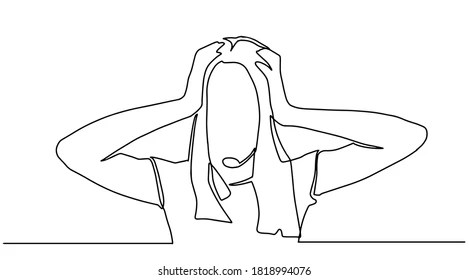
“I am being completely demolished.”

Maybe it is:

“I am in a state of transformation.”

The experience might feel exactly the same from inside the cocoon.

But the story changes what we believe is happening.


And then, while writing this, I found an old video of myself.

The Universe, apparently, has lost all regard for subtlety.

The woman in the video had a crown on her head and a purpose she could explain.

She talked for fourteen uninterrupted minutes about:

  • loving the world;
  • changing one life;
  • and coming back softer.

She seemed to know who she was.

Bless.

A few months ago, I might have watched that video and built a case for myself.

Look at her.

Look at everything she survived.

Look at everything she accomplished.

Look at all the evidence that she mattered.

I don’t want to do that today.

I don’t want to turn my former selves into exhibits presented in defense of my existence.

I don’t want to prove that the mush was once impressive.

Because I don’t think the blueprint has ever been for a particular version of my life.

It wasn’t directing me toward a crown. Or a classroom. Or a book. Or a butterfly.

Those were forms.

Caterpillar.
Cocoon.
Butterfly.

Random alligator that no one asked for.

The form keeps changing.

But I have a feeling that, underneath every version of me, the blueprint has always been orienting me toward the same thing.

Love.

As a child, I said I wanted to love the whole world.

As a teacher, I wanted one child to know they mattered.

In a crown, I took it off and placed it on somebody else’s head.

And now, as mush, I am beginning to wonder whether I need a recognizable shape at all to keep moving in the same direction.

Maybe the imaginal cells do not carry an image of what I am supposed to look like.

Maybe they carry an orientation.

Maybe I don’t need to know whether I am becoming a butterfly, a moth, or some deeply concerning winged creature that immediately flies into a porch light.

For once, I don’t want transformation to become another assignment.
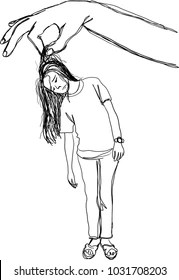
I don’t want to rush out of the mush.

I don’t want to demand that the new form introduce herself before she is ready.

I just want to be…mush.

Maybe with glitter.

The imaginal cells can do whatever they are doing.

The form can change.

The blueprint will keep pointing in the same direction.

Love.

That way leads Home.

The Pebbles Were Already There

On finding what changed when nothing changed

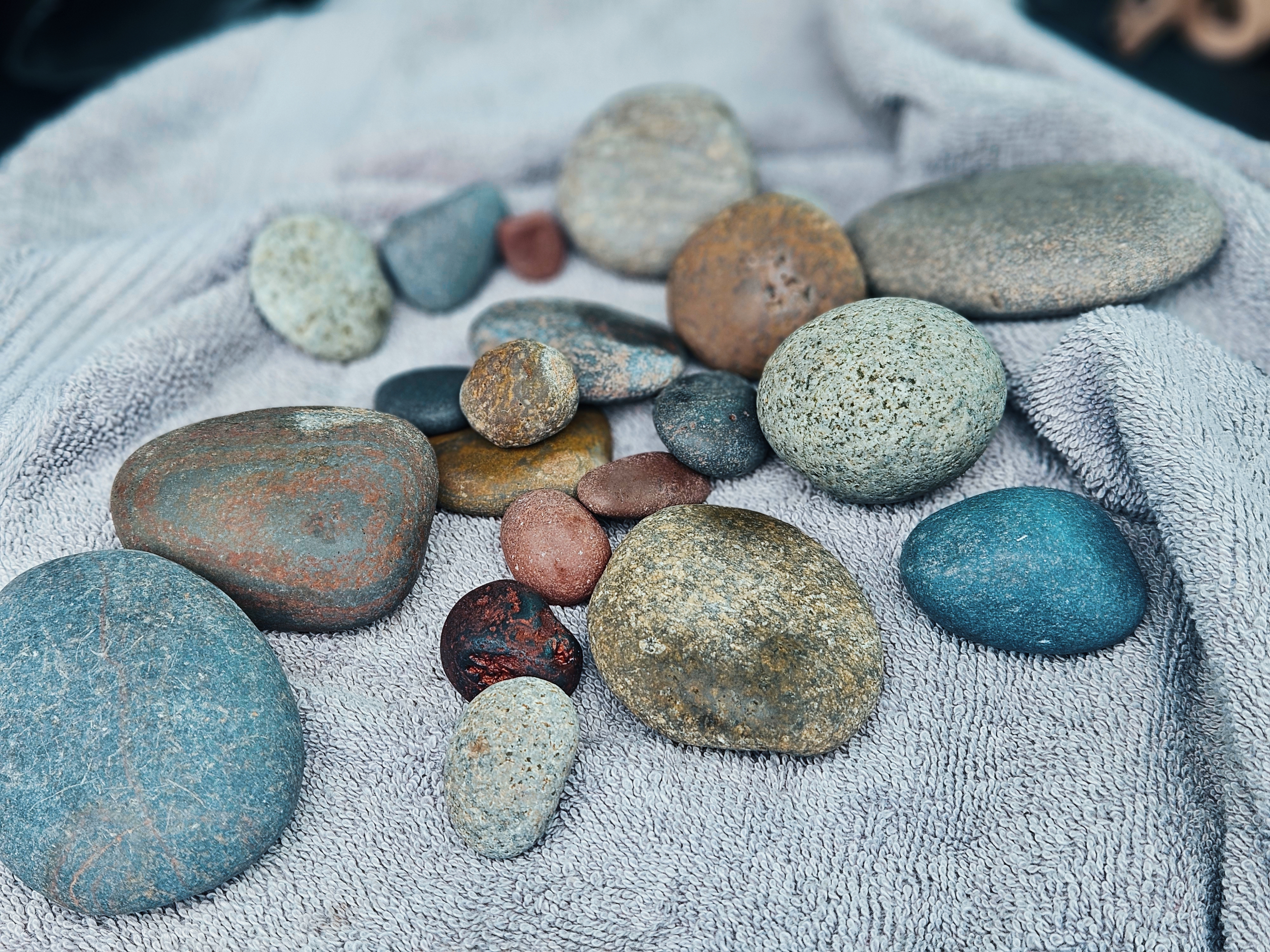
I started collecting pebbles on a black beach in Iceland.

I don’t remember deciding to do it. I only remember noticing one.
Then another.

One was pale and smooth. Another was dark, almost blue. One had a sharp edge; another fit softly into the curve of my palm. I began arranging them beside one another, comparing color, texture, size, and shape.

And something curious happened.

Every new pebble made the ones already in my collection more distinct.

The dark stone became darker beside the pale one. The smooth stone became smoother beside the jagged one. The small one did not disappear next to the larger stone; its smallness became more visible.

Each rock became more itself through connection to the new ones.

Maybe that was what Iceland wanted me to notice.

Beauty did not come from sameness.

It emerged through relation.

The lava caves were lovely beside the glaciers. The waterfalls were kinetic and majestic beside the silence of a lagoon. Fire lived beside ice. Ancient expanses of volcanic rock existed beside flowers soft enough to move with the wind.

And somewhere among all that grandeur was a silly little geyser erupting on cue, as though God had included a strict commitment to solemnity comic timing in the landscape.

There was so much unique beauty in every expression of God’s creative splatter.

Nothing had to become less itself in order to belong to the whole.

Later, when I looked through the pictures I had taken, I realized I had been collecting moments in much the same way I had collected the stones.

They were not simply “photographs of Iceland”.

They were photographs of Iceland through my eyes.

I had photographed a tiny human reaching toward a cat. A red door in an ordinary wall. A little statue of stacked pebbles that a stranger had left behind for other strangers to find and adore.

I photographed the things in which I found stories.

Or perhaps I did not have to find them.

Perhaps I only had to slow down enough to notice where the stories already lived.

A door suggested someone leaving and returning home. A child reaching toward a cat held an entire exchange of curiosity and tenderness. The pebble statue carried the touch of a person I would never meet—someone who had paused, arranged what was already there, and left a small act of meaning behind.

Maybe that is what I do too.

I place my attention beside something and say:

This was alive. This mattered. I was here.

Even the photographs carried my thumbprint.

My life is my meaning-making, my canvas, my stories, my connections—unique, odd, idiosyncratic.

Iceland did not look exactly the same through anyone else’s eyes because no one else had lived my life before standing there.

But I was not the only one creating meaning.

Life was moving through me too.

Water moves around stone without asking it to stop being stone. It finds the cracks. It travels along sharp edges. It softens, widens, shapes, and carries.

The natural forces of Iceland have been working upon the land for ages—fire rising through fissures, glaciers carving valleys, water wearing paths through rock.

Life has been shaping me in much the same way.

I make meaning from what happens to me.

And, what happens to me makes me.

Both are true.

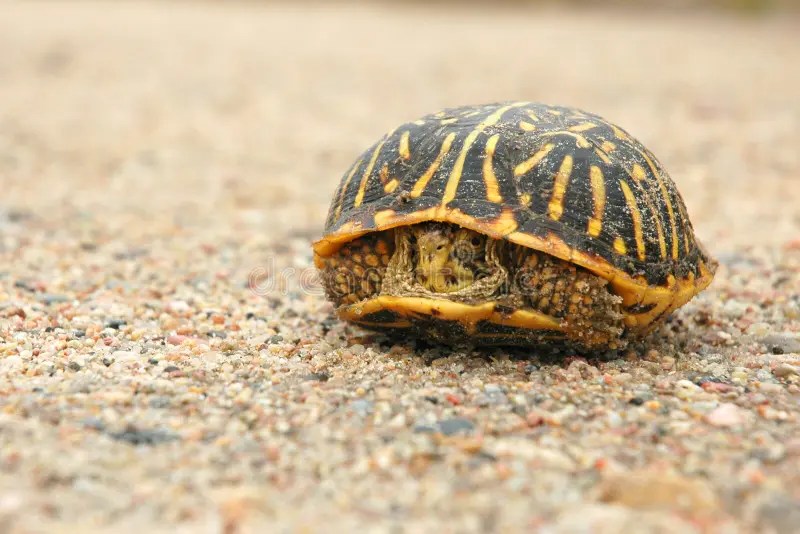
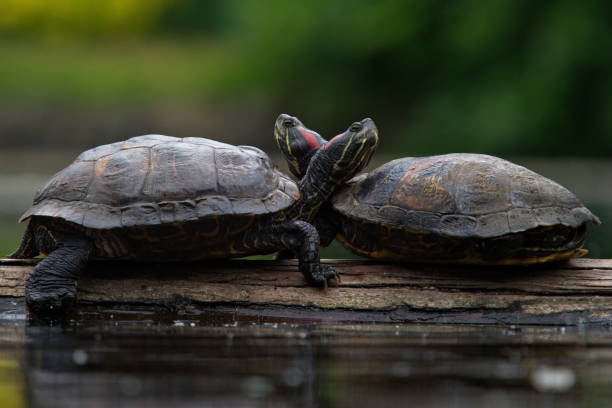
Perhaps that is why I am becoming more like a turtle.

I want to carry my home with me.

Not because I no longer need anyone. Not because I want to retreat from the world. But because I am beginning to understand that home cannot only be a place other people allow me to occupy.

I want it beneath me.

Around me.

Within me.

I want to be able to enter caves, lagoons, airports, family rooms, and unfamiliar parts of myself without leaving home behind.

Iceland taught me that the extraordinary is usually right under my nose.

It was in the smell of coffee before I tasted it.

It was in the distinct cadence of laughter moving through the Airbnb family room.

I had traveled thousands of miles to watch volcanoes erupt—to see the earth release what it had been holding beneath its surface.

Then, one evening, the eruption began with my dad’s loud voice.

My sister’s soprano smile rose next. Ahad’s tenor thunder rolled beneath it. Liz’s legato laughter stretched warmly across the room, while my mother’s metrical laugh kept its own unmistakable rhythm.

One voice triggered another until the entire room erupted.

Different pitches. Different tempos. Different expressions of the same living force.

For a moment, the Airbnb family room became another Icelandic landscape.

No sound disappeared into the others. Each laugh became more distinct in relation to the ones surrounding it.

Another pebble collection.

Another strange and beautiful arrangement of life.

Iceland taught me to slow down enough to hear it.

In the lagoons and caves, I found myself quietly praying over strangers.

People from different countries, languages, histories, beliefs, and walks of life were gathered there for one small blip of time, exploring the natural wonders of the world together.

Some of us could not communicate with words.

But we smiled.

We noticed.

I remember looking around and thinking:

What are the chances that we are all doing this together?

Strangers sharing warm water beneath a cold sky.

Different bodies. Different lives. Different stories.

All of us briefly held by the same landscape.

In the language of the Buddha, I was nobly born.

We all were.

Just like the landscapes in the land of fire and ice—not because they were smooth, peaceful, or alike, but because each expression belonged fully to life.

I did not arrive at that understanding from somewhere above myself.

I smelled it in the coffee.

I heard it in the eruption of laughter.

I felt it in the lagoon water moving around my body.

I saw it in a tiny hand reaching toward a cat.

The sacred did not arrive as an idea.

It was already there, beneath us and between us, waiting to be noticed.

I thought Blog 4 was supposed to be about hope.

For a while, I believed I needed to find more of it.

More evidence. More answers. More transformation. Something dramatic enough to carry home and present as proof that I had changed.

But Iceland showed me that it was not about more.

It was about what lay before me.

The pebble already beneath my feet.

The laughter already moving through the room.

The strangers already sharing the water.

The sacredness already living beneath our particular shapes.

The stories already waiting inside ordinary things.

I found myself circling the same question internationally.

What would happen if I stopped treating myself as the manager of life—and became somewhere life liked to happen?

Not becoming better at life.

Not learning how to arrange it more beautifully.

Just becoming more available to it.

I want to live in a way that Life enjoys living through me.

Iceland wanted me to notice.

And perhaps hope begins there—not in forcing life to become something else, but in slowing down enough to see that life is already moving.

Through water and stone.

Through strangers and family.

Through the cracks and sharp edges of my own particular shape.

I went to Iceland looking for wonder.

I came home realizing that wonder had been looking through me all along.

One Sentence, No Bouquets

Last time, I wrote about the tiny oks.

The small replies that told me connection had not disappeared entirely. The quiet evidence that even after rupture, love still had somewhere to land.

I called them hope.

I still believe that.

But repair has layers.

Sometimes repair is a tiny “ok”.

Sometimes it is an apology.

And sometimes, before an apology can become honest, we have to learn the difference between taking responsibility and disappearing.

Which, honestly, is deeply inconvenient, because disappearing has historically been one of my more efficient skill sets >__<

Not healthy.

But efficient.

For a long time, apology felt less like accountability and more like an emergency evacuation.

I am sorry.
Please do not leave.
I am sorry.
Please stop being angry.
I am sorry.
I will become whatever version of me makes this moment end.

Trauma can teach us to confuse apology with safety.

It can teach us that the fastest way back into connection is to absorb the entire rupture — to become the mistake, the hurt, and the solution all at once.

So we apologize quickly.

Beautifully, even.

We explain ourselves with trembling precision. We search the other person’s face for evidence that the danger has passed. We offer context, remorse, reassurance, and sometimes far more of ourselves than the moment asked us to give.

Some of us do not arrive with an apology.

We arrive with a full floral arrangement.

A tasteful one, obviously. 💐

Every flower carefully selected to prove that we are good, sorry, harmless, lovable, self-aware, emotionally evolved, and safe to keep.

A very humble bouquet.

But an apology is not a bouquet.

It is not a performance of pain.

It is not a public relations campaign for our own goodness.

It is not self-erasure dressed as maturity.

And it is not the promise that I will never inconvenience another nervous system again.

Which is unfortunate, because that would be a very tempting contract to sign.

A real apology is quieter.

It says:

I see what happened.

I care about the impact.

I understand what belonged to me.

I want to become safer.

No bouquet required.

🕯️

I am learning that accountability can contain an “and.”

I am sorry, and I am still here.

You are allowed to be angry, and I do not have to abandon myself to survive your anger.

The “and” is where truth becomes large enough to hold more than one person at a time.

That sounds simple when I write it.

Alas, it does not always feel simple inside my body.

Recently, during a hard moment with my daughter, I felt the familiar pull to do too much.

To explain too quickly.

To soften every edge.

To make the discomfort disappear before either of us had understood what happened.

I wanted to repair immediately, but beneath that urgency was something less noble and more human:

I wanted relief.

I wanted the room to stop feeling difficult.

I wanted reassurance that I was still a “good mother” before I had fully listened to the child in front of me.

That is humbling to admit.

Rude, even.

But true.

So instead, I tried one sentence:

“You are allowed to be mad and I love you; we will talk when we are both in our calm bodies.”

It was not yet an apology.

It was not the full repair.

It was a boundary, a reassurance, and a pause.

It was me refusing to choose between connection and steadiness.

Later, when I could speak without trying to escape the feeling in the room, I apologized for what was mine.

Not for having a limit.

Not for needing time.

Not for being human.

But, for my tone.

For the way my overwhelm had entered the room before my words did.

For the part of the moment I could genuinely repair.

That distinction still feels new to me.

I can apologize for how I spoke and keep the boundary I was trying to communicate.

I can regret my impact and remain curious about what overwhelmed me.

I can say, “I was wrong,” without saying, “I am wrong.”

This is not an argument for partial accountability.

It is an argument for honest accountability.

The kind that changes behavior because it is rooted in truth, not panic.

The kind that asks:

  • What happened inside me?
  • What did the other person experience?
  • What belongs to me now?

Because if we aren’t careful, an apology can become another way to rush past rupture….and straight into the theatrics.

We say sorry. Everyone exhales.

The emotional smoke alarm quiets down. Whew.

And….then we rebuild the same moment again because no one stayed long enough to understand what made it possible.

Sometimes, the apology is the sentence.

Sometimes, I wonder if the deeper apology is what happens afterward.

The pause.

The changed pattern.

The willingness to notice sooner.

The refusal to make another person carry the full weight of what we have not yet learned how to hold.

But changed behavior cannot grow from self-hatred forever.

Eventually, shame becomes too small a room for transformation.

And, I have spent enough time trying to renovate that room.

🤍

I am still learning how to apologize without disappearing.

How to let another person have their hurt without making their hurt the final definition of “me”.

How to say:

I see what happened.
I care about the impact.
I will repair what is mine.
And I am still here.

That last sentence may be the hardest one.

I am still here.

Not hiding inside shame.

Not arranging an emotional bouquet large enough to earn my way back into love.

Not promising to become so careful, useful, or good that no one will ever feel pain near me again.

Just here.

Human.

Accountable.

Loved.

Learning.

For much of my life, I thought repair meant restoring everything to the way it was before the rupture.

Now I wonder whether real repair sometimes creates something entirely new.

A little more truth.

A little more room.

A relationship capable of staying present after something hard has happened.

Maybe that is why the tiny oks mattered so much.

They were not evidence that nothing had happened.

They were evidence that something could happen and connection could remain.

That rupture did not always have to become abandonment.

That love could be disappointed and still stay.

That accountability did not require annihilation.

And perhaps, after a lifetime of preparing for what might go wrong, that is how the nervous system first begins to consider another possibility:

What if something goes right?

What if love stays?

What if repair is not only the end of rupture, but the beginning of our capacity to receive?

One sentence.

No grand performance.

No bouquets.

Just enough room for hope to enter without being chased away.

Till next time

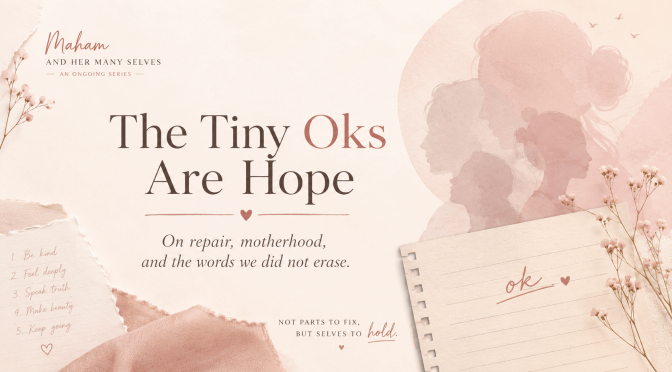
The Tiny Oks Are Hope

On repair, motherhood, and the words we did not erase.

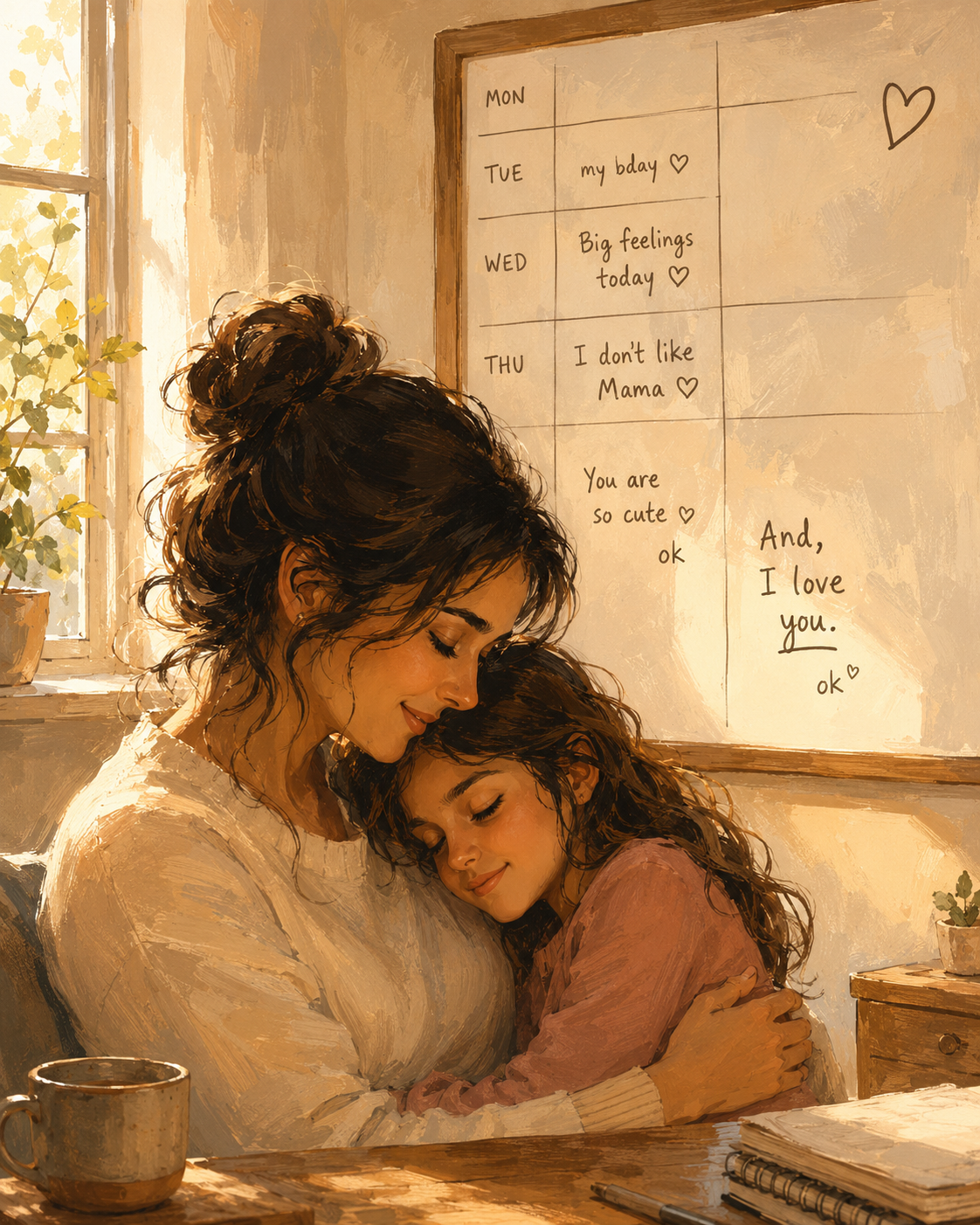
My daughter wrote “I don’t like Mama” on our weekly planner.

Then, a little later, I wrote:

“And I love you.”

By the end of the day, underneath my repair words, she had added the smallest possible offering:

ok.

Not a grand apology.

Not a cinematic hug with swelling music and one tasteful tear.

Not one of those soft-focus parenting moments where everyone wears linen and speaks in nervous-system-approved whispers.

Just dry-erase marker.

A hard day.

A rupture that did not become the ending.

And two tiny letters that felt like hope.

Because here is what I am learning: repair does not always look beautiful while it is happening.

Sometimes repair looks like a child writing the thing she feels before she knows how to say it gently.

Sometimes repair looks like a mother feeling the sting of those words and choosing not to make the child responsible for that sting.

Sometimes repair looks like writing back:

“You are so cute.”

“I’m sorry today felt so big.”

“And I still love you”

And sometimes, after all of that, repair looks like a tiny ok written underneath your words.

The tiny oks are hope because they prove something quietly revolutionary:

Rupture happened, and love still had somewhere to land.

For a long time, I thought good mothering meant preventing rupture.

If my child was upset with me, I had failed.

If I reacted, I was becoming everything I feared.

If repair was not immediate, eloquent, complete, and preferably witnessed by a small panel of experts confirming I had not ruined my child forever, it probably did not count.

But motherhood is teaching me something much less glamorous and much more holy:

Repair is not the absence of rupture.

Repair is what happens when rupture is allowed to be real, but not allowed to write the whole story.

Repair, I am learning, is not asking my child to reassure me.

It is showing her that I can stay present without making her feelings dangerous.

If my first post was about “The Girl With the List”, this one might be about what happens when List Girl has to mother.

“The Girl With the List” likes preparation. She likes structure. She likes the fantasy that if she can plan enough, anticipate enough, understand enough, and make the correct emotional spreadsheet, then no one will get hurt.

She is not bad.

She is trying to love through planning.

But motherhood does not always honor the list.

Children have feelings on their own timeline.

Repair does not arrive color-coded.

And some of the most important moments in a relationship cannot be controlled into safety.

They can only be met.

The list can stay.

But it cannot mother for me.

My daughter does not live with me year-round. She comes to visit in the summers, and that time is deeply precious to me. It is also a transition.

Each summer is a kind of re-entry: a new rhythm, a beloved disruption of routine, a closeness I ache for and still have to adjust to.

For someone with a very active inner world — a whole inner cast ready to offer commentary at any given moment — it can take my nervous system a beat to catch up.

Not because she is too much.

Because she matters so much.

Love raises the stakes.

And sometimes my nervous system is still catching up to what my heart already knows.

We did not erase her words.

We did not write over them.

We did not pretend “I don’t like Mama” had not been written.

We also did not let those words become the final sentence.

We let them exist.

We let them breathe.

And then, underneath them, around them, beside them, we made room for something else too:

Love.

Apology.

Connection.

A tiny ok.

I think that is what feels so different to me.

So much pain gets passed down through erasure:

That did not happen.

You are too sensitive.

You are fine.

And so much pain also gets passed down through writing over someone else’s experience:

Here is what you should feel.

Here is why your hurt is inconvenient.

Here is why my shame matters more than your truth.

But this time, we did something else.

We left the words on the board.

We let the feeling have a place.

And then we practiced coming back.

This is also complicated for me because I have spent years working with children. I have been a teacher, a nanny and a counselor. With other children, I can often access patience and curiosity more easily. I can observe. I can regulate. I can remember that behavior is communication.

But with my own daughter, more of “me” enters the room.

Not less skill.

More history.

More longing.

More fear.

More grief.

More hope.

More old wounds whispering, “Don’t mess this up,” while holding a clipboard and several pieces of unsolicited evidence.

Mothering is not harder because I know less.

Mothering is harder because more of me shows up.

And that is the part I am learning how to meet: the part of me that panics when my daughter is upset, thinks one hard moment means I have ruined everything, and forgets children do not need perfect parents.

They need parents who can come back.

So this week, I am trying to let the tiny oks count — to let repair be evidence that a hard moment is not the whole story.

Because there is proof all around me, if I look toward the light, that love finds us even after mistakes.

A child can write “I don’t like Mama” and still love her.

A mother can feel hurt and still stay soft enough to repair.

A rupture can happen, and the relationship can survive it.

A tiny ok can become a doorway.

Maybe healing does not always arrive loudly.

Maybe it does not look like a breakthrough.

Maybe sometimes healing is just two small letters written underneath an apology.

Maybe sometimes it is both of us saying, in the smallest handwriting possible:

This is not how our story will end.

<3, List Girl: Mothering Edition

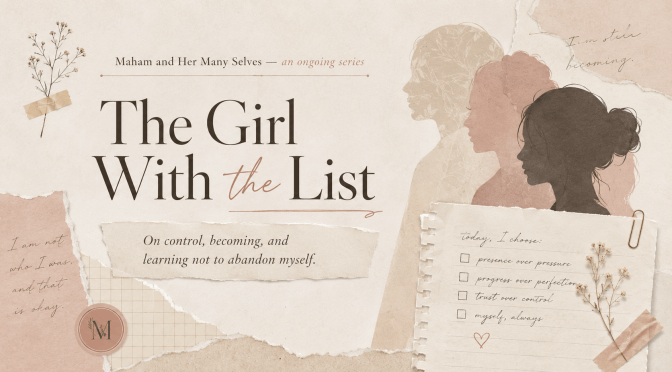
The Girl With the List

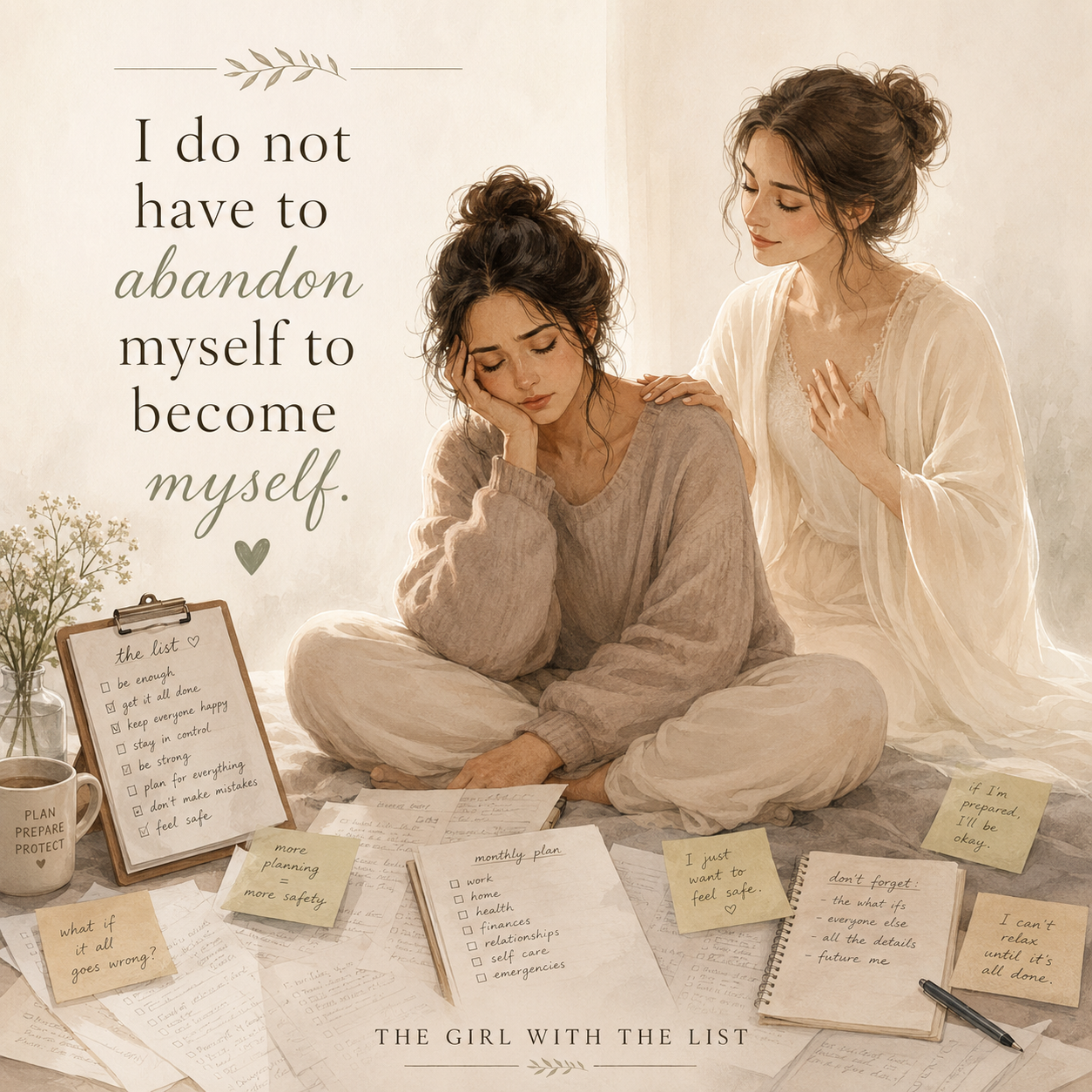
There is a girl inside me who believes that if she can make a good enough list, she can finally feel safe.

Not a normal list.

A sacred list.
A survival list.
An “if I can just get all of this out of my head and onto paper, maybe my body will stop acting like there is a lion in the kitchen” list.

📝

She writes down everything.

The appointments.
The errands.
The texts she needs to answer.
The people she might have disappointed.
The gifts she still needs to wrap.
The book she wants to write.
The blog she wants to start.
The life she is trying to build.
The version of herself she is trying very hard to become.

A casual Tuesday, basically.

She is efficient, this girl.

She is also exhausted.

And dramatic.

Not just regular dramatic. More like, “If we don’t reorganize our entire life before 11:43 a.m., we may never fulfill our destiny” dramatic.

For a long time, I mistook her for discipline. I thought she was ambition. I thought she was proof that I was trying, growing, healing, becoming.

And she is trying.

But she is also (so) afraid.

🕯️

Afraid that if she slows down, everything will fall apart.
Afraid that if she forgets one thing, she will become one thing: unreliable.
Afraid that rest will be mistaken for failure.
Afraid that if she stops managing the whole universe, the whole universe will finally have the audacity to manage itself without her.

Rude, honestly 😒

Sometimes I catch her in the act.

There I am, allegedly “taking a break,” except my break has somehow become a 17-step plan for emotional liberation, financial stability, spiritual enlightenment, and possibly reorganizing the pantry.

Because why simply drink water when you could also create a five-year plan? 🤦‍♀️

Why feel one feeling when you could build a comprehensive nervous system operating manual and assign it subheadings?

🌿

But lately, through EMDR, IFS, motherhood, and the deeply humbling experience of being human, I am beginning to understand something:

The list is not the problem.

The list is a part.

A protector.

A little clipboard-holding manager inside me who learned a long time ago that being prepared was safer than being present.

She does not need to be shamed.
She does not need to be fired.
She needs to be witnessed.

Because underneath the list is usually a feeling.

Grief.
Fear.
Shame.
The ache of wanting to be held.
The terror of being needed when I already feel empty.
The old belief that I have to earn my right to rest.

And when I only add more tasks, I never reach the feeling. I just create a more organized form of avoidance.

A very color-coded dissociation, if you will.

🤍

There is another part of me now, though. A quieter one. A slower one.

She does not hate the girl with the list.

She actually kind of respects the hustle.

But she also gently asks:

What are we afraid will happen if we pause?
What feeling are we trying to outrun?
What if the next right thing is not the most productive thing, but the most honest one?

This question is deeply inconvenient.

I would personally prefer a spreadsheet.

I used to think healing meant finally becoming the kind of person who could do everything.

Now I wonder if healing means becoming the kind of person who no longer needs to.

The list can stay.

But it cannot be God.

It cannot be my worth.
It cannot be my mothering.
It cannot be my authorship.
It cannot be the measure of whether I am becoming who I am meant to be.

Sometimes the bravest thing I can do is not cross off another task.

Sometimes it is to put the pen down, place one hand on my chest, and say:

I am here.
I am not behind.
I do not have to abandon myself to become myself.

And yes, the list girl may still whisper, “Okay, but should we make a list about how to stop making lists?”

Bless her.

We love her.

We are not letting her drive.

Maybe that is where the real list begins.

Not with everything I have to do.

But with everything I am finally allowed to feel.

Till next week…

<3,

List Girl

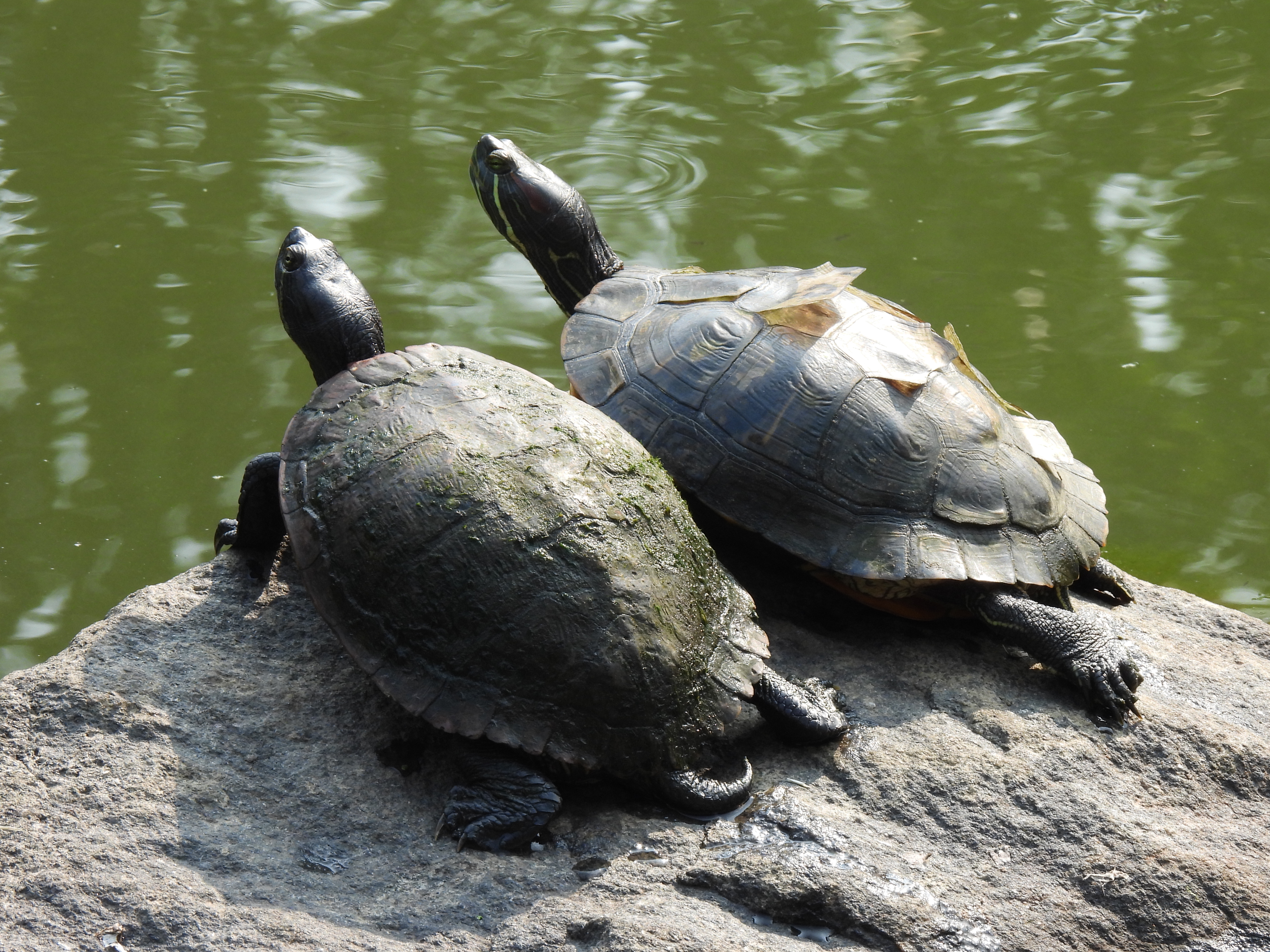
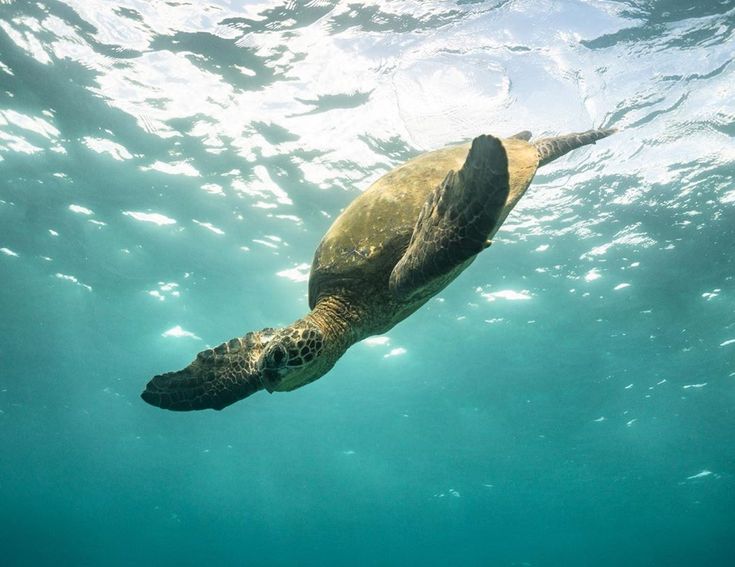
Timeless Turtles

A poem about finding friendship, oneself, and God.

Over the years, I became accustomed to a lonely life inside my shell–
It had become my second-nature to retreat when all just felt unwell.
I felt dejected because like other creatures, I couldn’t run, climb or fly.
So much so, in challenging times, I didn’t even give it an honest try.  
Instead, I crawled back into the confines of my boxed, bosomed shell–
choosing to survive day by day, with not a single adventurous tale to tell.


One day in jaded June, I basked under the searing sun.
I drifted off for a moment, only to awake next to someone!
I peered timidly at the stranger, resting quietly beside me–
Her pleasant patterned carapace was quite the sight to see!
I wondered if she knew just how perfect and polished she seemed,
The sun’s radiant rays made her soft leathery skin glitter and gleam.


Her whimsical webbed-feet were unlike anything else I’d seen before.
I pondered silently to myself about what she might use them for.
Without a warning, she opened up her glassy, jewel-toned eyes.
She dove fearlessly into the opaque pond, much to my surprise!
My heart fluttered restlessly, as I feared for her safety below.
How could she simply jump in, without letting anyone else know?
What if she drowns dismally or gets stuck in murky mudflow?


I shook inside my shell, anxiously waiting for her emerald head to emerge
The water’s surface stayed silently still while my panic began to surge.
“Please, God,” I prayed passionately, “please let her be alright.”
“I’ve waited so long for any sign of Your eternal loving Light.”
The sun’s final rays danced daintily across the lulling lake,
in the midst of their beams–I finally saw a reflection I couldn’t mistake!


Her intricate shell appeared iridescent just below the serene surface;
She gracefully glided to the top, and took a deep breath in with purpose.
Following her lead, I remembered to finally let out my stifled exhale.
Sighing with relief, I watched in awe, as she fearlessly sailed.


She played peacefully in the welcoming water, confident and headstrong.
Oh, how desperately I, too, wished to find somewhere to belong.
It became clear to me that the wonderous water was unmistakably her home.  
I realized that the very shell offering me shelter had also left me feeling secluded & alone.

Feeling ashamed, yet again, I retracted back into my comfortable cage.
This time, however, its darkness left me brimming with rage.
My mind became a roaring arena full of angry, self-loathing talk.
Mindfulness slipped away, and her presence was something I forgot.

Suddenly, I felt a powerful push–followed by a startling splash!
I found myself in whirling waters, and began to helplessly thrash.
I saw her silhouette near the shore, crawling carefree as could be,
“Swim!”, she urged spiritedly, “You are a lot like me!”

ME?!” I thought, restlessly, “she must not be able to see.”
“Just focus on your breath”, she said “and you, too, will feel free”
“You’re wrong!”, I gasped between plunges, “I can’t do this at all!”
She reminded me so sweetly, “but, you’ve already survived the fall.”

I watched the wholesome water warmly wrap itself around me, like it was awaiting my return.
It enveloped me into its eager embrace; reminding me I was no unfamiliar extern.
The familiar fear I lived with everyday with felt frivolous once I could see–
–the dreary decades drifting away simply reflected my faithlessness in its steadfast security.

The comforting current cradled me, for the water had constantly carried me along.
Surrendering to its steady support helped me to feel that I was inherently strong.
I cried; I laughed—because I hadn’t felt much of anything in so long.
But most of all, in that moment, I finally felt what its like to truly belong.


The majestic creature dove back into the water, and helped me swim back to shore.
“Look!”, she declared, as we crawled out, pointing towards the lake’s alluring floor.
I turned around trying to find what it was she wanted me to look for.
Once I finally caught a glimpse of it, it was a sight too spellbinding to ignore.

I peered timidly into the water, marveling at a reflection I did not recognize.
I stared at its perfectly patterned-shell, and soft skin with awe and surprise.
“Wow”, I whispered, “It’s breathtaking–especially in the water’s blue hue.”
“Of course she is,” smiled the truthful turtle, “because that, my friend, is you.”

.

Love you always, all ways.


I Was Wrong

For the last few months, I have taken a deep plunge into healing. After years of therapy from all different modalities, I found very little difference. My life would be fine and “functional” for a few years, only to be followed by an inevitable crash. I’ve been through this cycle for most of teens and all of 20s. Each time, I picked myself back up only to white-knuckle my way through “functionality”–until, the inevitable crash.

For so long, these “crashes”—long periods of depression, psychosomatic symptoms, and lapses of complete dysfunction–seemed unrelated. I would excel in work, friendship, and relationships only to lose all of them. Time and time again, I felt dejected, humiliated and utterly worthless.

Why do I keep messing it up? What is wrong with me!?

In the aftermath, I sought out help–only to help me get back on my feet again and once I felt “ready” enough, I plunged in headfirst into work, relationships and life with even more resolve and stubbornness.

I can’t let him win. I can’t let trauma win. I HAVE to do it right, this time!

Yet, I couldn’t. I couldn’t do it in a sustainable manner.

For decades, I deluded myself into thinking that I could “white-knuckle” it through life. I danced between diagnoses, swapped out medications, changed therapists, implemented new strategies from the self-help book of the season; yet, every single intervention yielded minimal results.

This year, I was forced to face the lingering effects of unaddressed trauma; my body gave me no choice. The unprecedented seizures, fainting episodes, and gaping lapses of memory loss jilted me to my very core. I was desperate, in more ways than one. Some days, I was more scared of the seizures and syncope episodes; other days, I found myself begging God that they take my life.

I found myself in an impossible situation where I was equally scared of death and of life

It was this very predicament that finally brought me to the doorstep of surrender. I didn’t know what more to do; every willful intervention of mine had not worked. I didn’t want to die and I certainly was not living. I thought if I was just strong enough, stubborn enough, knowledgeable enough…I would be able to “beat it”. In my case, knowledge was not power. I went to school to get a masters degree in psychology; I studied the ins and outs of different modalities & dissected the interventions of esteemed theorists. As a counselor, I became adept in helping others navigate through their own hardship and grief–but I could do nothing for myself.

Knowledge, in my case, was my Achilles. It brought me hubris, and an unhelpful sense of intellectual arrogance. My training in counseling and psychology bred an avid resistance to be treated. I thought I knew better, so I refused the treatment prescribed for me by other mental health professionals.

But, knowing better doesn’t always lead to doing better.

There is a reason that mental health professionals and doctors cannot treat themselves or their loved ones. Sometimes, we are just too close to the subject. In my case, I was the subject and could do very little to help. There is a reason “blind spots” are called just that. We cannot pinpoint them using our own biased way of thinking.

The problem cannot be solved using the same mind creating it.

In June of this year, I finally got to a point where I could no longer tolerate the suffering. Now, I have come to realize that the suffering was being perpetuated by my relentless need to be in control.

We must let go of the need to control to gain it.

Five months ago, I begrudgingly started the process of EMDR. Despite years of others suggesting it for me, I resisted it at all costs–all because, I simply did not know how it would work. I had no faith in the process. How could moving my eyes a certain way help unpack layers of complex trauma? It honestly sounded laughable.

Yet, here we are.

I am no where close to being “healed”, but the beautiful paradox is that I’ve let go of the idea of being “healed.” It is no longer some faraway, unachievable destination that torments me; it is here, and now. Throughout the EMDR process, my healing has been anything but linear; it has ebbed and flowed with life itself, and there is infinite beauty in that. I no longer find myself fantasizing of a perfectly “healed Maham”; I no longer torture myself by comparing my “now” to that preconceived ideal.

My suffocating grip on the rigid definition of “healing” has loosened.

Day by day, I’m learning to experience myself as I am. And, dare I say, life would not be intolerable if I remain who I am today, for all of my days. The rigid parameters I placed around creating “a good life” are slowly dissolving. These days, progress seems far more promising than perfection; I find myself welcoming minor setbacks as necessary precursors to growth and “healing”.

I am starting to assess “healing” by my ability to tolerate feeling.

Bit by bit, I am starting to work through unspeakable pain. In doing so, I’m finding acquaintances in connection, love, and even ephemeral joy.

Nowadays, I find that even gratitude chooses to sit by me sometimes.

Thank God, I don’t have all the answers. Thank God, I don’t understand everything. Thank God for the realization that I never had to.

Thank God, I finally had the courage to be wrong.

— because of it, I’m finally being led to what feels right.

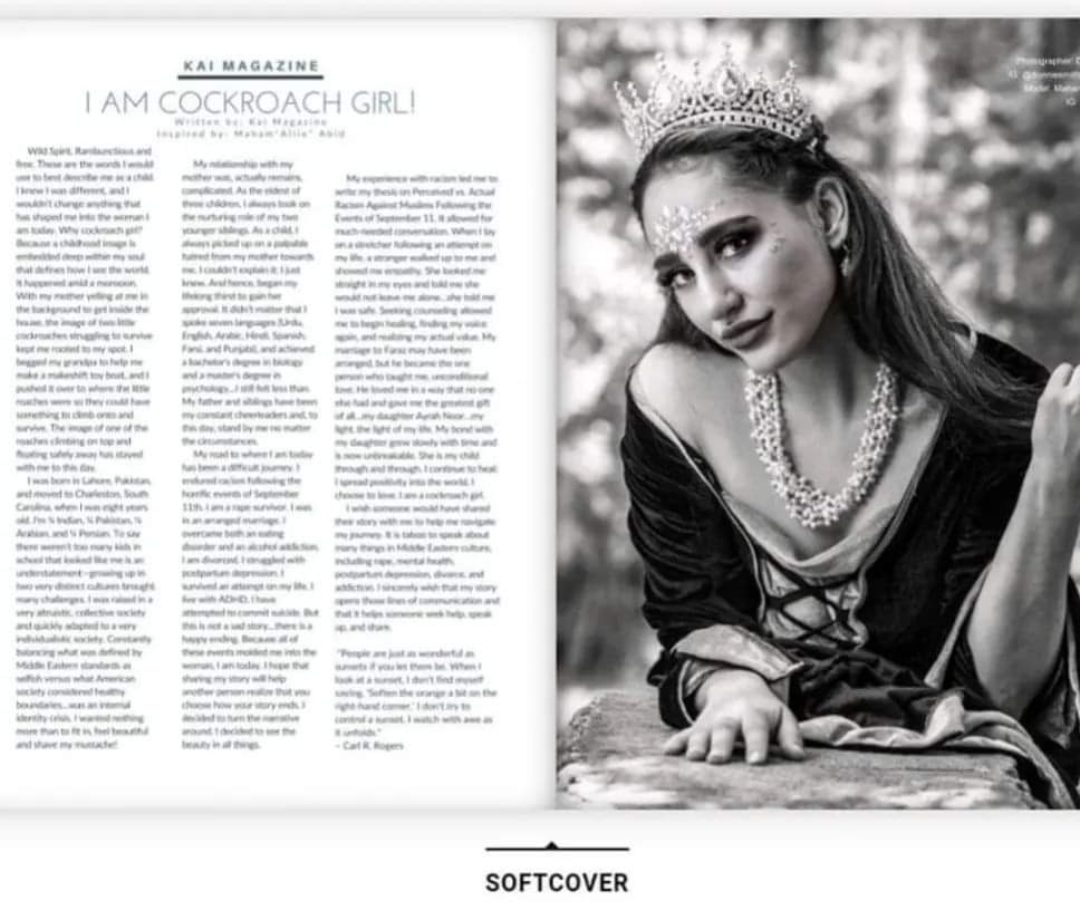
I Am Cockroach Girl

Article written beautifully by Claudia Rios after an interview.

🪳🪳🪳🪳🪳

“Wild spirit, rambunctious, untamed and free.”

These are the words I would use to best describe me as a child. Even then, I knew I was different and I wouldn’t change anything that has shaped me into the woman I am today.

Why cockroach girl? Because a childhood image is deeply embedded in my soul, it defines how I see the world. It happened in the midst of a monsoon. With my mother yelling at me in the background to get inside the house, the image of two little cockroaches struggling to survive kept me rooted to my spot. I begged my grandpa to help me make a makeshift toy boat, and I pushed it over to where the little roaches were so they could have something to climb onto and survive. The image of one of the roaches climbing on top and floating safely away has stayed with me to this day.

I was born in Lahore, Pakistan, and moved to Charleston, South Carolina when I was 8 years old. I’m ¼ Indian, ¼ Pakistan, ¼ Arabian, and ¼ Persian. To say there weren’t too many kids in school who looked like me is an understatement. Growing up in two very distinct cultures brought with it many challenges. I was raised in a very altruistic, collective society and had to quickly adapt to a very individualistic society. Constantly balancing what was defined by Middle Eastern standards as selfish versus what American society considered healthy boundaries…it was definitely an internal identity crisis. I wanted nothing more than to fit in, feel beautiful and shave my mustache!

As the eldest of three children, I always took on the nurturing role to my two younger siblings. My relationship with my mother was, actually remains, complicated. As a child, I always picked up on a palpable hatred from my mother towards me. I couldn’t explain it, I just knew. And hence, began my lifelong thirst to gain her approval. It didn’t matter that I spoke 7 languages (Urdu, English, Arabic, Hindi, Spanish, Farsi, and Punjabi), achieved a bachelor’s degree in biology and a master’s degree in psychology…I still felt less than. My father and siblings have been my constant cheerleaders and to this day, stand by me no matter the circumstances.

My road to where I am today has been a difficult journey. I endured racism following the horrific events of September 11. I am a rape survivor. I  was in an arranged marriage. I overcame both an eating disorder and an alcohol addiction. I am divorced. I struggled with postpartum depression. I survived an attempt on my life. I live with ADHD. I have attempted to commit suicide.

But this is not a sad story…there is a happy ending.

Because all of these events molded me into the woman I am today. My hope is that sharing my story will help another person realize that you choose how your story ends.

I choose to turn the narrative around

I decide to see the beauty in all things, no matter how minuscule it may have appeared. Even from the very beginning, I decided to see value, even in the cockroaches in the monsoon.

My experience with racism led me to write my thesis on Perceived vs Actual Racism Against Muslims Following the Events of September 11. It allowed for much needed conversation. When I laid on a stretcher following an attempt on my life, a stranger walked up to me and showed me empathy. She looked me straight in my eyes and told me she would not leave me alone…she told me I was safe. Seeking counseling allowed me to begin healing, finding my voice again and realizing my true value.

My marriage to Faraz may have been arranged but he became the one person who taught me unconditional love. He loved me in a way that no one else had and gave me the greatest gift of all…my daughter Ayrah Noor…my light, the light of my life. My bond with my daughter grew slowly with time and is now unbreakable. She is my child through and through. I continue to heal, I spread positivity into the world, I choose to love, I am cockroach girl. 

It is taboo to speak about many things in Middle Eastern culture, to include rape, mental health, postpartum depression, divorce, and addiction. I wish someone would have shared their story with me to help me navigate my journey. It is my sincere wish that my story opens those lines of communication, that it helps someone to seek help, to speak up, to share.

To end, with my favorite quote:

Thank you for reading ❤️

@mahamabidtalent

Another Notch on the Belt

By: Maham Abid

The creaky office felt sterile and cold.

My brimming anxiety grew into something bold.

One more visit down—another notch on the belt,

What’s wrong isn’t always clear to see, but it is deeply felt.

It keeps being suggested that it is “all in my head.”

But if that’s really so, why is my body responding with distress?

I admit I can be neurotic and full of unnecessary fear,

But I’ve lived most of my life with anxiety looming near.

That’s precisely how I identified these new symptoms as severe.

I am no stranger to silently analyzing the absurdity of my worry.

So, how ironic is it that when I finally speak up, I’m dismissed in such a hurry?

Why won’t someone validate the sensations that I feel?

I have no ulterior motive; I just want to heal.

So today, as I sit stiffly in yet another sterile waiting room,

My mind can’t help but wander off to similar memories of gloom.

This doctor, too, shall say that he can’t specify what’s wrong.

And refer me for more poking & prodding–which will only prolong–

–me suffering silently, trying to make sense of what is really going on.

This entire process has felt like crazy-making at its worst,

The constant dismissal of my symptoms feels like a curse.

Is it ungrateful of me to almost hope they find something soon?

So I can finally get some reprieve from the sense of impending doom?

Of course, I don’t want it to be something that doesn’t have a cure.

What I desire is external proof to validate my intuition for sure.

At any point now, another physician will walk in.

He will talk at me in medical jargon that’ll make my head spin.

I know our dear doctors see innumerable patients every day,

but communicating genuine care is not an ethic to be pushed away.

I understand that sometimes answers are complex and hard to find,

But perhaps being transparent with me won’t leave me feeling as resigned.

How is it that the people with the most knowledge of all,

–are the very ones that leave so many feeling unheard and small?

“Something is wrong!”, my intuition cries.

“I’m truly not here based on fabricated lies.”

It is okay for professionals to not have all the answers quite yet,

but empathy and care are traits that no human should forget.

If we continue to view our patients as “just another one”,

We will, carelessly, add more damage to what was already done.

#NotAnotherNotchOnTheBelt

Love you always, all ways

IG: @mahamabidtalent

Youtube: https://www.youtube.com/@mahamabidtalent

Part II: The Body Keeps Score

“The greatest source of our pain lies in the lies we tell ourselves,”

Gulp. What lies am I telling myself? 

The Moment that Sparked This

A few weeks ago, a friend looked at me mid-conversation with a strange, tilted smile. She gently asked, “You’ve told me this before—three times, actually. Do you not remember?”

I laughed it off. Again.
But later that night, in the quiet, I didn’t laugh. I stared at the ceiling and asked myself the question I’d been avoiding:

What am I not remembering…and why?

I’ve always thought of myself as self-aware, maybe even hyper-aware. I’ve studied psychology, therapy, trauma, neuroscience—you name it. So how could I, of all people, not see my own blind spots?

That question is what started this post.

What Lies Am I Hiding From Myself?

Here’s the trickiest part:
I think I do know.

Not in the way you’d expect—
I’m not lying to you.
But I might be lying to myself.

Because deep down, I feel it.
There are gaps. Blanks in the story I tell myself.
Parts that feel foggy—like I lived them, but only in theory.

And every time someone close to me—someone who’s paying attention—points out my repetitive and frequent memory lapses or the inconsistencies in my timeline, I brush it off.
At least, I used to.

You see, the brain is wired to protect us. Survival, at all costs.
Darwin nailed it.
When the stress is chronic, intense, and unrelenting, your mind steps in and starts hiding things.
It buries what you can’t afford to feel.
And eventually, the body keeps score… and starts fighting back.

Mine is.

In my case, knowledge didn’t equal power.
It didn’t even turn into wisdom.
I know I’m forgetting something.
But that awareness doesn’t mean I can just will it into memory.
It doesn’t mean I can hand it to you, wrapped and processed and neatly labeled.
Because I can’t. I wish I could.

If you asked me right now:
“What lies are you telling yourself?”

My answer?
I don’t know.
Not because I won’t tell you.
Because I can’t remember them.

And yeah, that makes some distant part of me feel sad.
Not for pity or sympathy—I swear, this isn’t that kind of post.
I’m writing this to hold myself accountable.
To process the hard stuff.
To try to heal.

And if I’m going through all that torture…
Why not take you with me? 😏

A Story With Missing Pages

Here’s the thing: I want to tell you the whole story.

Not just the chapters where I was the victim, but also the ones where I was the villain.

But how do I do that when I know I’m missing pages?

Because maybe… my mind can’t remember.
But my body does.
I feel the ache of what’s been hidden, even if I can’t name it.

How can I be aware that I’m forgetting something… and still not remember it?

“The greatest source of all our suffering are the lies we tell to ourselves”

As I continue to re-read “The Body Keeps Score”, the preceding question keeps following me around like a dementor from Harry Potter. It looms eerily over me as I try to absorb the information, page by page. 

What lies am I hiding from myself?” 

It’s a deceptively simple question—and yet, deeply complex. Here’s where it gets tricky: I think I do know. Or at least, I know that I don’t know—and that matters.

Not Forgotten; Just Buried

What I mean is this: I have a sense that parts of my story are missing. Not erased entirely, but inaccessible. Like fragments of a puzzle that refuse to fit, or worse—aren’t even on the table yet. And while I may not be able to consciously retrieve repressed or painful memories at will, I’m not oblivious to the empty spaces they’ve left behind.

The Survival Mechanism of Forgetting

The crux of Darwin’s theory of survival is that the human being has been created to fight, at all costs, to survive. This means that if the brain is subjected to chronic amounts of stressors repetitively and frequently, psychological symptoms ultimately pass the “threshold” that divides the psychological and physical borders of the human make-up.

When pushed to its limits, the body not only keeps score, it also starts to fights back.

Mine is.

When the brain is exposed to overwhelming stress, especially in early developmental periods, it may suppress, distort, or fragment memory—a phenomenon known in clinical literature as dissociative amnesia (American Psychiatric Association, 2013). Over time, these psychological stressors often manifest physically, leading to what trauma scholars call somatization, or the expression of emotional distress through the body (Scaer, 2007; van der Kolk, 1994).

As Dr. Bessel van der Kolk puts it in: “The Body Keeps Score (van der Kolk, 2014), even when the mind shuts down access to traumatic material, the body often retains implicit memory through physiological symptoms, emotional reactivity, and behavioral patterns.

In my case, knowledge didn’t equal power. In fact, itt didn’t even lead to clarity.

I can’t simply “choose” to remember. My awareness of the gaps in my memory does not mean I can access what’s missing. And this disconnect—between cognitive awareness and emotional recall—is something many trauma survivors know all too well.

Dissociation: A Psychological Defense

“What lies are you telling yourself?”

The question won’t leave me alone.

The lies, I believe, have to do somewhat with the psychological concept of dissociation.

Psychologists have long identified dissociation as a protective mechanism. Pierre Janet was one of the first to describe dissociation as a process by which unprocessable experiences are split off from conscious awareness. Today, dissociation is understood as a continuum—from mild daydreaming to severe forms like Dissociative Identity Disorder (Putnam, 1997; Spiegel et al., 2011).

When the mind perceives that a memory or experience is too overwhelming, it may block access to it entirely. This is not a flaw; it’s a survival strategy. It’s a way the psyche says: You can’t hold this right now, so I will.

But there is a cost. Resilience always comes at a cost.

The price of safety can sometimes be the loss of narrative coherence. You begin to sense that your story—your identity—is fractured. You know something’s off. You feel the ache of what you can’t remember.

It’s a strange paradox: how can I be so sure I’m forgetting something, and still have no idea what it is?

Why Share This?

Because I know I’m not alone. I can’t be the only one going through this.

This post is not an attempt to gain sympathy or pity or influence. In fact, I think it’s about the opposite– it is my way of ASKING for help.

To some degree, I am being selfish. I am writing these posts, and making the podcasts because I’m terrified to do it alone.

I don’t want to navigate the murky waters of health issues by myself. They say there is power in numbers, and we are a relational, tribal species. I want to share this journey with you so that, much like Dory in “Finding Nemo”, maybe you all can help guide me, support me, and encourage me in finding my way back to myself.

The Brain That Lies to Me

How do I navigate the world with a brain that lies to me?

How do you begin to walk through the world, gauging people and their motives, or even your own, when you can’t trust your mind?

UGH! Can one of the pesky emotions from “Inside Out” just hit the “un-repress button“, so that all my emotions can return? Right now, they control me. I don’t control them.

I know that my trying to externalize my “mind” from my whole “self” is an extension of polarized, all-or-nothing thinking–a very common cognitive distortion I learned about in graduate school. I know it is a distortion–a maladaptive, inaccurate way of viewing the world. But, as you’ve noticed—knowledge does not mean power. Knowing about it doesn’t mean I’m immune to it; after all, I am just human.

How curious is it that some may even consider me adept in helping others navigate their beautiful and puzzling lives; it is a pity that I can’t seem to utilize the same interventions to help myself?– help myself in a way that is sustainable, wholesome, and hopeful.

The Body Knows What the Mind Can’t Say

“The greatest source of our suffering is the lies we tell ourselves.”

Sigh. This quote is going to be the death of me.

I really don’t know.
And I don’t say that flippantly. I mean it in the most honest, emotionally raw sense possible.

I may not know what the lies are.
But I do know they are not rooted in ignorance.
They are rooted in protection.

So instead of asking, “What lies am I telling myself?”—maybe we start with:
What truths are too painful to carry?

This shift doesn’t eliminate the discomfort, but it reframes the question from one of self-deception to one of survival.

Why is my mind wasting so much energy to make me forget certain truths?

My hunch says it has to do with emotions.

Big, painful, nimbus-cloud, feelings.

“Shame, terror, guilt, grief, powerlessness”, my brain enumerates.

I smile because, as much as my brain infuriates me, I do appreciate all that it has done for me; it is, in part, the reason why I’m here.

[SIDE NOTE: I even wrote a poem to honor the brain, His Arrogant Highness, it’s posted a few blog posts below and is titled “Loquacious Logic”. My poems are much less pedantic than posts like these—ones that butt their heads against a wall, in an attempt to understand myself. ]

I get the feeling that my brain is not half wrong. Notice that I didn’t say “thought.” It truly is an intuitive feeling–a “knowledge” that the human mind has no knowledge of.

I believe the answers lie in uncovering some of the memories associated with those big feelings.

It is scary, however, to think that in trying to protect me–my brain may be engaging in emotional censorship, presenting plausible half-truths, not allowing me to experience my current reality in all of its fullness.

*Shudder*

Ya’ll, I really need to find the “greatest source of my suffering.”

So, I need to find these lies, hidden truths, like… they are Pokemon. Gotta catch ’em all.

and soon (I hope).

Knowledge is not the Same as Wisdom

Despite all my training—all the academic credentials, psychological frameworks, and intellectual insight—I still can’t name the exact lies I may be telling myself. Not because I’m avoiding them. But because I genuinely don’t remember them.

This suggests something profound: that forgetting is not always passive. Sometimes, it’s an active, neurological process—a form of self-preservation

Unless my upcoming EEG tells me otherwise, I’m increasingly convinced that the psychosomatic model is right: trauma, when unresolved, doesn’t just live in the mind—it embeds itself in the body (van der Kolk, 2014; Ogden, Minton, & Pain, 2006).

Hopefully, I will have more answers after my follow-up appointment tomorrow.

Coming Up Soon: Dory and Dissociation

In my next post in the series, I’ll be diving into something seemingly lighter (but surprisingly deep): a comparison between the beloved character Dory from Finding Nemo and trauma survivors who live with dissociative symptoms.

Yes, there will be tangents.
Yes, there will be science.
And yes—there will be some uncomfortable truths.

Because if I’m going to dig into this mess, I might as well bring you with me. Until then, remember:

At the end. it will all be okay. And if it’s not okay…its not the end yet.

also… welcome to the neurotic, neurodivergent nuisance of a mind. #alliterationwins

Love you always, all ways.

IG handle: @mahamabidtalent

YouTube: https://www.youtube.com/@mahamabidtalent

——————————————————————————————

Random Tangent: Neurologist Appointment

PS- I have a follow-up with the neurologist tomorrow; It’s in regard to my EEG results. I’m kinda scared.

But…

Can I tell you something, without you judging me?

Okay–so is it terrible and really ungrateful of me (yes I know, a part of me knows that it is) to almost hope that they find something? That I finally get a diagnosis? Nothing fatal, I mean. But…like…serious enough to be taken seriously?

I mean, I feel as I’ve been complaining about feeling like crap for so long that I’m kinda starting to get frustrated with people not giving a crap. I a aware that it is not life-threatening, and nothing that requires immediate attention. I truly am grateful for thatthe fact that it is nothing serious.

At the same time, though, I want someone to acknowledge that my symptoms feel real to me. Even though healthcare professionals may not know the etiology of my symptoms, they can still validate that the symptoms have really drastically changed the quality of my life.

They have affected my livelihood.

Trust me—passing out on the side of the road was not by choice. Having seizures that I don’t even remember are not fun. But, unfortunately, in today’s world, we have EMS called, they do a superficial check-up, recommend going to a hospital (which will cost you your whole life)…just so they can run the routine scan and labs—stabilize you, and off you go. Let’s just chalk it up to dehydration, anxiety, stress, me being dramatic, major depression, PTSD, malnutrition…have your pick.

It’s the same symptoms–that keep getting dismissed. “Oh, it’s just a fainting spell”…”…just an isolated seizure or two”…

I feel like very few people are truly listening to me. In the last two months, I’ve had at least 8 of these fainting spells. And more, if you consider loss of consciousness accompanied by seizure-like activity.

Try having syncope (fainting episodes) every week–with little to no warning–at any time, anywhere. It’s frankly debilitating and terrifying.

I was let go from work due to a liability issue. Apparently, it’s not cute to pass out mid-sentence at a client’s house or on the side of the road on a shoulder.

In my experience, it is all too easy for contemporary healthcare professionals to chalk up fainting episodes or seizures to anxiety and neurosis. It sucks. Also, did ya’ll know they have a special code they use in the EMS to communicate when someone has an extensive mental health history? Giggles.

When I say that these episodes are happening and I’m scared, please don’t be so quick to chalk it up to my long struggle with anxiety or depression. Sure, there is probably a surge of neurotic patients seen in the ER. Yet, the irony is, it is because I’ve dealt with mental health conditions most of my adult life that I know when things feel drastically worse. Depression? Anxiety? PTSD? At this point, they are like little annoying nephews and nieces that are just along for the drive. I’ve dealt with them my whole life. So if I thought it was just symptoms from years of going through the conditions, I wouldn’t ask for help in the first place.

Passing out? Yes, I know her very well, too. She and I go way back to my panic disorder days. I am acutely aware of the symptoms associated with vasovagal syncope. I haven’t had one of those spells in years. I remember exactly what they feel like, and they don’t feel like this.

I guess all I’m saying is…I want someone to sit down with me (instead of using Telehealth or a phone) and try to hear me as a person. A central point for coordination wouldn’t be a bad idea. Why not compile all these different test results from various specialists together, analyze them holistically, and help point me in the right direction? I want someone to understand my concern because I can tell something is off (in comparison to baseline, which may, in fact, be highly neurotic).

It comes down to validating my own knowledge of my own body.

My asking for help because something feels more wrong is also not due to my pain threshold; It’s not because I’m “being a baby.” When it comes to pain, I had my daughter- 32 hours of labor with no epidural, on purpose. Worst decision ever. But that’s neither here nor there.

I think what I’m really seeking is someone who communicates respect for my own knowledge and awareness of my body, while staying confident in their own expertise. I didn’t realize how important autonomy is to me till I realized that my brain discreetly associates it with the loss of control I felt during my sexual abuse. It is that same loss of control, and helplessness that I carry with me to this very day. So, as much as I want everything to be alright at my appointment tomorrow, and as much as I truly desire for it to be nothing too serious or “unfixable”, is it inexplicable for me to want some proof on some sheet of paper to reassure myself of my own intuition? & If I’m being completely honest..a part of me also wants it as a way to say “f*ck you” to all those who made me doubt myself…and to EACH individual who treated my body like they knew it better than I did.

It’s often trying to reason with very successful and loveable left-brained doctors and lawyers, especially when they are in your family system. My whimsical right brain gets defeated pretty effortlessly when its only weapons are the very invisible “intuition” and elusive “emotional acuity.”

“black sheep”, anyone?

Anyway, until next time, keep me in your prayers. My appointment tomorrow is at 10 am ET. I have scheduled this blog post to publish at the exact same time as my follow-up appointment

Till then…

Never forget that you are the expert in your life. Every specialist, life coach, counselor, teacher—everyone outside of you simply serves as an ally to help add depth, vocabulary and detail around your real experience.

Till next time, do not forget that ~*you are iconic*~.

Love you always, all ways.

IG: @mahamabidtalent.