
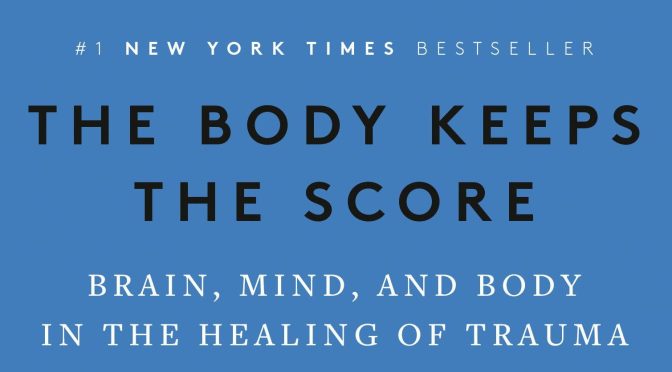
“The greatest source of our pain lies in the lies we tell ourselves,”
Gulp. What lies am I telling myself?
The Moment that Sparked This
A few weeks ago, a friend looked at me mid-conversation with a strange, tilted smile. She gently asked, “You’ve told me this before—three times, actually. Do you not remember?”
I laughed it off. Again.
But later that night, in the quiet, I didn’t laugh. I stared at the ceiling and asked myself the question I’d been avoiding:
What am I not remembering…and why?
I’ve always thought of myself as self-aware, maybe even hyper-aware. I’ve studied psychology, therapy, trauma, neuroscience—you name it. So how could I, of all people, not see my own blind spots?
That question is what started this post.
What Lies Am I Hiding From Myself?
Here’s the trickiest part:
I think I do know.
Not in the way you’d expect—
I’m not lying to you.
But I might be lying to myself.
Because deep down, I feel it.
There are gaps. Blanks in the story I tell myself.
Parts that feel foggy—like I lived them, but only in theory.
And every time someone close to me—someone who’s paying attention—points out my repetitive and frequent memory lapses or the inconsistencies in my timeline, I brush it off.
At least, I used to.
You see, the brain is wired to protect us. Survival, at all costs.
Darwin nailed it.
When the stress is chronic, intense, and unrelenting, your mind steps in and starts hiding things.
It buries what you can’t afford to feel.
And eventually, the body keeps score… and starts fighting back.
Mine is.
In my case, knowledge didn’t equal power.
It didn’t even turn into wisdom.
I know I’m forgetting something.
But that awareness doesn’t mean I can just will it into memory.
It doesn’t mean I can hand it to you, wrapped and processed and neatly labeled.
Because I can’t. I wish I could.
If you asked me right now:
“What lies are you telling yourself?”
My answer?
I don’t know.
Not because I won’t tell you.
Because I can’t remember them.
And yeah, that makes some distant part of me feel sad.
Not for pity or sympathy—I swear, this isn’t that kind of post.
I’m writing this to hold myself accountable.
To process the hard stuff.
To try to heal.
And if I’m going through all that torture…
Why not take you with me? 😏
A Story With Missing Pages
Here’s the thing: I want to tell you the whole story.
Not just the chapters where I was the victim, but also the ones where I was the villain.
But how do I do that when I know I’m missing pages?
Because maybe… my mind can’t remember.
But my body does.
I feel the ache of what’s been hidden, even if I can’t name it.
How can I be aware that I’m forgetting something… and still not remember it?
“The greatest source of all our suffering are the lies we tell to ourselves”
As I continue to re-read “The Body Keeps Score”, the preceding question keeps following me around like a dementor from Harry Potter. It looms eerily over me as I try to absorb the information, page by page.
What lies am I hiding from myself?”
It’s a deceptively simple question—and yet, deeply complex. Here’s where it gets tricky: I think I do know. Or at least, I know that I don’t know—and that matters.
Not Forgotten; Just Buried
What I mean is this: I have a sense that parts of my story are missing. Not erased entirely, but inaccessible. Like fragments of a puzzle that refuse to fit, or worse—aren’t even on the table yet. And while I may not be able to consciously retrieve repressed or painful memories at will, I’m not oblivious to the empty spaces they’ve left behind.
The Survival Mechanism of Forgetting
The crux of Darwin’s theory of survival is that the human being has been created to fight, at all costs, to survive. This means that if the brain is subjected to chronic amounts of stressors repetitively and frequently, psychological symptoms ultimately pass the “threshold” that divides the psychological and physical borders of the human make-up.
When pushed to its limits, the body not only keeps score, it also starts to fights back.
Mine is.
When the brain is exposed to overwhelming stress, especially in early developmental periods, it may suppress, distort, or fragment memory—a phenomenon known in clinical literature as dissociative amnesia (American Psychiatric Association, 2013). Over time, these psychological stressors often manifest physically, leading to what trauma scholars call somatization, or the expression of emotional distress through the body (Scaer, 2007; van der Kolk, 1994).
As Dr. Bessel van der Kolk puts it in: “The Body Keeps Score (van der Kolk, 2014), even when the mind shuts down access to traumatic material, the body often retains implicit memory through physiological symptoms, emotional reactivity, and behavioral patterns.
In my case, knowledge didn’t equal power. In fact, itt didn’t even lead to clarity.
I can’t simply “choose” to remember. My awareness of the gaps in my memory does not mean I can access what’s missing. And this disconnect—between cognitive awareness and emotional recall—is something many trauma survivors know all too well.
Dissociation: A Psychological Defense
“What lies are you telling yourself?”
The question won’t leave me alone.
The lies, I believe, have to do somewhat with the psychological concept of dissociation.
Psychologists have long identified dissociation as a protective mechanism. Pierre Janet was one of the first to describe dissociation as a process by which unprocessable experiences are split off from conscious awareness. Today, dissociation is understood as a continuum—from mild daydreaming to severe forms like Dissociative Identity Disorder (Putnam, 1997; Spiegel et al., 2011).
When the mind perceives that a memory or experience is too overwhelming, it may block access to it entirely. This is not a flaw; it’s a survival strategy. It’s a way the psyche says: You can’t hold this right now, so I will.
But there is a cost. Resilience always comes at a cost.
The price of safety can sometimes be the loss of narrative coherence. You begin to sense that your story—your identity—is fractured. You know something’s off. You feel the ache of what you can’t remember.
It’s a strange paradox: how can I be so sure I’m forgetting something, and still have no idea what it is?
Why Share This?
Because I know I’m not alone. I can’t be the only one going through this.
This post is not an attempt to gain sympathy or pity or influence. In fact, I think it’s about the opposite– it is my way of ASKING for help.
To some degree, I am being selfish. I am writing these posts, and making the podcasts because I’m terrified to do it alone.
I don’t want to navigate the murky waters of health issues by myself. They say there is power in numbers, and we are a relational, tribal species. I want to share this journey with you so that, much like Dory in “Finding Nemo”, maybe you all can help guide me, support me, and encourage me in finding my way back to myself.
The Brain That Lies to Me
How do I navigate the world with a brain that lies to me?
How do you begin to walk through the world, gauging people and their motives, or even your own, when you can’t trust your mind?
UGH! Can one of the pesky emotions from “Inside Out” just hit the “un-repress button“, so that all my emotions can return? Right now, they control me. I don’t control them.
I know that my trying to externalize my “mind” from my whole “self” is an extension of polarized, all-or-nothing thinking–a very common cognitive distortion I learned about in graduate school. I know it is a distortion–a maladaptive, inaccurate way of viewing the world. But, as you’ve noticed—knowledge does not mean power. Knowing about it doesn’t mean I’m immune to it; after all, I am just human.
How curious is it that some may even consider me adept in helping others navigate their beautiful and puzzling lives; it is a pity that I can’t seem to utilize the same interventions to help myself?– help myself in a way that is sustainable, wholesome, and hopeful.
The Body Knows What the Mind Can’t Say
“The greatest source of our suffering is the lies we tell ourselves.”
Sigh. This quote is going to be the death of me.
I really don’t know.
And I don’t say that flippantly. I mean it in the most honest, emotionally raw sense possible.
I may not know what the lies are.
But I do know they are not rooted in ignorance.
They are rooted in protection.
So instead of asking, “What lies am I telling myself?”—maybe we start with:
What truths are too painful to carry?
This shift doesn’t eliminate the discomfort, but it reframes the question from one of self-deception to one of survival.
Why is my mind wasting so much energy to make me forget certain truths?
My hunch says it has to do with emotions.
Big, painful, nimbus-cloud, feelings.
“Shame, terror, guilt, grief, powerlessness”, my brain enumerates.
I smile because, as much as my brain infuriates me, I do appreciate all that it has done for me; it is, in part, the reason why I’m here.
[SIDE NOTE: I even wrote a poem to honor the brain, His Arrogant Highness, it’s posted a few blog posts below and is titled “Loquacious Logic”. My poems are much less pedantic than posts like these—ones that butt their heads against a wall, in an attempt to understand myself. ]
I get the feeling that my brain is not half wrong. Notice that I didn’t say “thought.” It truly is an intuitive feeling–a “knowledge” that the human mind has no knowledge of.
I believe the answers lie in uncovering some of the memories associated with those big feelings.
It is scary, however, to think that in trying to protect me–my brain may be engaging in emotional censorship, presenting plausible half-truths, not allowing me to experience my current reality in all of its fullness.
*Shudder*
Ya’ll, I really need to find the “greatest source of my suffering.”
So, I need to find these
lies, hidden truths, like… they are Pokemon. Gotta catch ’em all.
and soon (I hope).
Knowledge is not the Same as Wisdom
Despite all my training—all the academic credentials, psychological frameworks, and intellectual insight—I still can’t name the exact lies I may be telling myself. Not because I’m avoiding them. But because I genuinely don’t remember them.
This suggests something profound: that forgetting is not always passive. Sometimes, it’s an active, neurological process—a form of self-preservation
Unless my upcoming EEG tells me otherwise, I’m increasingly convinced that the psychosomatic model is right: trauma, when unresolved, doesn’t just live in the mind—it embeds itself in the body (van der Kolk, 2014; Ogden, Minton, & Pain, 2006).
Hopefully, I will have more answers after my follow-up appointment tomorrow.
Coming Up Soon: Dory and Dissociation
In my next post in the series, I’ll be diving into something seemingly lighter (but surprisingly deep): a comparison between the beloved character Dory from Finding Nemo and trauma survivors who live with dissociative symptoms.
Yes, there will be tangents.
Yes, there will be science.
And yes—there will be some uncomfortable truths.
Because if I’m going to dig into this mess, I might as well bring you with me. Until then, remember:
At the end. it will all be okay. And if it’s not okay…its not the end yet.
also… welcome to the neurotic, neurodivergent nuisance of a mind. #alliterationwins
Love you always, all ways.
IG handle: @mahamabidtalent
YouTube: https://www.youtube.com/@mahamabidtalent
——————————————————————————————
Random Tangent: Neurologist Appointment
PS- I have a follow-up with the neurologist tomorrow; It’s in regard to my EEG results. I’m kinda scared.
But…
Can I tell you something, without you judging me?
Okay–so is it terrible and really ungrateful of me (yes I know, a part of me knows that it is) to almost hope that they find something? That I finally get a diagnosis? Nothing fatal, I mean. But…like…serious enough to be taken seriously?
I mean, I feel as I’ve been complaining about feeling like crap for so long that I’m kinda starting to get frustrated with people not giving a crap. I a aware that it is not life-threatening, and nothing that requires immediate attention. I truly am grateful for that– the fact that it is nothing serious.
At the same time, though, I want someone to acknowledge that my symptoms feel real to me. Even though healthcare professionals may not know the etiology of my symptoms, they can still validate that the symptoms have really drastically changed the quality of my life.
They have affected my livelihood.
Trust me—passing out on the side of the road was not by choice. Having seizures that I don’t even remember are not fun. But, unfortunately, in today’s world, we have EMS called, they do a superficial check-up, recommend going to a hospital (which will cost you your whole life)…just so they can run the routine scan and labs—stabilize you, and off you go. Let’s just chalk it up to dehydration, anxiety, stress, me being dramatic, major depression, PTSD, malnutrition…have your pick.
It’s the same symptoms–that keep getting dismissed. “Oh, it’s just a fainting spell”…”…just an isolated seizure or two”…
I feel like very few people are truly listening to me. In the last two months, I’ve had at least 8 of these fainting spells. And more, if you consider loss of consciousness accompanied by seizure-like activity.
Try having syncope (fainting episodes) every week–with little to no warning–at any time, anywhere. It’s frankly debilitating and terrifying.
I was let go from work due to a liability issue. Apparently, it’s not cute to pass out mid-sentence at a client’s house or on the side of the road on a shoulder.
In my experience, it is all too easy for contemporary healthcare professionals to chalk up fainting episodes or seizures to anxiety and neurosis. It sucks. Also, did ya’ll know they have a special code they use in the EMS to communicate when someone has an extensive mental health history? Giggles.
When I say that these episodes are happening and I’m scared, please don’t be so quick to chalk it up to my long struggle with anxiety or depression. Sure, there is probably a surge of neurotic patients seen in the ER. Yet, the irony is, it is because I’ve dealt with mental health conditions most of my adult life that I know when things feel drastically worse. Depression? Anxiety? PTSD? At this point, they are like little annoying nephews and nieces that are just along for the drive. I’ve dealt with them my whole life. So if I thought it was just symptoms from years of going through the conditions, I wouldn’t ask for help in the first place.
Passing out? Yes, I know her very well, too. She and I go way back to my panic disorder days. I am acutely aware of the symptoms associated with vasovagal syncope. I haven’t had one of those spells in years. I remember exactly what they feel like, and they don’t feel like this.
I guess all I’m saying is…I want someone to sit down with me (instead of using Telehealth or a phone) and try to hear me as a person. A central point for coordination wouldn’t be a bad idea. Why not compile all these different test results from various specialists together, analyze them holistically, and help point me in the right direction? I want someone to understand my concern because I can tell something is off (in comparison to baseline, which may, in fact, be highly neurotic).
It comes down to validating my own knowledge of my own body.
My asking for help because something feels more wrong is also not due to my pain threshold; It’s not because I’m “being a baby.” When it comes to pain, I had my daughter- 32 hours of labor with no epidural, on purpose. Worst decision ever. But that’s neither here nor there.
I think what I’m really seeking is someone who communicates respect for my own knowledge and awareness of my body, while staying confident in their own expertise. I didn’t realize how important autonomy is to me till I realized that my brain discreetly associates it with the loss of control I felt during my sexual abuse. It is that same loss of control, and helplessness that I carry with me to this very day. So, as much as I want everything to be alright at my appointment tomorrow, and as much as I truly desire for it to be nothing too serious or “unfixable”, is it inexplicable for me to want some proof on some sheet of paper to reassure myself of my own intuition? & If I’m being completely honest..a part of me also wants it as a way to say “f*ck you” to all those who made me doubt myself…and to EACH individual who treated my body like they knew it better than I did.
It’s often trying to reason with very successful and loveable left-brained doctors and lawyers, especially when they are in your family system. My whimsical right brain gets defeated pretty effortlessly when its only weapons are the very invisible “intuition” and elusive “emotional acuity.”
“black sheep”, anyone?
Anyway, until next time, keep me in your prayers. My appointment tomorrow is at 10 am ET. I have scheduled this blog post to publish at the exact same time as my follow-up appointment
Till then…
Never forget that you are the expert in your life. Every specialist, life coach, counselor, teacher—everyone outside of you simply serves as an ally to help add depth, vocabulary and detail around your real experience.
Till next time, do not forget that ~*you are iconic*~.
Love you always, all ways.
IG: @mahamabidtalent.










 abidmaham