
And track of your bullshit too (unfortunately)
Ya’ll I started reading again. I immediately regretted it. I came across this rattle snake quote:
“The greatest source of our suffering is the lies we tell to ourselves.”
Dr. Kolk, you nearly gave me a heart attack with that quote.
And then…you used it twice?
To make sure repressed memories had not just one–but two chances to pester me?
I see your subliminal messages, Kolk, I see you. Lol.
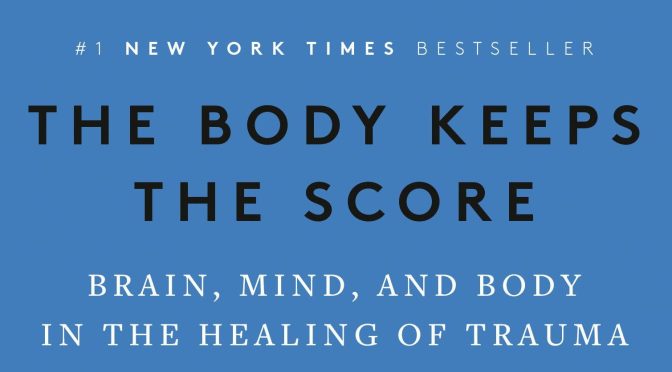
Anyway, I started re-reading “The Body Keeps Score”, a book by Dr. Kolk (MD) who offers sturdy evidence supporting the psychosomatic model of wellness. I admire how the book reminds us to view the human being through a wholesome, holistic lens– especially when tailoring treatment and interventions from a psychological, spiritual and physical standpoint. Furthermore, in his book, he manages to brilliantly unpack trauma in a way that is accessible to the touchy population that struggles with it, day in and day out. It is easy to follow, written objectively, and therefore, most importantly, explains and “unpacks” trauma and its effects in a a way that is NOT retraumatizing.
THE FIRST YUCKY EXPERIENCE
So anyway, back to my first re-stab at figuring out why this quote elicited such a disharmonious yet congruent feeling from deep within a crevice of my soul?
“The greatest source of our suffering is the lies we tell to ourselves.”
In this revered book, “The Body Keeps Score”, Dr. Kolk refers to the preceding quote, not once–but twice. I wish I could say that the first time I saw it, I just glazed over it, giving it no attention; I truly wish I could tell you my mind’s ability to repress sh*t was stronger than my body’s ability to react to the sensation it evoked. I think that I would have found some solace is NOT being able to relate to the quote, despite how abstractly I did. It would have confirmed my bias because I could use my detachment as “proof” to myself that it really is “mind over matter” and in this case, “mind over body and trauma.” But…that would keep me in denial (which is an area I apparently love hanging out in)… and it would also kinda go against the very premises of the book he wrote 🙄
Dr Kolk’s very research builds its case on an overarching and (most likely true) assumption. Like many other social scientists and neurobiologists, Kolk implies that no matter how arduously the mind tries to make us forget about big feelings, the body doesn’t just simply follow suit and “forget” too. This phenomenon is so evident in the recollections of relentless flashbacks experienced by so many PTSD warriors. It is such an odd feeling. One second, our day can be going fine and dandy then one flipping sensory cue later–like a certain quote, a phrase, a sound, someone’s voice, a fragrance, a temperature fluctuation, a visual cue, the cadence with which one talks… any sensory “trigger”– which may seem miniscule and relatively insignificant has the capacity to bring with it a torrential tsunami of sensory and affective overload that is so typical to trauma.
So…. long story short–no. I can’t, with full honesty, say that I was able to simply skim over that quote without feeling any connection to it, regardless of how distant it felt at first. The truth is the words literally caught my attention. The first time I saw the quote was on page 11.
“The greatest source of our suffering is the lies we tell to ourselves.”
I read it, it made me stop. That means a lot to me.
I also know that when it comes to quantifying something, phrases like “a lot” and “a little” are subjective measurements of that are so variable and therefore unhelpful. So let me rephrase– for me, having a random “quote” elicit some abstract “sensation/feeling” out of me that I couldn’t even pinpoint long enough to make me cranky was pretty remarkable.
I don’t think you realize how severe my inattentive subbrand of neurodivergence is.
On that topic, for something to really stop my inattentive, million mph mind in its tracks, even for a few seconds--it means a lot. It was the first sentence in this book that made me truly pause. It left me speechless.
The first time I came across the quote, it simply resonated with a repressed subconscious part of me. It’s almost as if when I read it, a deeply buried part of myself echoed back out, noting, “hmm…how peculiar–I wonder what parts Maham’s brain is hellbent on hiding from her…and why?”
The quote read me. I didn’t read the quote.
I swear, I’m not trying to sound like Yoda; I’m trying to use words and language to effectively capture and hopefully, convey the eerie experience of association i had with that quote. Reading it…reminded me of something very familiar–like deja vu. Okay, so most of ya’ll will understand this example–its the same, unexplainable, intuitive feeling that you get when you meet an absolute stranger–and in that moment, you don’t know how and no reason to logically think why, but you FEEL and KNOW that this person is going to come to mean something so important to you one day. Maybe the experience is a result of Carl Jung’s “collective unconscious” giving us a kick in the behind saying we’ve experienced their energy in a past life…or maybe the experience is to activate our fight or flight reflexes to run because we are running into the next Ted Bundy reincarnated–I don’t know. I deflect.
THE SECOND, EVEN YUCKIER EXPERIENCE
Anyway, the SECOND time I happened to “stumble” upon Dr. Kolk’s accidental use of the same eerie quote on page 27, it came together. I felt, understood, and remembered why the quote struck such a deep discordant chord within me. My thoughts, feelings, and sensorimotor recall reintegrated to form a cohesive memory that I could call upon.
That’s the irony in trauma–the very experience of it impairs our prefrontal cortex functioning, which is responsible for a lot of higher order thinking skills. Sometimes I feel like trauma created this weird delay between my right and left brain conversations. Anyway, on page 27, the second time I read the quote, had given my right brain sufficient time to get in contact with its left counterpart, very temporarily turning on my and my executive functioning skills.
What the pedantic jibberjabber above pretty much says, is that my mind finally caught up to my body, and I understood why the same quote had evoked a disconcerting and gut-wrenching feeling when I first read it on page 11.
“The greatest source of our suffering is the lies we tell to ourselves.”
“Well,” I had initially thought, “what lies am I telling myself?”
“Um…none–” is what my my frantic flight-or-flight response had impulsively interjected, fearing that we may be getting “warmer” to the truth.
The book talks about how since the greatest sources of our suffering are the lies we tell ourselves, then healing must essentially lie in us becoming rigorously honest with ALL parts of ourselves. That can be particularly hard in individuals whose chronic struggle with cPTSD has resulted in large degrees of dissociative episodes that are sprinkled with larger and larger time periods they have no recollection of. Because, to be completely honest, I feel like I have realized the “lies I’m telling myself” before in therapy…I just think, they are too painful to sit with. We are all strong enough to face our demons for a brief period, until the human brain launches its super power of self-preservation power and despite realizing what’s holding you back, you also simultaneously know that you WILL MOST CERTAINLY FORGET any truth that can help you make true progress very SOON.
So, putting my judgement aside, I reread the quote, and thought about it. “Seriously, all bull**** aside, Maham,” I asked myself, “What is going on?” What am I hiding from myself? I mean, clearly knowing me, if I’m hiding it that strongly from myself, it probably has something to do with a lot of shame–like a crippling amount of shame that I can’t psychologically handle without the possibility of fracture. Dr. Kolk talks about this agonizing shame as a hallmark among most PTSD survivors, despite the inherent variability seen in their respective traumas. The complex nature of trauma does not help, as oftentimes, survivors snap and react in ways that are not characteristic of themselves immediately after a trauma; it is usually the aftermath of the moment in which the psyche fractures. (Yall, there is a great Tyler Perry movie on Netflix about this called “Straw”–>Watch it!)
Shame could come from the actions one did/did not do to protect themselves in their situation, and yet shame could also come from dealing with with isolating stigmas, and ostracizing cultural narratives. The sources for the tormenting shame felt by trauma survivors are myriad in nature, however, the palpable presence of the dementor that is shame in all those who have experienced PTSD is a great starting point for further research.
As I sat with the quote longer, my stomach dropped.
Why do I refuse to eat? Why do I not want to live? What am I not forgiving myself for?– so much so that I want to punish myself by barely getting by?
The intrusive thought/s just popped into my head, and gave birth to a million other equally disturbing tangential thoughts. Because clearly, the one thing all my doctors, despite their specialty, can agree on is that:
I am slowly killing myself by depriving myself nutritionally in a chronic manner; it is not suicide that is imminent. It is a confounding and tragic type of slow existential death.
And it is a painful and slow death.
It looks like a period of it “just staying all in your head”, until it isn’t. Then, much like it happened for me, cute new little symptoms start emerging as physiological manifestations–but they are just psychosomatic manifestations of the same age-old psychological struggles I’ve been going through for the last three decades.
Maybe my shame lies in knowing how avidly I pursued higher education grasping at any information about trauma and its insidious impacts. I think I did in this in an attempt to “get ahead of it” and not let the trauma I felt brimming under the surface affect me. Perhaps the source of my shame results from KNOWING better and yet choosing not TO DO better…even though I think some part of me always knew there was a different way…. one that had worked for many before me.
Accumulating all the “academic knowledge” about human behavior and life after trauma, my mind still remains just as hellbent on unseeing the fact that I am literally the textbook case of the subjects we read about in our graduate courses who presented with CPTSD!
My stubborn mind refuses to believe that yes–trauma can even catch up to me, Maham Abid. My comprehension about it on a “cognitive” level does not imply that my knowledge of trauma ever translated into wisdom.
If it had, I would’ve been able to help myself from repeating the same agonizing cycles that have left me crippled with shame. “Insanity is doing the same thing, over and over again, expecting a different result,” right?
So when I read the quote on page 27 again, I tried delving past that initial recognition, and tried to connect to it more intimately. Leaning into it was not fun. It created that nasty, “crawling out of my body” sensation whose origin my mind couldn’t quite connect to or trace. I think the sensation highlighted the stark difference between how “well” I convince myself I am handling my trauma versus how “unwell” I’m actually coping with it… like, at any given moment of time. I mean, a lie I definitely perpetuate is that I, unlike all the other people I have studied about, can somehow magically go through years and years of jarring trauma and come out of it, unlike everyone else, completely unscathed.
The assumption I’m trying to highlight is the inaccurate notion that knowing better or cognitively understanding something better results in doing better. I always tend to underestimate how deeply pervasive the effects of my own residual trauma are. Likewise, I tend to overestimate how “fast” I can have recovered from some really horrific things–while in actuality, I’m only ever really putting band-aids over a gaping wound.
My amazing psychiatrist (yall, she’s put up with me for almost a decade), has told me before, so eloquently and concisely what the problem is. Years ago, she told me:
“Maham, I can keep your body alive (to some extent) using these medicinal interventions…but that’s not saying much. The rest is up to you.”
Alright, brain = explode
More deep dives into the dearth of dreary discordant dissonance later.
Hasta luego,
More bones to pick with you later, Dr. Kolk 😋





 abidmaham