“Unpacking WHAT?” I blurted out aloud, years ago. I was in the middle of attending a continuing teaching certification course.
“Unpacking standards,” the speaker repeated, much slower, almost to be clapping out the syllables.
Judging by the blank stare on my early teacher face, she looked up to my Bambi, doe-eyed self, and repeated, once again, “yes–really figuring out how you measure the things we ask you to measure.”
Floored. I was floored. My brain had never thought that far.
We have these objectives–these assessmenttools–“points of relativity” from which we are supposed to evaluate humans…in comparison to how they are doing to other humans. 💁♀️
Each educator at every level has seen them, heard of them and even had them beat into their nightmares.
Yet so few times do we have John Maxwell type “leaders” who truly take time to explain what these subjectively defined target points mean. In my 8 years of teaching, I’ve seldom had someone really break down what each objective means– into real world, observable, measurable examples I could observe in the classroom.
How am I supposed to know what a 5 year old looks like when they are “applying knowledge of structure and phonics to decode text?” That sentence alone makes my own head explode 🤯
So here is a blog post about unpacking self-compassion.
~Self Compassion: What it is it about?~
Self-compassion, as defined by researcher Dr. Kristin Neff, involves treating yourself with the same kindness, care, and understanding that you would extend to a loved one in distress. The three core components are:
1. Mindfulness
Observing your feelings without judgment or over-identification.
This is the one with whom I continue to wrestle a challenging relationship with. WE have a lot to learn about one another (which means…I have a lot of surrendering to do #nottodaysatan
2. Common Humanity
Realizing that suffering and imperfection are shared human experiences.
Curiosity is a safer friend to sit with alone; sometimes the daunting intonations of its’ companions, shame and hope, are more arduous to sit with together.
Realizing that suffering and imperfection are shared human experiences.
3. Self-Kindness
Acknowledging your pain with warmth and understanding, rather than criticism.
Self-compassion isn’t self-pity, passivity, or a lack of accountability. Instead, it’s a powerful tool to support “emotional well-being”, especially for individuals processing trauma or working toward healing:
Why Self-Compassion Matters
When life’s challenges become overwhelming (and they will), self-compassion serves, as an anchor. Research shows that compassion-focused practices can reduce anxiety, depression, and feelings of shame, key obstacles for those healing from PTSD or cPTSD. A lack of self-compassion amplifies self-criticism and isolation, leaving many trapped in cycles of guilt or fear. Embracing self-compassion creates a foundation for healing and reconnecting with yourself.
In a fast-paced world that values hustle, achievement, and productivity, self-compassion often takes a backseat. For many—including those dealing with trauma, PTSD, cPTSD, or the aftermath of difficult experiences like assault—
Practicing kindness toward yourself can feel foreign, or even impossible. However, self-compassion is a vital step toward healing and empowerment.
In the next informative blog post, you’ll discover 10 simple yet transformative ways to cultivate self-compassion, backed by mindfulness, presence, and gentle practices you can integrate into everyday life.
Trauma has a way of upending our world in an instant. For women who have bravely endured rape, abuse, or assault, the initial aftermath can feel like standing in most turbulent part of a hurricane—overwhelmed, shaken, unsure where to turn.
While the emotional chaos may feel insurmountable, it’s important to know this: healing is possible, and you don’t have to navigate this journey alone. How do I know this? Because you’re proof. You merely reading this blog post by some random stranger shows me that despite how I may feel at times, I’m not actually alone.
My goal for this blog post is to offer insights, actionable steps, and compassionate guidance to help us begin the process of recovery, no matter the crisis. We have already shown extraordinary strength by surviving. Now, let’s focus on taking the first steps toward healing.
1. Acknowledge the Overwhelm: You are not broken.
The days immediately following trauma are often filled with a tangle of emotions—shock, guilt, anger, sadness, and fear. These feelings are not a sign of weakness or failure. They are a normal response to an abnormal event. Trauma impacts both the mind and body, and understanding this can be the first step toward regaining control.
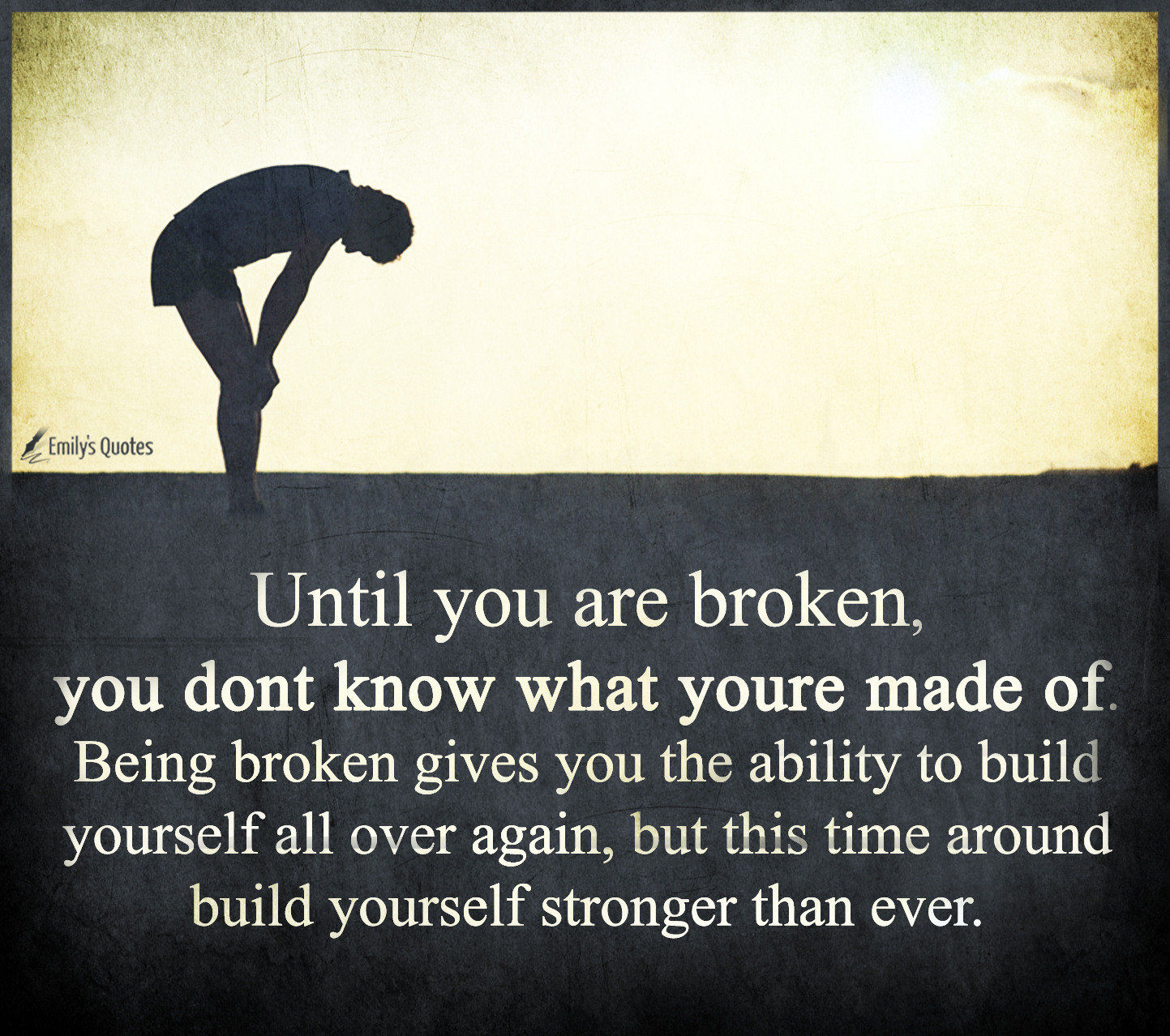
Take a moment to remind yourself that what happened to you does not define who you are. You are not broken. If you take anything away from this pedantic blog, please let it be this: you are not broken. We are simply responding to a devastating experience, and that, in itself, is a reflection of your humanity.
ACTIONABLE STEP: Begin by naming your emotions. Journaling, voice recording, or even speaking aloud to yourself can help you identify and process these feelings. This first step is vital in beginning to untangle the emotional storm inside.
2. Prioritize Your Safety and Basic Needs
The immediate aftermath of trauma can leave you feeling unsafe in your own skin. Reestablishing a sense of security, both physically and emotionally, is crucial. That might mean creating boundaries with people who don’t support your recovery or avoiding places that trigger painful memories.
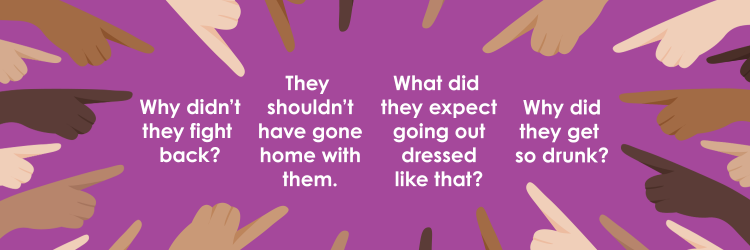
Coming from a culture in which we aren’t to date, it is so easy to pin any sort of negative domestic exchange on the women. The dissolution of a marriage? a woman’s fault. The husband cheating? it’s the woman’s fault. Assault, abuse, rape? No brainer. WOMAN’S FAULT.
And honestly, I don’t think it’s an exclusively cultural thing. I see it everywhere–in every continent; that makes my heart very sad.
If I had a penny for every time I’ve sought out support and understanding in contemporary culture and heard the statements above instead, I would be a millionaire—
“See, this is why Allah swt told you not to date–He knew these things would happen (which to some extent, I agree), –so it is your fault. If you hadn’t dated, you wouldn’t have suffered ______”
I digress.
In the aftermath of a crisis, it is equally important to tend to your physical needs as well, such as adequate sleep, nourishing food, and hydration. These seem like small tasks, but they lay the foundation for emotional healing.
ACTIONABLE STEP: If safe, reach out to a trusted support system, whether it’s a friend, family member, hotline, or therapist. Convey your need for safety and begin to design a personal plan to help you feel grounded.
3. Give Yourself Permission to Feel
Survivors of rape and abuse often try to suppress their feelings, either out of fear of being judged or because the feelings are too hard to face. However, bottling up your emotions will only prolong your pain. It’s okay to cry, yell, rest, or express your emotions in a way that feels safe for you.
One of the most painful consequences of trauma is feeling invalidated—whether that’s by others or your own inner critic. You may hear thoughts like:
it was my fault
it was because i wore that
it was because I drank too much
it was because I was vulnerable. I knew I shouldn’t have gone.
it was because I dated.
it was because I asked for it.
it was because I don’t remember it.
The list goes ON and ON. But you know what I find to be the motif among the list….
“It was because I deserved it'”.
ACTIONABLE STEP- Try journaling as a form of release. Write without censuring yourself—this is a space just for you. Putting your feelings into words can help you process what happened and regain some sense of control. Remember, feelings are not right or wrong; they are simply part of your healing process.
For me, writing poetry is such a cathartic experience. When I’m flooded with intrusive thoughts, I start finding words that rhyme in my head. Honestly, as a kindergarten teacher, it works. It takes quite a bit of brain power to generate words that rhyme–much less, string them together in a sentence that abstractly captures my feelings.
Understand the Immediate Aftermath of Trauma
When trauma occurs, your body and mind react instinctively to process what happened. These reactions—whether they manifest as numbness, fear, anger, guilt, or disbelief—are completely normal. Your brain is trying to make sense of something senseless and figure out how to protect you moving forward.
Many survivors describe feeling like they’re in a fog or like life has suddenly changed in an instant. After a sexual assault or act of abuse, the fight-or-flight response remains heightened, leading to physical and emotional exhaustion. The first step in addressing these overwhelming reactions is to remind yourself: everything you’re feeling right now is a valid response to trauma.
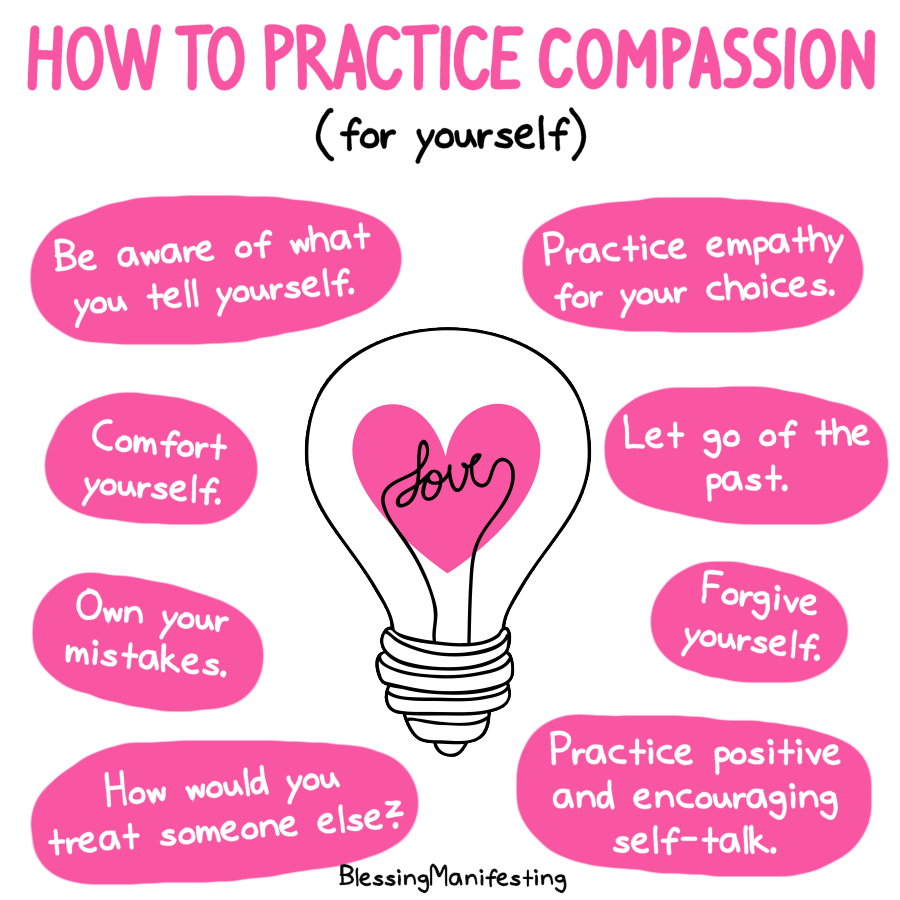
Our journey to healing starts with self-compassion.
And that’s what we’ll dive deeper into in my next post–practicing self-compassion.
But for now…
ACTIONABLE STEP: Start practicing and incorporating self-compassion.
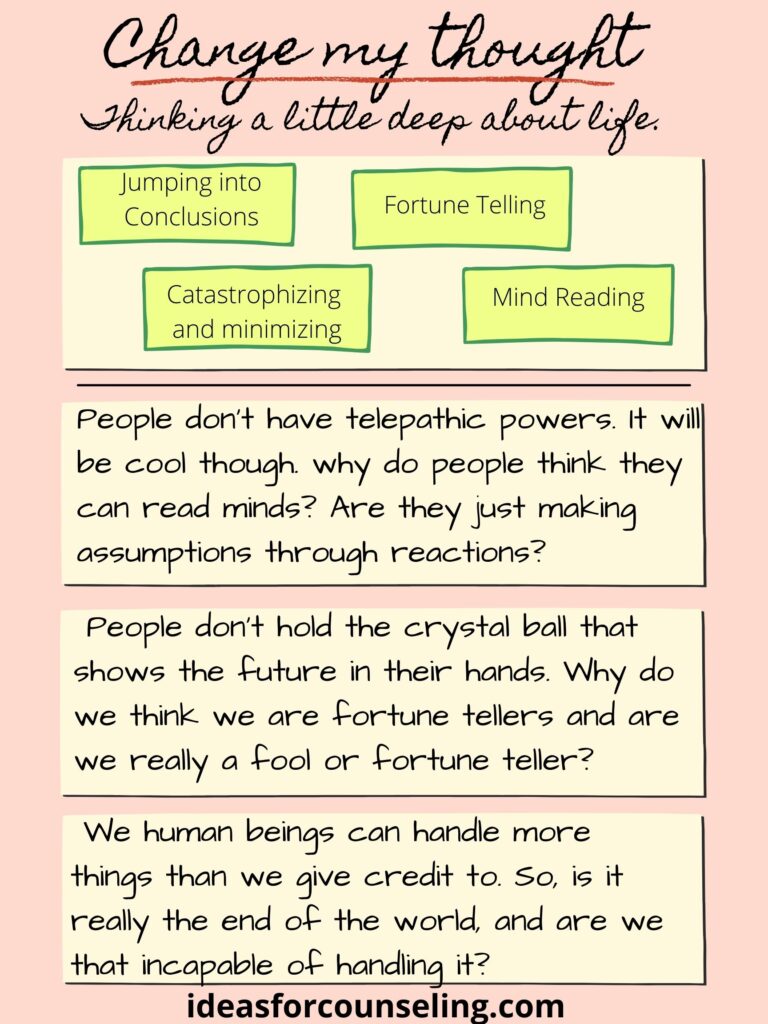
A twin sister of mind-reading, who happens to be just as convincing in the least helpful ways is….
drum-roll!!!!!!
Albert Einstein, one of my favorite scientists said: “we cannot solve problems from the same thinking patterns we used in creating them.” This means, we cannot use the same patterns of thinking that manifested the problem to try and construct solutions that will actually work.
That is why it is so essential to become aware of these common cognitive distortions. Once we can develop a meta-cognition, of sorts, to observe the faulty patterns of cognition our minds may have developed over time, we can begin to solve deep-seated issues within our psyche.
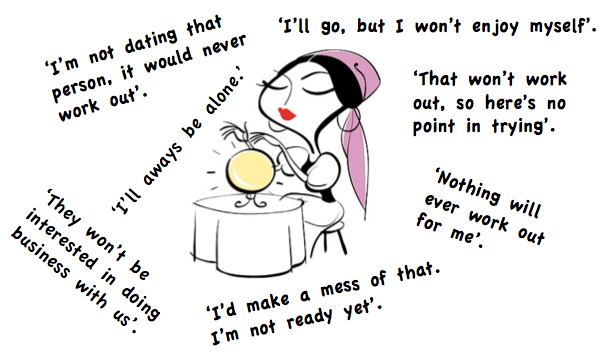
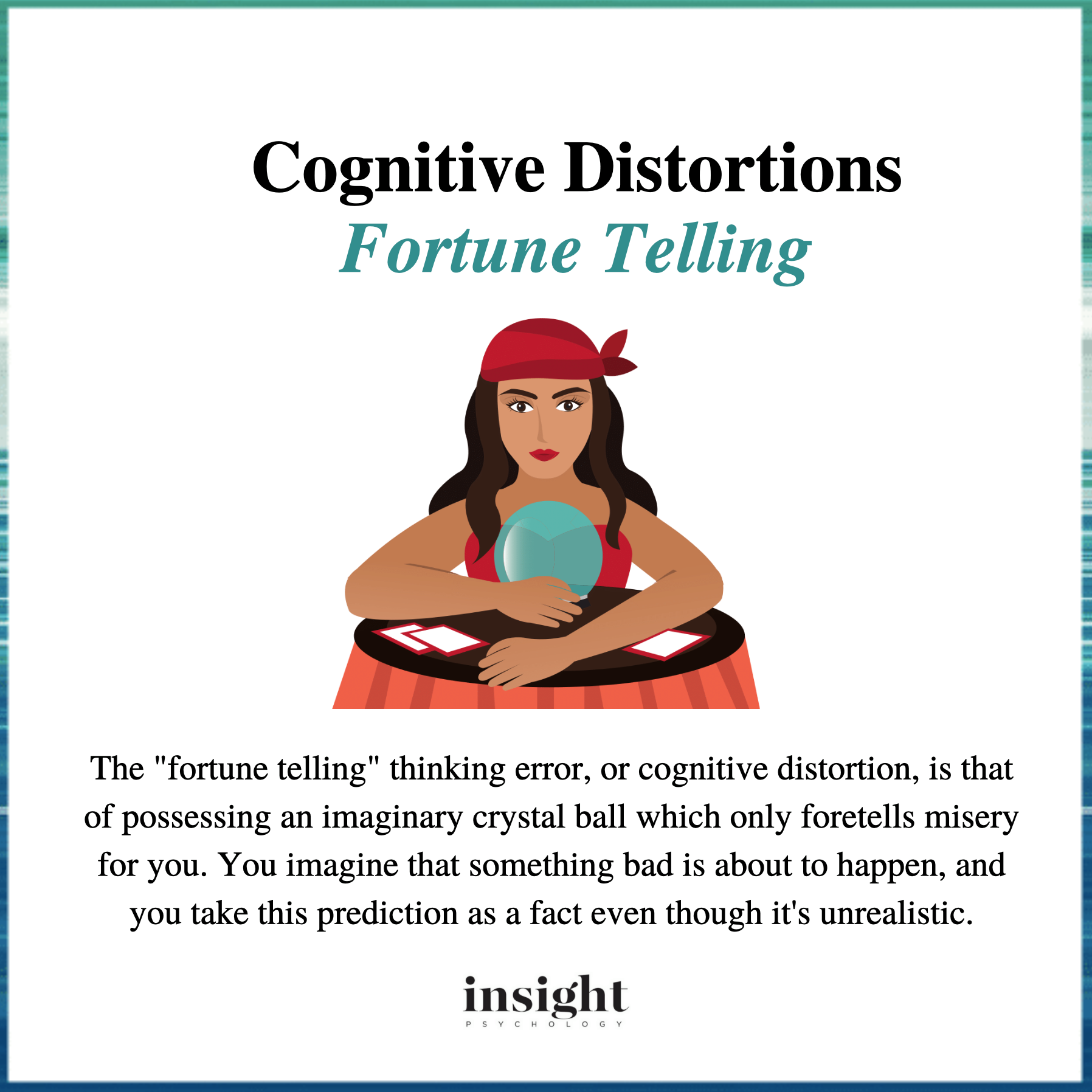
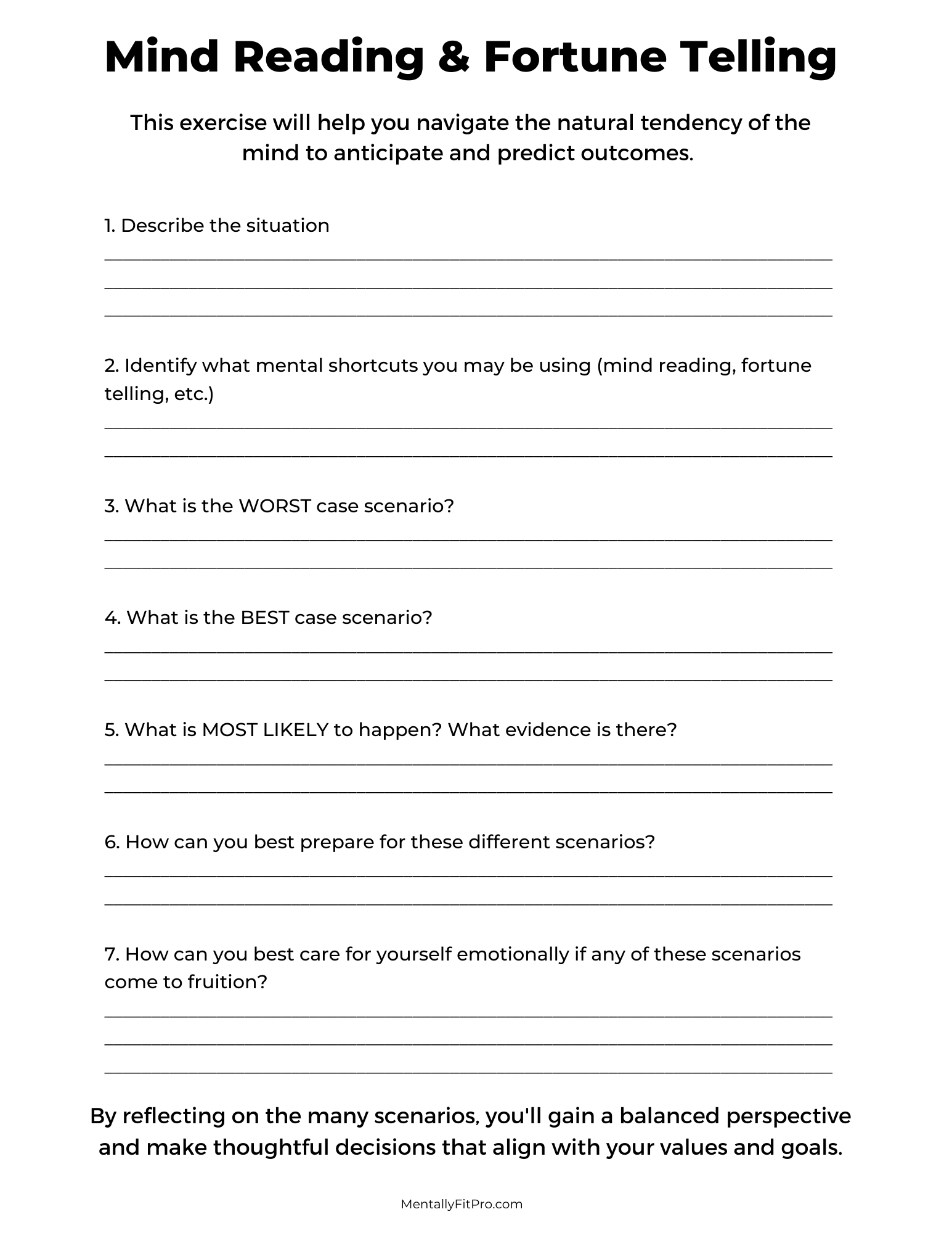
Fortune telling, much like mind-reading, is a branch in the family of cognitive distortions associated with jumping to conclusions. Fortune telling is a cognitive distortion that predisposes us to favor and predict a negative outcome without realistically considering the actual odds of that outcome.
This type of predilection towards worst-case scenarios is usually linked to anxiety and depression. Most often, those of us struggling through an active anxious or depressive episode display skewed thinking about the world and ourselves.
In fact, when I was practicing counseling in New Orleans, fortune telling was actually one of the most common cognitive distortions that came up for my clients. They seemed to have this eerie unbased “knowledge” that things would just end in a very catastrophic way without any real logical evidence to believe so.
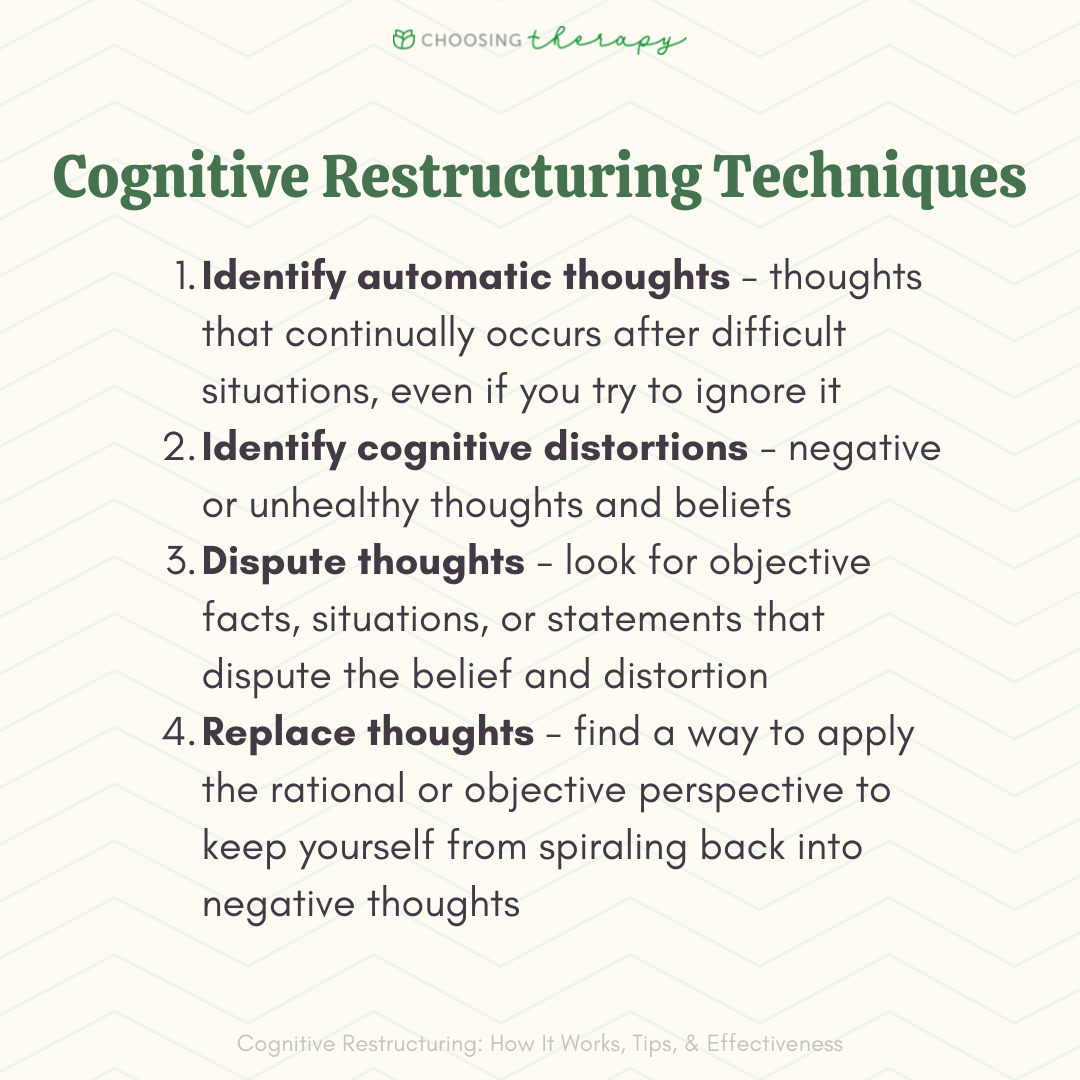
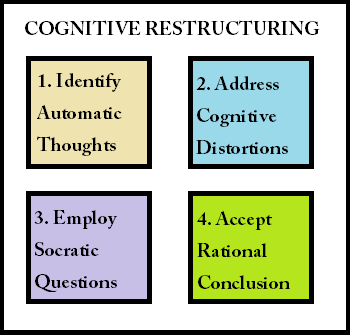
The process of taking some of these rehearsed faulty patterns of thinking and retraining the brain to replace them with helpful, more realistic and healthy patterns is called cognitive restructuring.
In psychology, especially among therapists that employ the CBT modality, cognitive restructuring is a technique used heavily to help individuals become aware of the age-old narratives they come in telling themselves. After appropriate reflection, clients are then challenged to analyze whether or not they would like to change their self-talk and automatic narratives. If clients decide that the benefits of change outweigh the price of staying the same, the therapist works directly with the client and helps reframe unhealthy automatic core beliefs to more helpful, healthy and productive ones. That is the goal of cognitive restructuring.
Our deepest beliefs, or cognitive schemas, are essentially the byproduct of a well-rehearsed story that we have knitted together through our own lifespan. Some of the meanings that we assign to our experiences are conscious, however, the process of forming our patterns of thinking are largely done by subconscious sources.
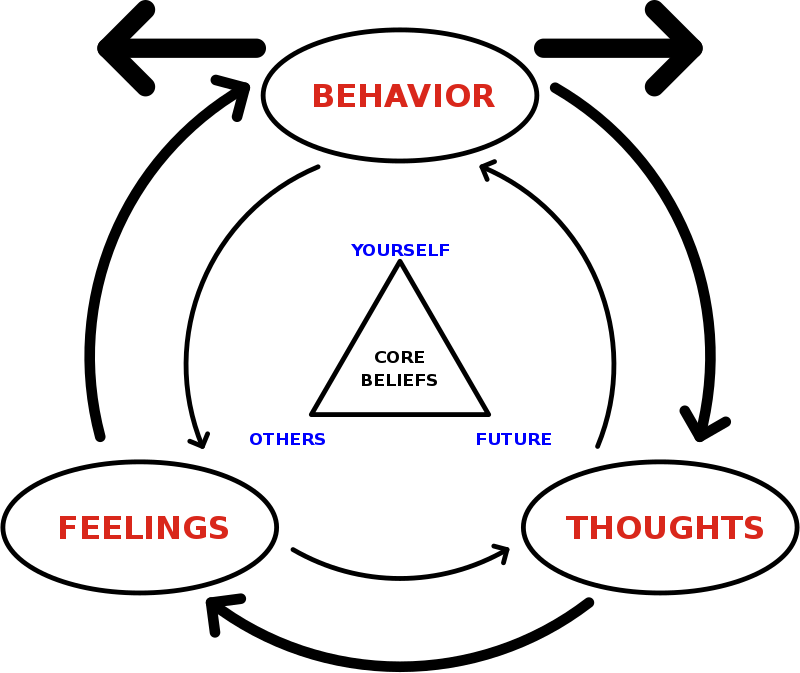
We see our beliefs reflected in our thoughts, feelings and actions. Our behaviors are the closest indicators of our true internal thermostat and core beliefs. The simplified medical way of looking at cognitive distortions is that once patterns are repeated, the brain simply learns an efficient, easier pathway of firing to arrive at a faster “action state”.
Here comes out the nerdy part of me! Something you may or may not know about me is that I pursued a double bachelors in Biological Sciences and Organic Chemistry in college. I graduated valedictorian of the college of sciences from College of Charleston with a summa cum laude. Studying the human body so closely sparked an interest within me to try to understand the mechanisms of the neuroplastic mind. That is precisely why I pursued my masters degree in Psychology and Counseling with a specialization in clinical mental health.
Anyway….
I want to quickly, and simply (hopefully) explain how our brains learn. The reason for this is because once we all are familiarized with the basics behind memory recollection, and how our brain creates meaning, we can begin to work WITH its natural wiring to develop more helpful patterns of thinking.
I view human beings as holistic creatures, and in no way would I ever advocate working against certain parts of ourselves. We are a unique collection of experiences, thoughts, behaviors, actions, cultures, and feelings. The more we understand each one of those compartments, the faster we can work with all facets of ourselves to improve overall life quality.
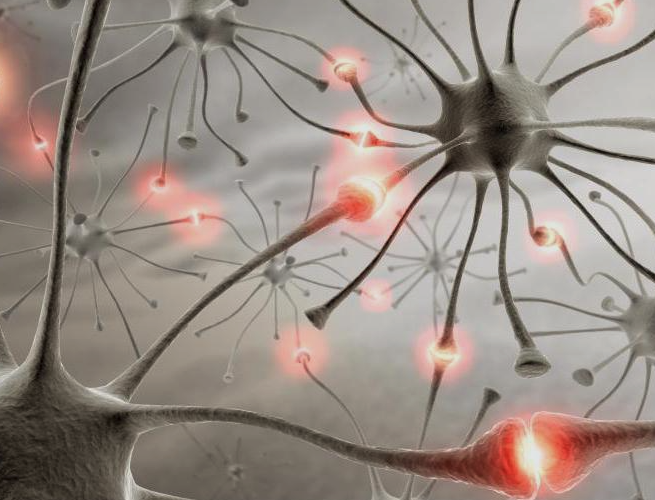
At every moment, our brain orchestrates a complex symphony of perfectly coordinated, and intentional signals across billions of neurons. These neurons, then, transmit the signals through trillions of synapses, lighting up pathways of the brain that are associated with a similar event (firing of dendrites). Becoming familiar with this complex neural circuitry enables us to start to understand the processes that work together to enable all aspects of brain function.
When we are learning something, neurons in different parts of the brain communicate with each other. If two neurons interact frequently enough, they form a connection that allows them to transmit messages more easily, efficiently and “accurately” (or so it thinks).
The more often certain neurons communicate with one another, the more fortified their connection gets. As a result, it becomes easier & easier for our automatic thoughts to follow in line with that same familiar thinking pattern. Use it and improve it!
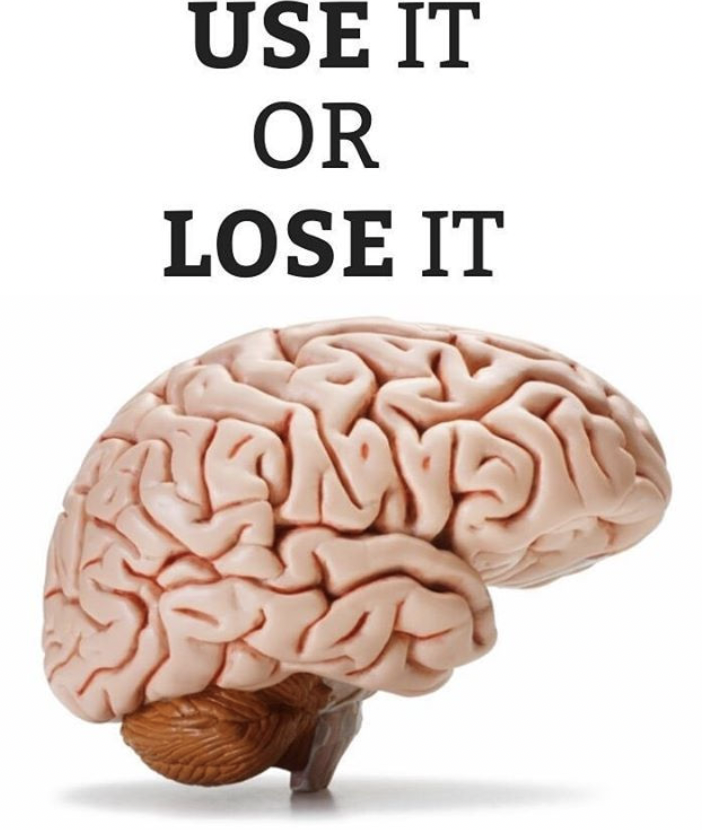
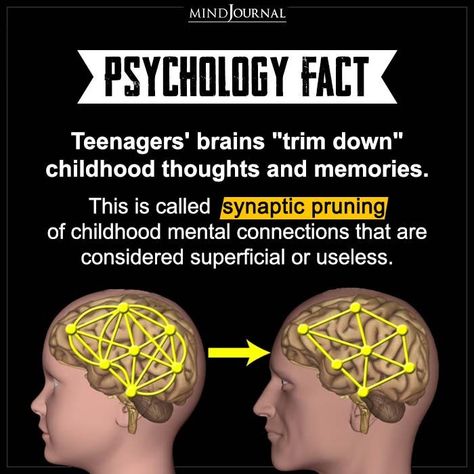
Similarly, the principle “use it or lose it” also holds true. Because there is such an infinitely overwhelming number of different pathways our brain cells can fire, most human beings tend to undergo a process of synaptic pruning. Essentially, “synaptic pruning” is just a fancy scientific way of saying “use it or lose it”
As we grow older, neural circuits that are not being actively engaged in performing tasks begin to degrade. Quite literally, this means if we do not use an area of our brain for a prolonged time, we will lose the function that was previously stored there.
The hope of so many psychological modalities lies in the neuroplasticity of the brain. Our saving grace lies in the fact that we can, with time and consistency, retrain our brains to think (and eventually, believe) differently. We have the power to wholly replace negative thought patterns with positive ones–literally, changing the very wiring of our brains.
That is some pretty powerful stuff.
If we have learned it, we can unlearn it.
Furthermore, we can also learn something else–something entirely new—something more conducive to our well being.
This is where cognitive restructuring can literally change our lives (if we let it).
Much like everything else, it takes a lot of practice and it takes times. Therefore, it is important to be gentle with ourselves throughout the process of rewiring our thinking. We didn’t just “think” ourselves into who we are overnight. By that same token, we cannot “outthink” ourselves into somebody new overnight either.
Tip #1- Challenge your thoughts by asking very basic, simple questions.
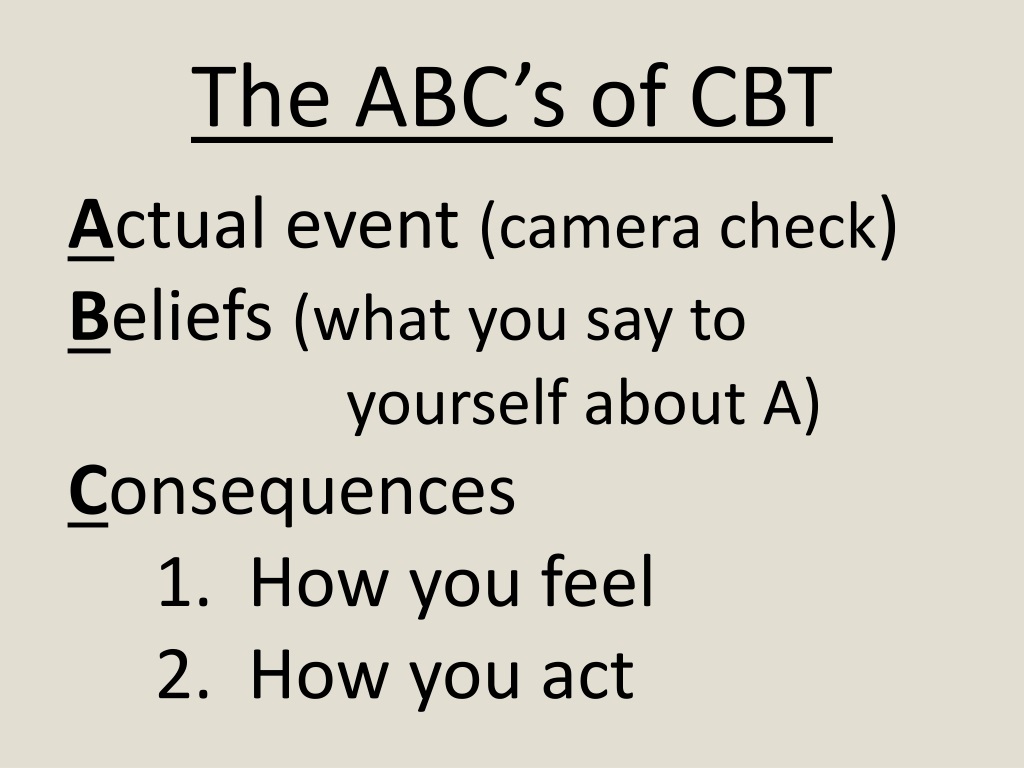
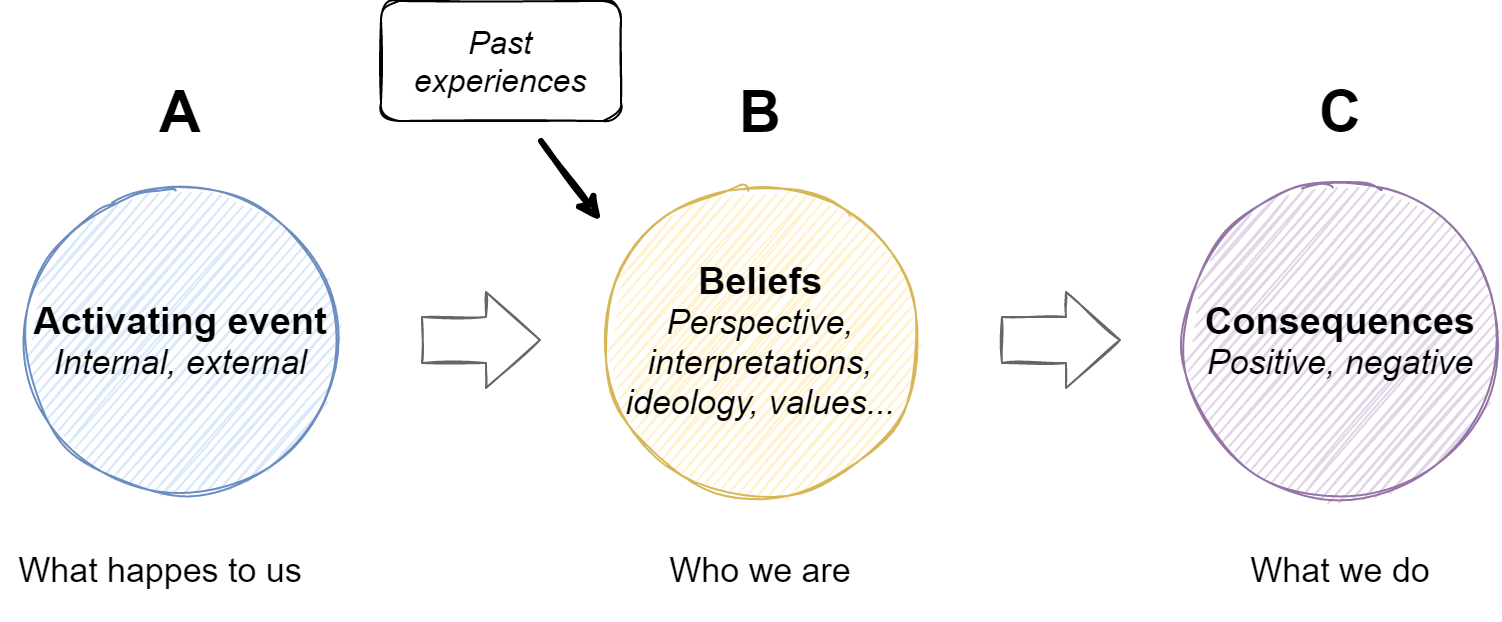
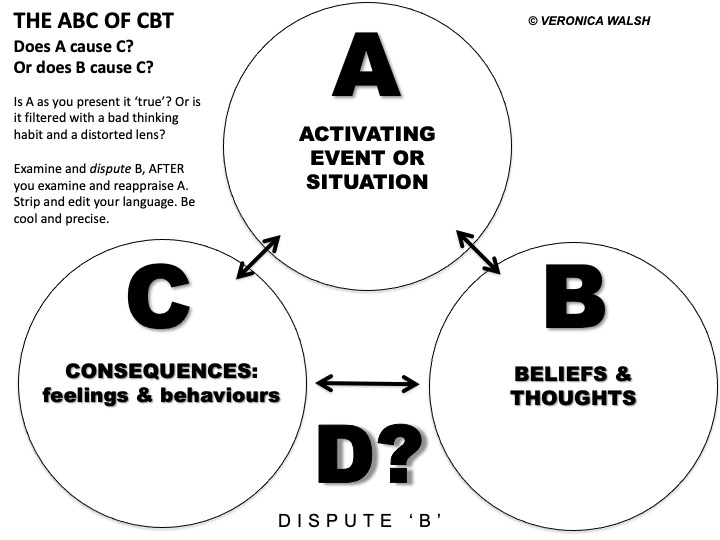
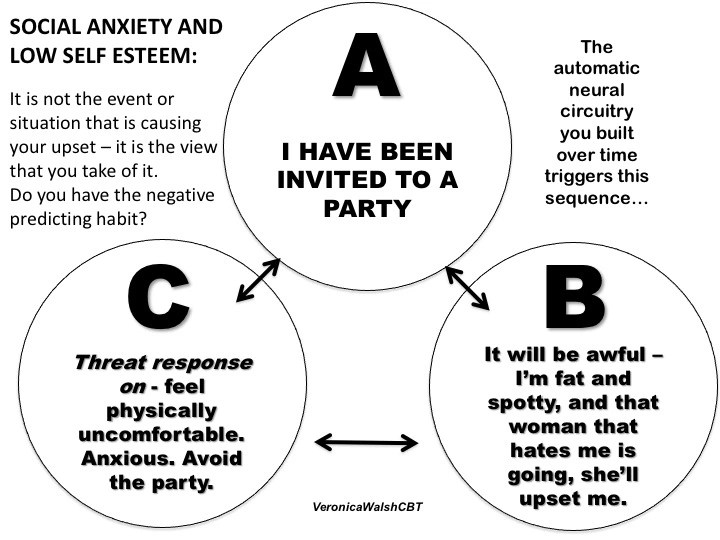
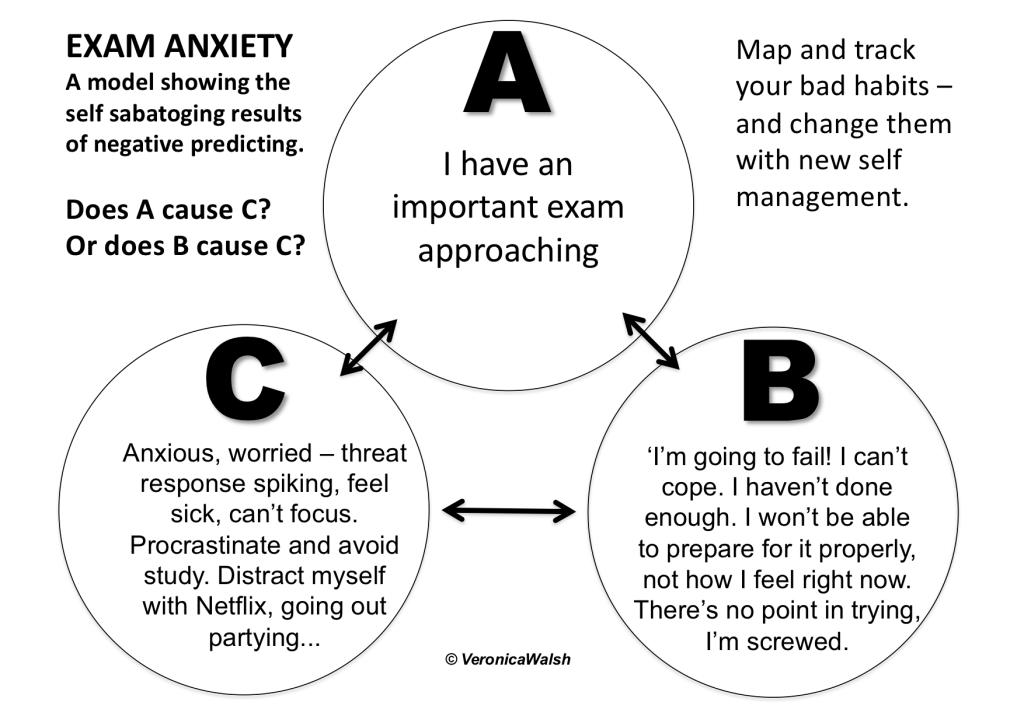
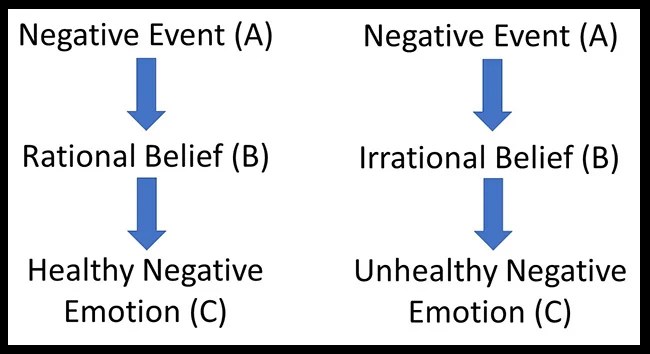
Tip #2- Use the ABC model to help slow down and track thoughts so that we can begin to change them.
What is an “ABC” Model?
The goal of conducting the ABC analysis is to truly get to our core beliefs that trigger our thoughts and feelings. Once we target what our core beliefs are, we can analyze them and figure out if they are based in reality and if they are helpful to us or not.
ABC models are most helpful when done on paper. There is something about writing things down that allows our brain to slow down processing and truly pause.
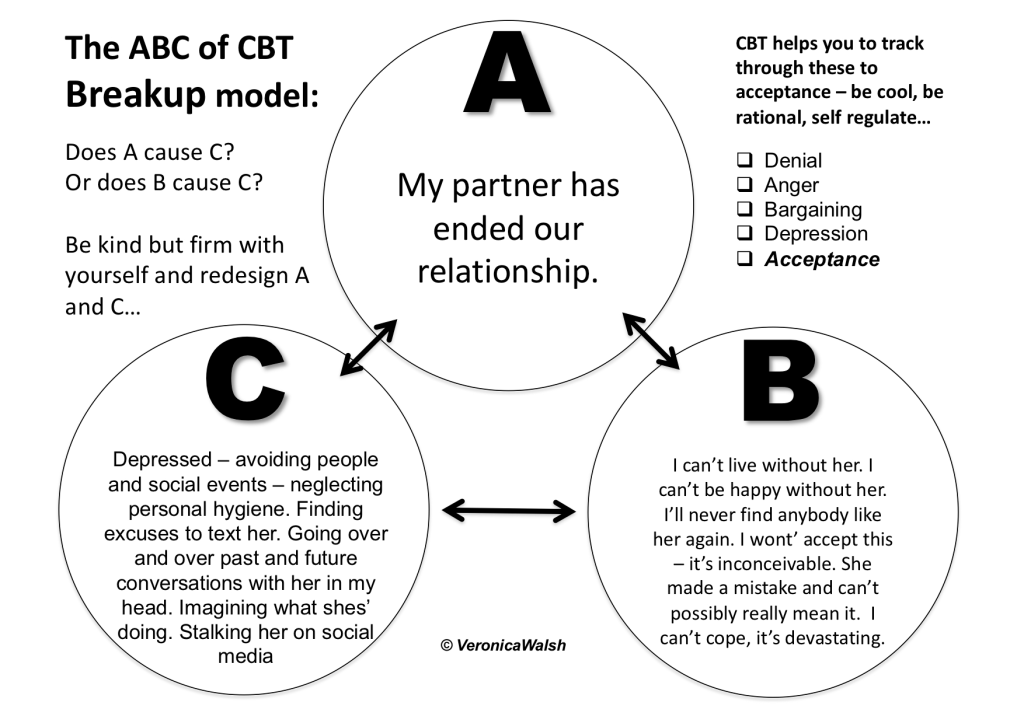
Examples of ABC models that have been done
Example 1: End of Relationship
Example 2: Social Anxiety
Example 3: Performance Anxiety
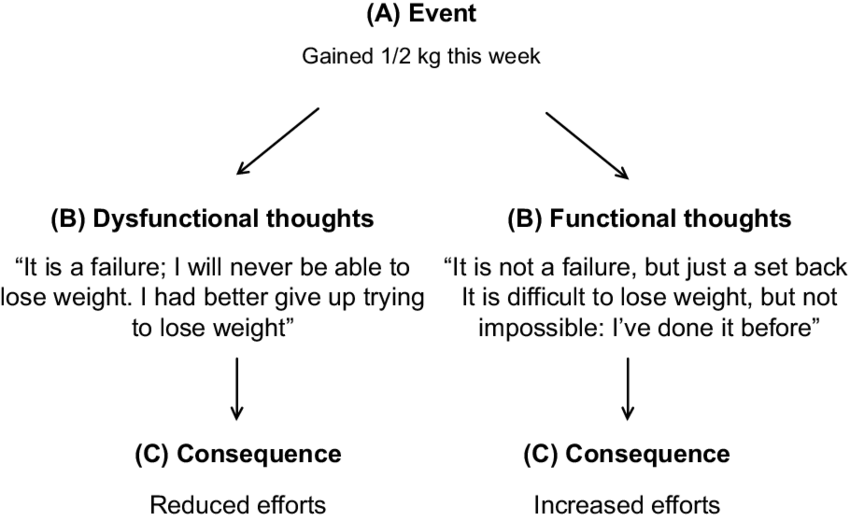
Tip #3- Use a “Behavior Chain Analysis” to monitor new and old behavior
The basic set-up for a chain analysis is as follows:
I encouraged all my clients to do at least two behavioral chain analyses. The first one should depict what would (continue to) happen in each of the categories if the core belief was left unchanged. The second one should ideally depict what would change in the respective categories if the core belief were to be challenged.
Example of Behavioral Chain Analysis utilized in CBT
Tip #4- (If you really want to do some serious cognitive “soul searching)…try some DBT or CBT worksheets that help prompt you to examine your core beliefs.
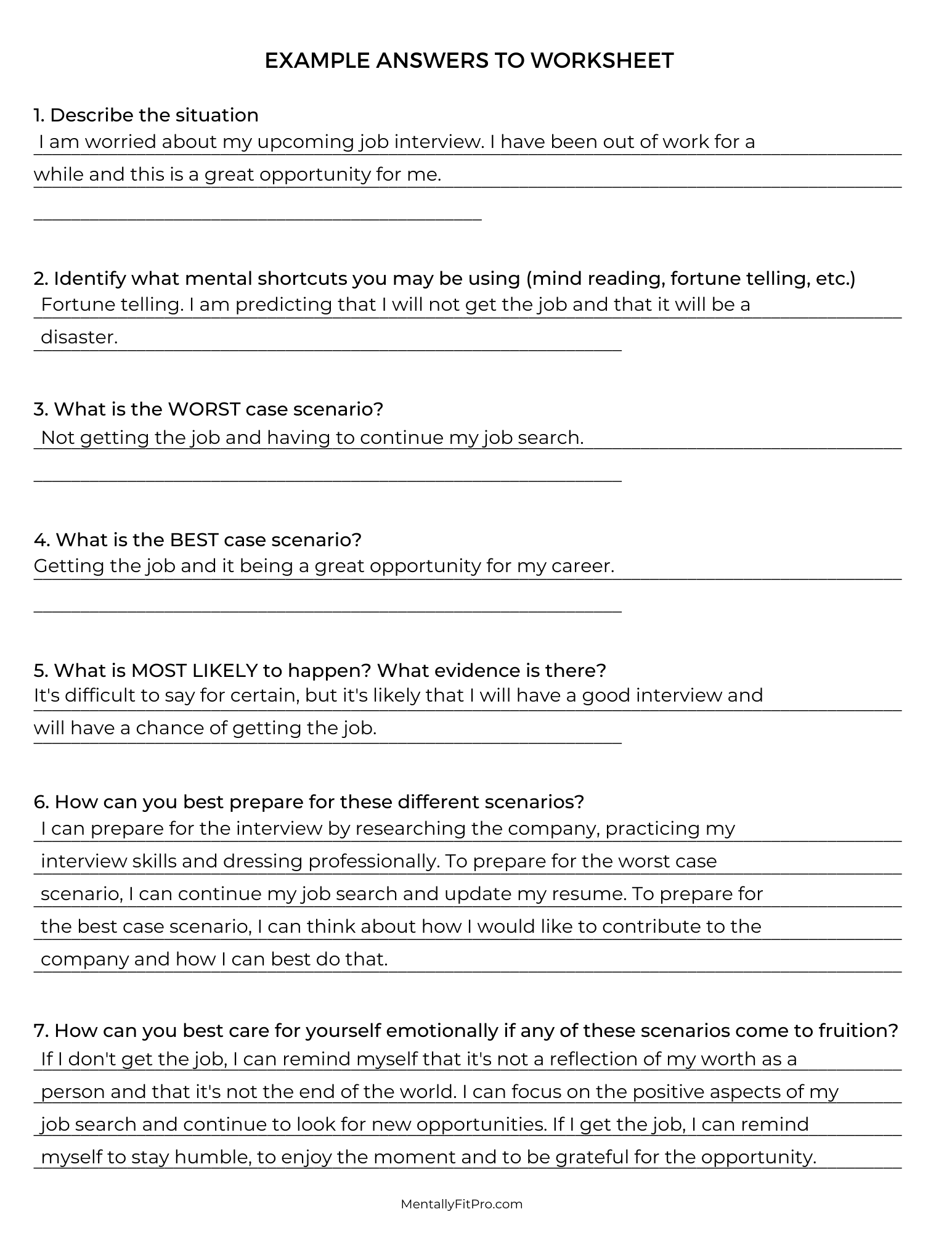
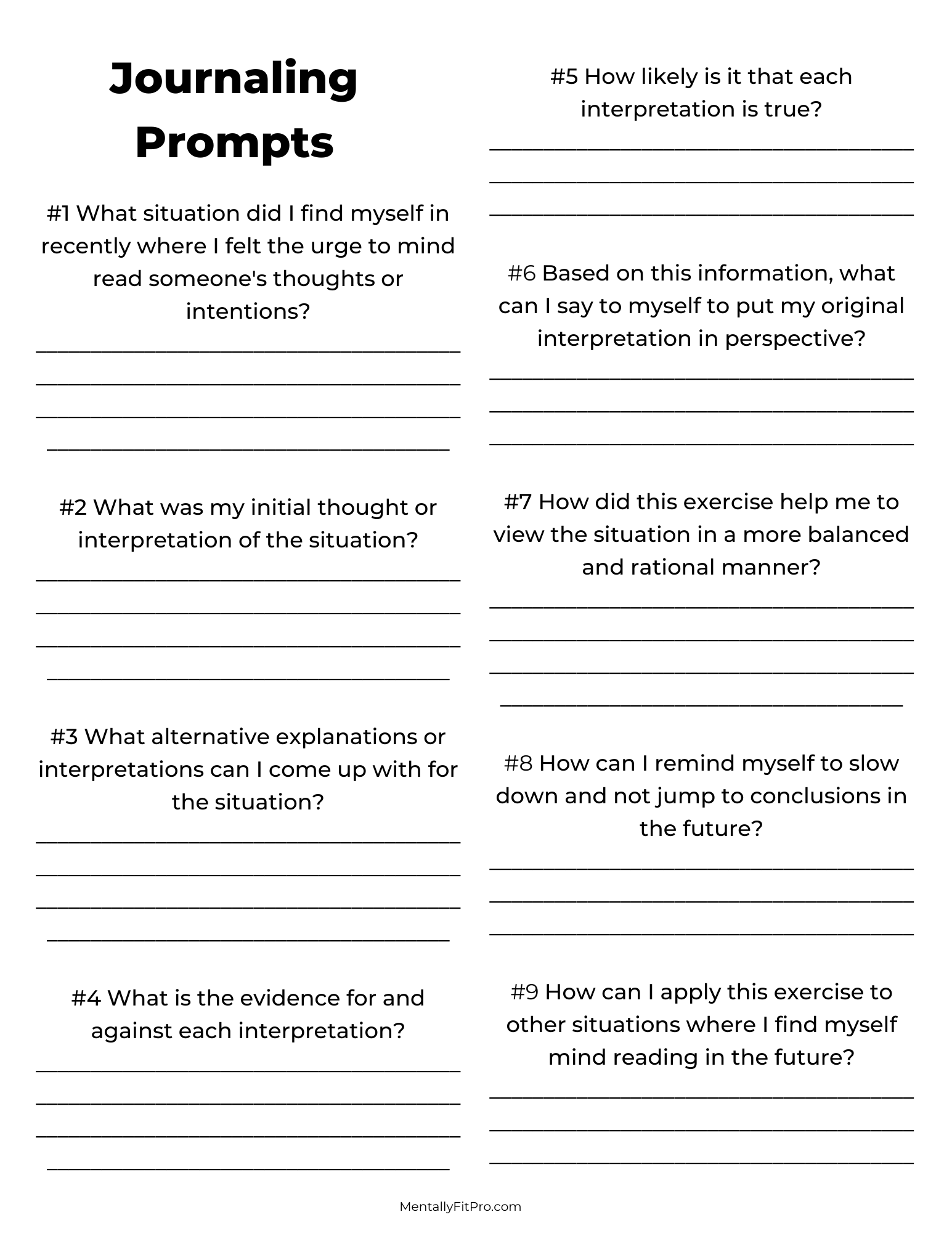
For our purposes, I am going to upload a copy of worksheet that I have used and given others to use when I find myself jumping to conclusions, engaging in mind-reading or becoming my own self-anointed fortune teller.

















 abidmaham