
I have had numerous questions regarding which types of cardio to do, when to do it, how to do it, etc. But, the most FREQUENTLY ASKED question I have been asked is some form of the following:
Will cardio bulk me up/pack on excessive muscle in the legs/help me lose muscle/help me lose fat/help me lose weight?
The answer is: yes and no. It depends.
Before getting into further discussion, please note that I am not a nutritionist or physical trainer. I do have a degree in biological sciences (pre-med track), so I can pull on from things I’ve learned regarding human muscular anatomy and physiology.
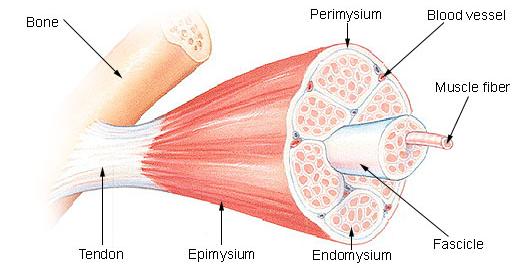
Alright, let’s first talk about what “bulk” is. When we talk about “bulking up”, we’re talking about gaining muscle. In human anatomy and physiology, we had several opportunities to observe cross-sections of muscles. What we found, in simple terms, is that there is far more to muscle than just protein. There is also water stored in muscles, as well as some carbohydrate (preserved in the form of glycogen).
So, simply put:
MUSCLE = protein + glycogen + water + other stuff.
What does this mean in terms of muscle loss/muscle gain?
If you have just started doing low-moderate intensity cardio, and simultaneously reduced your caloric intake, you may notice changes in just a few weeks. HOWEVER, you are probably not losing true muscle, or the protein part of the muscle. You are losing the other stuff by depleting glycogen stores, and water. These can be easily restored once refeeding begins. Consequently, this weight loss is not permanent.
If you have been doing HIIT, sprints, and/or participating in a strength training regimen, and you find that you are rapidly “gaining” muscle, you are most likely not gaining true muscle. It is probably due to these two things: 1) water retention, as water can leak through microtears within the muscle fibers or 2) Inflammation.
In summary, true muscle (protein) loss/ gain takes closer to a month to few months 😉

Alright, alright! So now onto some of the most common questions asked:
- What type of cardio do I do to lose muscle?
- What type of cardio do I do to keep my lean muscle but lose fat?
- What type of cardio do I do to lose errything?
Question #3
Alright, FIRST, lets start by answering the last question. In order to LOSE anything, you need to have a caloric deficit. This means, that you should be consuming less than you are burning. The caloric deficit can be small-large. It can also be created via exercise alone, and diet alone, however, the largest deficits are created through a combination of exercise and watchfulness in diet. That is why they say that weight loss is most effective when you eat less, and exercise more.
Calories In – Calories Out = -(number) for weight loss.
In terms of losing “things”, our body loses both fat and muscle when we are on a caloric deficit. We cannot exclusively choose losses from one or the other; I’m sorry but anyone that tells you otherwise needs to take a basic physiology/anatomy course. Combined with a deficit, there ARE, however, certain forms of exercises that promote fat loss while maintaining muscle mass. There are also certain forms of exercise that promote an overall weight loss (both fat and muscle).

Question #2
The answer to this question is going to be the most confusing, so please read closely! You want to keep your lean muscle mass, but you want to lose fat?
If you read the answer to the question before, you will know that it is not possible to lose ONLY fat. There will be muscle loss, but there are ways to minimize it. In another words, there are certain exercises that help preserve muscle mass, while allowing for fat loss.
Let’s begin by talking about the makeup of the muscle. I’m sure that most of you have probably heard the terms Type I and Type II fibers. Our muscles are made up of certain ratios of both types of fibers.
Type 1 Fibers (Left)
Type 1 fibers are called “slow-twitch” fibers. These fibers contain more mitochondria than the Type II ones. They produce energy for us to do our workouts by a process known as oxidative phosphorylation. What does this mean? Basically, it means that these types of fibers NEED a consistent stream of OXYGEN in order to efficiently provide energy for movement.
Aerobic = presence of oxygen
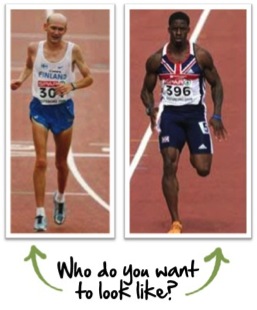
These are the types of fibers we use when we are, let’s say, standing up for long periods of time, when we are walking in a park for an hour, when we are moving around the house etc. These fibers are fatigue resistant because there is tons of oxygen present for them to utilize. When we train these types of fibers, we gain stamina and endurance WITHOUT necessarily gaining the size. (esthetically petite look, the picture on the left)
So what does this mean in terms of exercises? Low-moderate intensity cardio such as walking, jogging, and doing the elliptical trainer promotes the growth of these types of slow-twitch fibers. Because doing these types of exercises is not as strenuous on the body, you are not huffing and puffing for air, and you are not out of breath. If you are not out of breath, there should be more or less, a steady stream of oxygen going in through your nose, and eventually through your blood stream allowing the oxygen to be utilized in producing energy for movement.
Type II fibers (right)
Type II fibers are called fast twitch fibers. These are the ones that do not contain nearly as many mitochondria as the Type I’s. Because they don’t possess as many mitochondria, they do not utilize as much oxygen for producing movement. These types of fibers are able to produce energy WITHOUT using oxygen.
Anaerobic = without oxygen
But don’t we need oxygen to live? Um yes. So how long do you think you can train these muscles without oxygen? NOT LONG. They produce short-duration contractions because they cannot sustain activity without oxygen forever. They also fatigue easily because they are being forced to contract in the presence of LITTLE oxygen. Think rapid JUMPING movements and body-builder strength training. These get you out of breath really fast, and you are dead tired after a few reps. When we train these types of fibers, while
- eating at maintenance (calories in = calories out): we are more likely to preserve lean mass and have some fat loss.
- eating at a surplus (calories in > calories out): we are likely to gain strength and size in mass.
- eating at a deficit (calories in < calories out) : we are likely to get injured!
So, in short, if you are WANTING to preserve or gain lean muscle mass, and enhance fat loss, you should try HIIT.
High intensity interval training or HIIT for short, is a great way to add cardio into your routine and not spend 30 minutes-hours at the gym. The main goal of HIIT is to give you the benefits of traditional cardio without sacrificing muscle mass. Studies have shown an increase in anaerobic activity using HIIT when compared to traditional steady state cardio.
Remember anaerobic = without oxygen = activate Type II fibers = are responsible for gains in muscle mass, in the presence of a caloric surplus, and are responsible for muscle MAINTENANCE, in the presence of caloric maintenance.
Link to the study: http://www.ncbi.nlm.nih.gov/pubmed/16541371
To maximize muscle growth, exercise must stimulate fast-twitch fibers (picture on the right).
Question #1
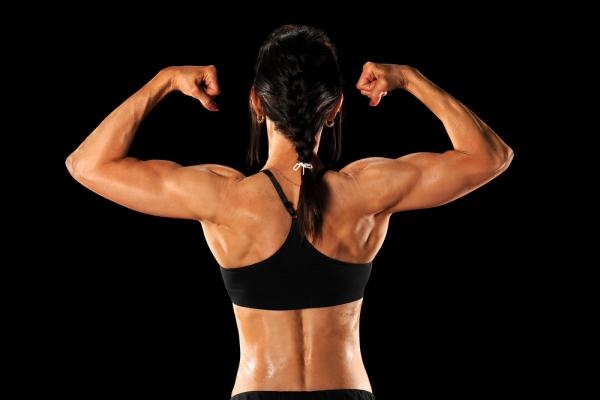
What about if you have put on more muscle than you like, and would like to reduce muscle size? I’m going to really emphasize this point again. We cannot “lose muscle” only. We lose weight.
Weight = water + organs + muscle + bones + fat + blood + inflammation + wastes
So, the better question is “How can we MAXIMIZE muscle loss?”
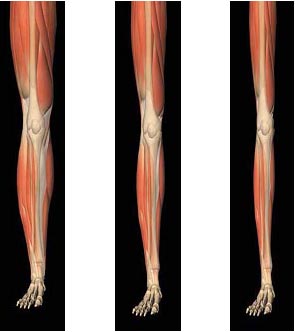
Well, lets go back to what we were talking about at the beginning of this blog post.
MUSCLE = protein + glycogen + water + other stuff.
So, it takes TIME (months) to lose TRUE MUSCLE (ie; the protein part). The first few drops on the scale are flukes because they are losses in glycogen/water/other stuff. These can easily be restored. Now, in order to lose muscle, we need to reduce strength training, and INCREASE long duration low-moderate intensity cardio!
It is VERY very VERY hard for our bodies to lose muscle. They do not want to do this naturally, and that is why it is so essential that we do LONG DURATION cardio (30-45 minutes, 4-5x a week).
When we aredoing aerobic cardio (in the presence of oxygen), we first burn through the local carbohydrate stores (the glycogen part of the muscle). Only AFTER these stores are depleted, do we start to burn some of the true muscle, or protein. The liver begins to release glucose into the blood stream for the muscles to burn through. It takes the average person about 2 HOURS OF exercise to reach a state of total glycogen depletion.
Yeah. That’s a long time. Do you have time to spend two hours at the gym a day? Yeah. Me neither. That is why having a caloric deficit is SO important! it is very tough to lose muscle through changes in excercise alone.
If you are trying to lose muscle, I recommend doing moderate intensity excercise instead of low intensity, because it burns more calories (ie; uses MORE of the energy that the body would use to build muscle, in the first place). This could include jogging elliptical trainer and a cycle (without incline or resistance). Jump roping is good, however, it has to be done for greater than 20 minutes. I personally recommend a combo of these excercises.

I want to end this blog post with something that I found helpful. A study found that if we took two people, one with high levels of body fat, and one with low levels of body fat, and fed them the same low-calorie diet, a greater proportion of the total weight lost in the leaner individual would come from muscle!! So the leaner you are, the more muscle you will lose as weight.
Citation: Hall KD. (2008). What is the required energy deficit per unit weight loss? International Journal of Obesity, 32, 573-576
I hope that this clarifies some of your confusion regarding the relationship between cardio and muscle gain/loss. ❤ Overall, I recommend that everyone performs some sort of cardio most days of the week, because it has great health benefits ❤
 abidmaham