This week, we will be returning to one of our mind’s most revered, well-rehearsed, and absolutely maladaptive ways of thinking, or what were they called again???
COGNTIVE DISTORTIONS!
Distortion, who?
WARRRRRRRRRPPPPPPPPPPPPPP
Cognitive distortions are unhelpful ways of thinking that are adopted throughout the lifespan of a human. They are usually adopted as defense mechanisms in immediate acute stages. However, if they continue to linger on and become a part of our daily routines, they become highly problematic. All cognitive distortions are patterns of thinking that are usually cultivated during a crisis–a short-term response to an emotionally overcharged situation. They are not inherently “good” or “bad.” They are just mere momentary defense mechanisms to help us get through immediate tension. When they become more overarching in our lives, they begin to infiltrate our day-to-day life and cripple our interpersonal connections and self-evaluation.
This week, WE will discuss one of the triplets of a a family of cognitive distortions.
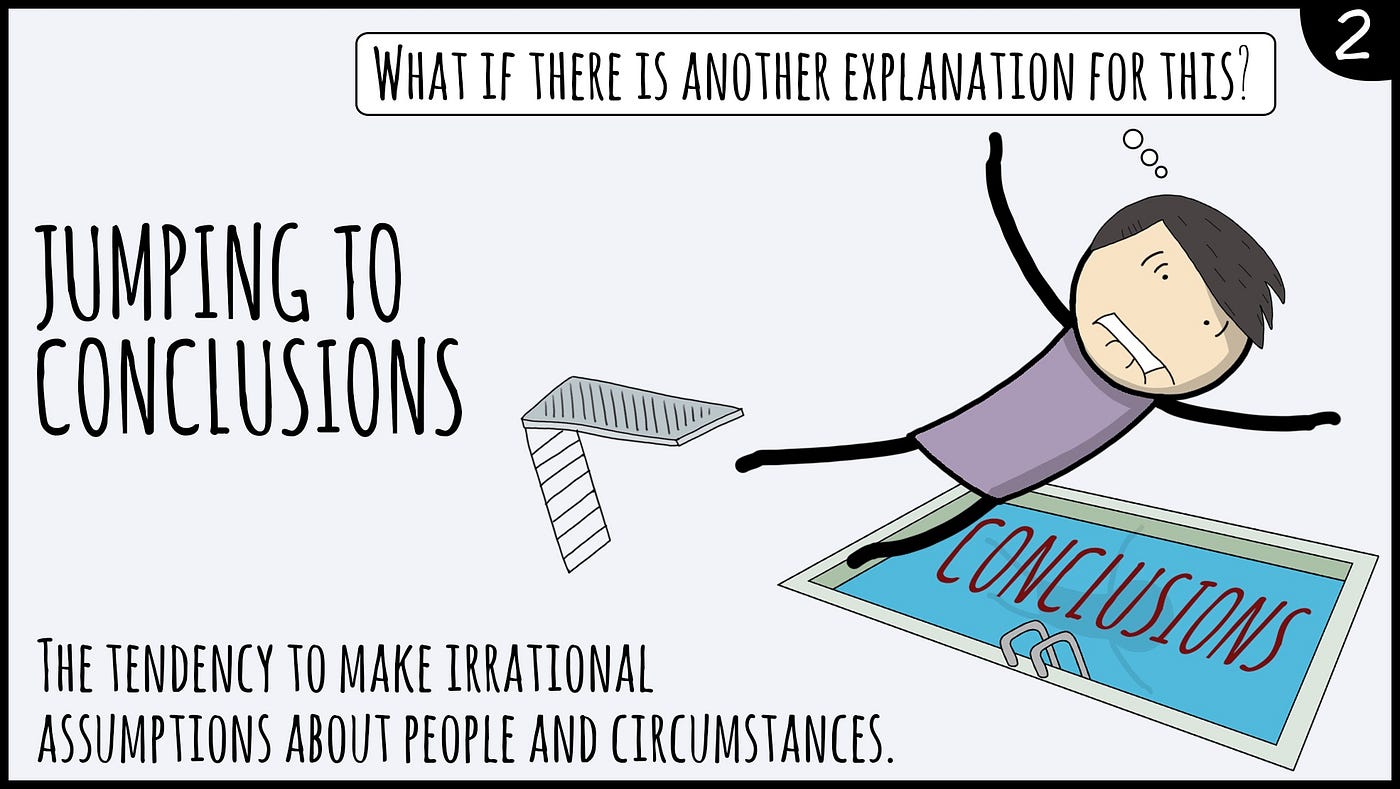
The FATHER of this family is jumping to conclusions.
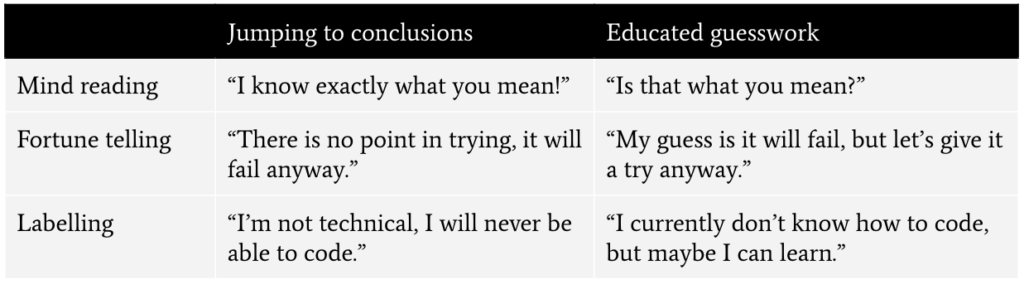
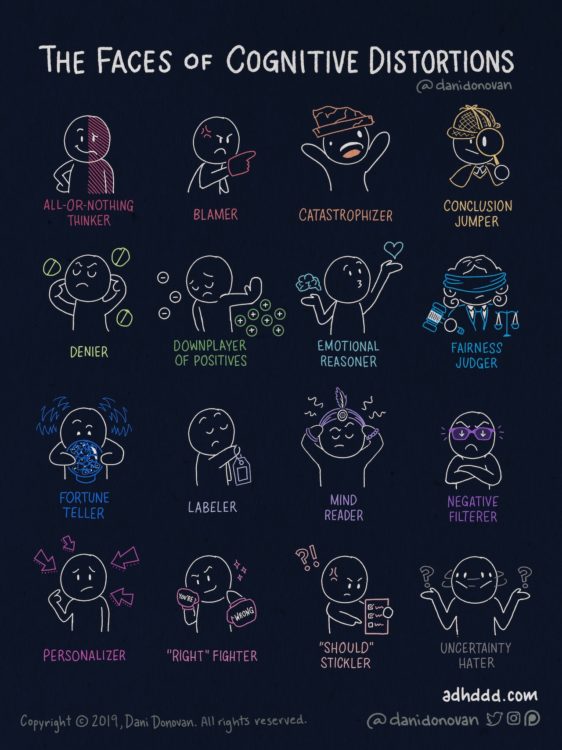
In psychology, this distortion branches out into three categories: 1. Mind-reading 2. Fortune-telling 3. Labeling.
So…what does each one pertain? Why do we engage in these negative ways of thinking? Most importantly,how do we catch ourselves in the midst of it so we can begin to stop it?
Here is your one-step stop for nipping these types of unhelpful patterns of thinking in the bud.
Mind-Reading
The first mutation branching off the “jumping conclusions” band wagon is “mind-reading”.
So mind-reading– What is it? When does it become unhealthy?
I think it’s really important to get the crisp, curt definition of the phenomenon.
In general, “mind-reading” refers to the super-human ability to discern the thoughts of each other without the normal means of communication, especially by means of a preternatural power.
In psychology, “mind-reading” falls into a subcategory of one of the most common cognitive distortions; its corresponding parent category is “jumping to conclusions.”
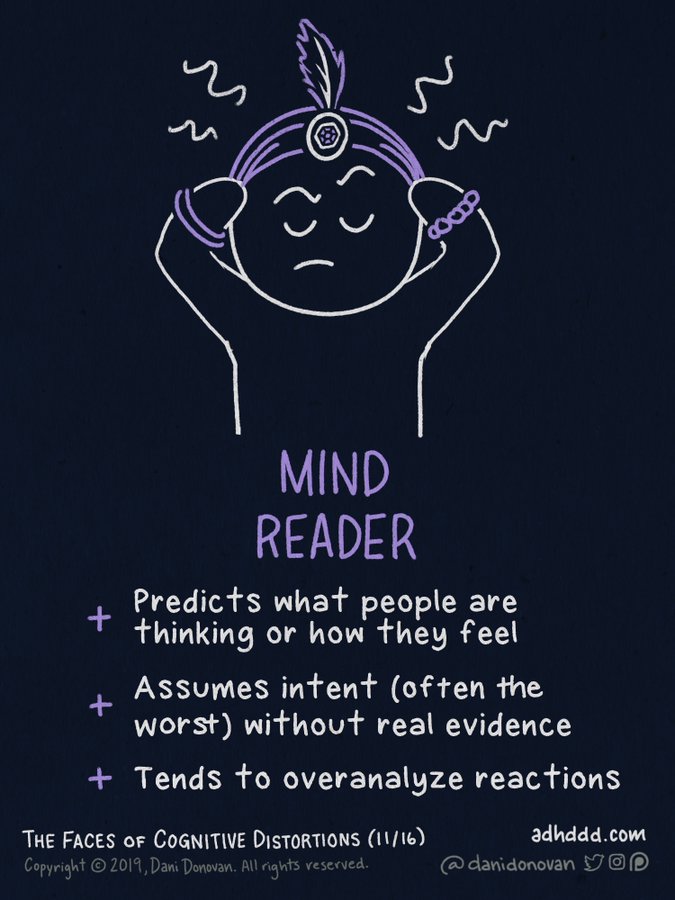
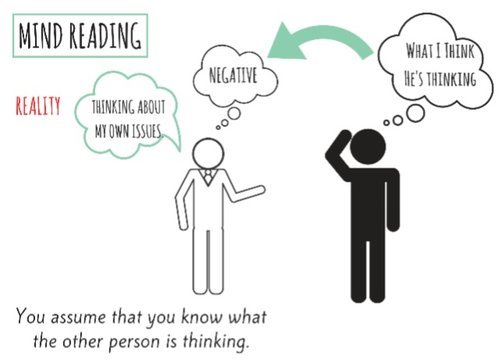
Mind-reading is a misnomer given to the cognitive error that occurs when we try to predict what someone else is feeling based on our own assessments of the situation alone.
Just in case you were curious, the conclusions we arrive to through mind-reading are usually WRONG.
When we are engaged in mind-reading, we do not take time to consider others’ unique thoughts and life experiences, and we become increasingly and incorrectly stuck in our limited lens of thinking.
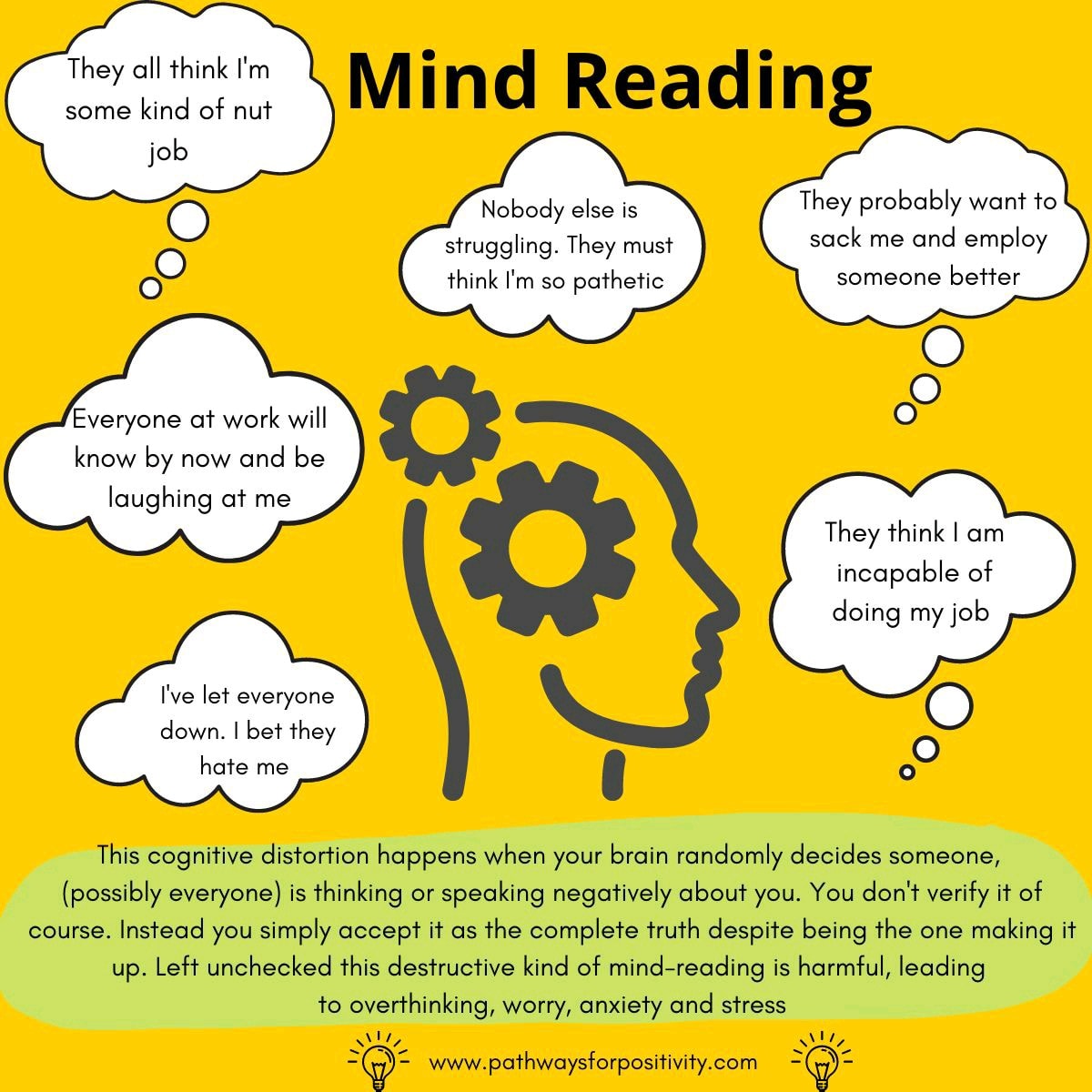
Some examples of “mind reading” look like:
As you can see, those are some lofty assumptions about reality. Another poignant observation is that each thought bubble shares the same faulty pattern of thinking. Each of these situations involves a person incorrectly assuming something to be true for another person. The problem with this type of thinking is that we are usually projecting what we feel onto others. We usually do not take time to check our facts, and consult with the other person/people in situation to see if our “read” on the situation may been skewed.
The truth of the matter is NO psychologically sound person is capable of “mind-reading.” It simply does not exist. In fact, if someone were to tell me that they knew, without a reasonable doubt, that another person was feeling a certain way, I may have to recommend them more intensive psychiatric help.
Believing that we know what others need, want, and think without communication is a delusion. We do not truly know what another wants or needs are unless there is an appropriate exchange of questions and answers.
That is why some of the most helpful skills therapists try to coach their clients are in regards to communication. We must questions for clarifying because, who knew? We are not always right.
By asking others how they feel, or what they want, we allow them to exercise their birthright of autonomy. When we ask questions, we create space for others to clarify their desires, thoughts, and actions.
I find myself commonly engaging in mind-reading around people in my immediate circle. It is only natural to study, observe and gather nonverbal data on those that we spend the most amount of time with.
The problem with this natural predilection is that our mind cannot stop doing it. So much so that, it sometimes does its job too well. It will arduously collect information, day in and day out. Now, the brain is not to blame. It is only doing what it was created to do. The primitive brain is often trying to categorize only in an attempt to simplify complex human realities. As a result, we may jump to conclusions, polarized thinking, overgeneralization and other patterns of erroneous thinking.
An Example of how F*CKED up it can get FAST
We have all experienced being the friend/coworker/partner who finds themselves thinking: “Oh no! ______ hates me. I’m just sure of it!” (of course we are)
This type of charged thought usually infects our brains long and before we know it, the parasite has taken over our secondary thinking. All of a sudden we are dealing with a cascade of negative feedback.
Quickly after suggesting the notion of someone not liking us to the brain, we begin to subconsciously “collect evidence” to support that same incorrect belief.
For example, if that person looks up and frowns, we are more likely to assume that it is because of their loathing towards us rather than a completely unrelated cause.
As more and more time goes on, the narrative in our heads thickens until we start to notice every single sigh, eye roll, and sarcastic remark and internalize it towards us.
We become so zoomed in; in this highly charged state, we become acutely aware of the slightest changes in the other’s body posture. Our panicked brains’ engulf themselves in rapidly computing every nonverbal cue to become negatively-connotated; we are trying collect all the (already-biased) information so that we may somehow arrive at the “logical” conclusion. At least, that is what the brain will have us “believe.” The truth is exactly what I stated above–we cannot ignore our own inherent bias about the situation.
The way our brains are wired is literally to search specifically for proof that validates the ideas we already believe to be true. We think we may be neutral, but at best, through psychoeducation and self-awareness, we can become mindful of the preexistence of these unique, acquired biases and shortcomings we have.
Next week, we will be delving into an equally insidious twin sister of mind-reading, who seemed to have gotten her dysfunctionality gene from their shared father–jumping to conclusions.
But before, let me not abandon you without suggestions for how to survive the tendency to mind-read.
Tip #1- Reflect and Retrain
The most wonderful and liberating thing about realizing that we are, most likely, wrong….is that we also possess the power to re-equilibrate our thinking to align more closely with reality.
I want you to ask yourself the following question
Why do I assume that people will treat or talk about me in a bad way?
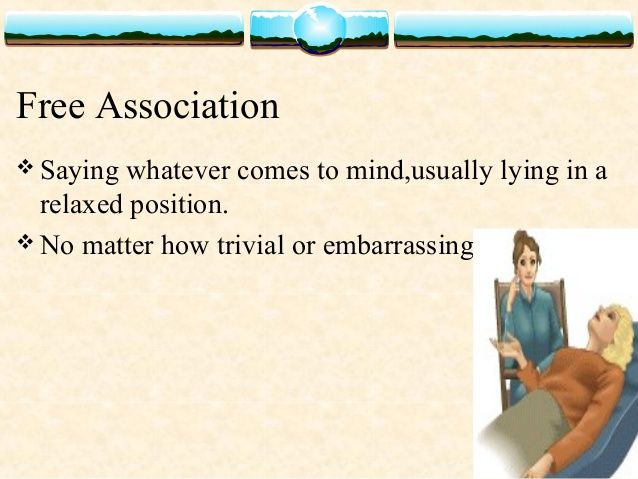
Please write down at least 10 reasons why you believe that to be the case. The best way to approach this exercise is to a) don’t judge yourself too much for believing it because we all do. We all seem to think that the world is preoccupied with us, to some extent. I want you to try to “free-associate” when jotting down the answers to the aforementioned question.
What does free-association mean?
That means, it does not matter how ridiculous, narcissistic, self-absorbed, negative or absolutely ludicrous your brain’s responses are to that question. I want you to just jot them down, without thinking (well…while minimally thinking). The point is to gather your automatic thoughts so that we can focalize on the underlying belief that may be driving you to think that you are indeed, the center of the world, and the reincarnation of the antichrist.
Tip #2- Observe Your Reaction During Mind-Reading
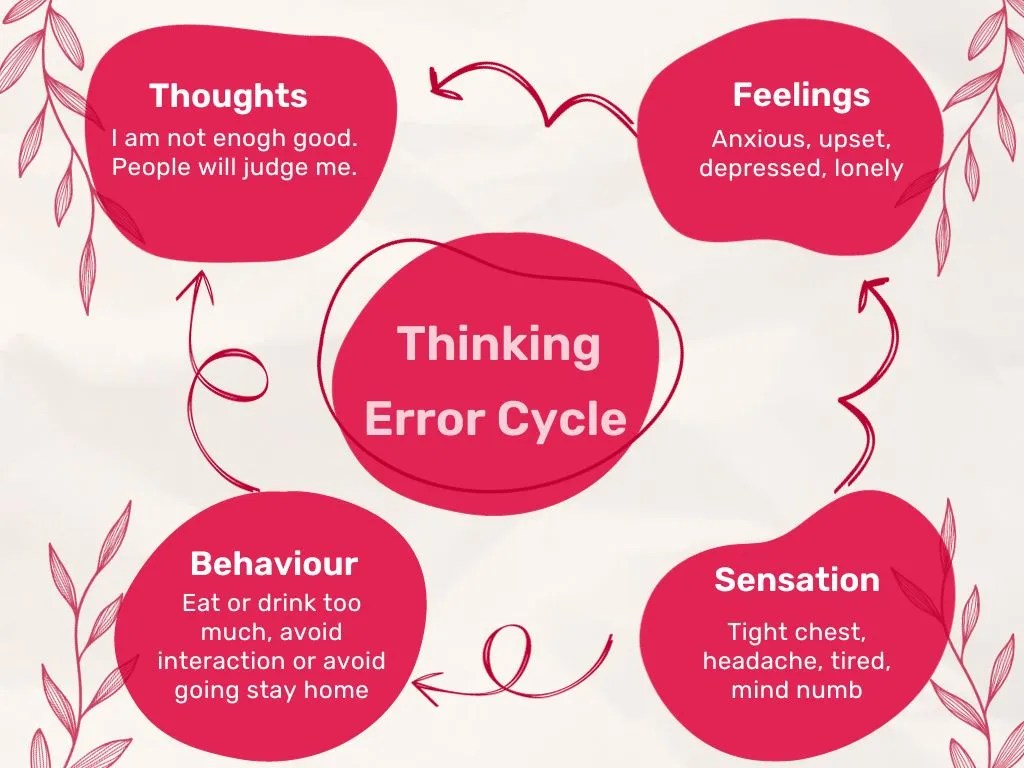
Mind-reading causes negative symptoms in your body and accelerates the fear which already exists. The reason we ALL begin to mind-read is because some external trigger has literally inflamed a pre-existing insecurity we had long before someone else ever rolled their eyes around us.
If you get anything out of this post—or anything out of the series of posts about cognitive distortions–please let it be this: WE MIND-READ BECAUSE OF WHAT WE BELIEVE ABOUT OURSELVES. It happens because someone or something else has triggered something that already PRE-EXISTED (usually long before) the irritant manifested itself.
As a result, our bodies start to give these tell-tale signs that we often ignore because we jump to conclusions and become extremely preoccupied with protecting ourselves. It is so vital to slow ourselves in the moment to observe these bodily sensations and cues because they can be of utmost help in recognizing our tipping off balance.
For example, fear of inadequacy is a phobia that often triggers me to mind-read. Due to my life experiences, and my own interpretations of them at the time, I have a very hard time controlling my reactions and thinking when I even SUSPECT that someone has “figured me out.” The following is an example of how my brain works:
– Insert external trigger: an eye roll or sigh or someone not saying hi to me.
Omg! ______ saw me and ignored me. What did I do? Is it because I didn’t say hi to her? Did I look mean? Did she overhear her me saying something negative about her? Should I apologize? I’m such a failure! I knew it. Everyone in my life was right (overgeneralization). I have been figured it out. God damn it! I try so hard to perfect this “facade” of having it all together and I knew it was just a matter of time. They’ve all figured it out. She’s probably told everyone else that I’m just a big old imposter. A wannabe. A loser. Someone who tries so hard just to “help” others because they just want to feel good about themselves. And you know why? Because I suck. I suck. and I KNOW I SUCK (emotional reasoning) and there is no way for me to hide it. It will always come out in time….etc.
The above was an example of free-association. Do you see how fast my thoughts spiraled?
Now, what is likely is that before I stepped into the quicksand of my dendrites firing away, there were probably tons of sensory cues that warned me that my brain was about to go down this path.
I know I must have felt that “heart drop” feeling. I don’t know how else to describe it, however, I know I ALWAYS tend to feel it when I feel rejected, humiliated, or fearful. It’s that pang in the heart. I might:
Start flushing red
Feel my body temperature rise
Start shaking
Show patterns of uneven breathing
Tighten up my shoulders due to tension
Begin to feel my stomach churn due to feeling uncomfortable.
Feel like I need to puke
Become clammy
Start furrowing my brows in worry
Feel “frozen” in time
Feel my heart beating faster.
There are so many different ways that our body tries to catch up to our mind. Even though each one of our “tell-tales” may be unique and different, I promise you that they exist. We all must work towards becoming aware of them so that we can not fall down the rabbit hole I just described above.
Tip #3- Ask questions
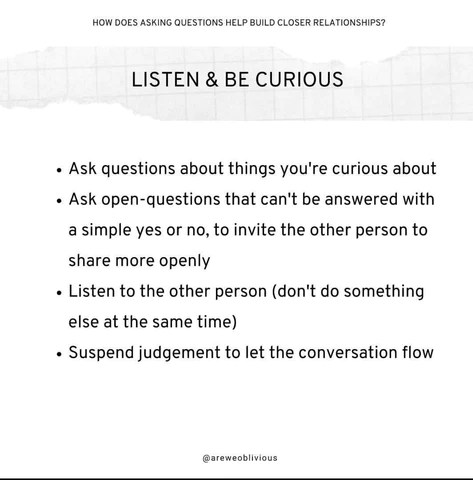
This is the simplest and most efficient way to nip mind-reading and other cognitive distortions in the bud. It is also one of the most difficult ones, in terms of mustering up enough bravery to ask something we may not want to hear the response to. I have had to train myself, and even come up with “scripts” when I’m not heated, that I can use in the moment to help clarify what I’m thinking. Some include:
“Hey, this might just be me, but I feel like there is a shift in energy in the room/between us (etc). Did I do something to offend you or upset you?”
“Are you upset with me, or is it just me?”
Bonus tip: ADD HUMOR– “You know my tendency to think everything is about me…so I saw you sigh earlier, and automatically jumped to the conclusion that it was indeed because of me. Now, I know I’m probably overthinking this, but I wanted to clarify and give you the opportunity to remind me that I’m just not that important.” this one gets a lot of laughs.
“I keep feeling like something is off with us. Am I wrong?”
“Hey, are you okay?”
Asking questions allows us to tell on ourselves, and allow others the autonomy to express their own feelings. Furthermore, it opens up the door for us to become of service to those around us if there is something unrelated bothering them. Checking in with others and being transparent about our own tendencies to catastrophize can also help them find us more relatable and feel comfortable enough to talk to us if there is something wrong in the future.
Please re-read this as many times as you need: “we LIKE people for their qualities, but we end up falling in LOVE with them for (admitting) their defects”.
What is it? Why do we do it? How do we change it? Why do we want to change it?
All your answers will be found below.
First, let’s revisit what we were talking about with those zebras earlier. Our first blog in this series of fifteen natural ways we all naturally f*ck ourselves up was about polarized thinking.
Now who remembers what polarized thinking was?
I feel like I’m teaching again.
Crickets.
Yup.
Polarized thinking was a cognitive distortion—an inaccurate or distorted way of thinking that is not helpful to us, our interpersonal relationships and our environment.
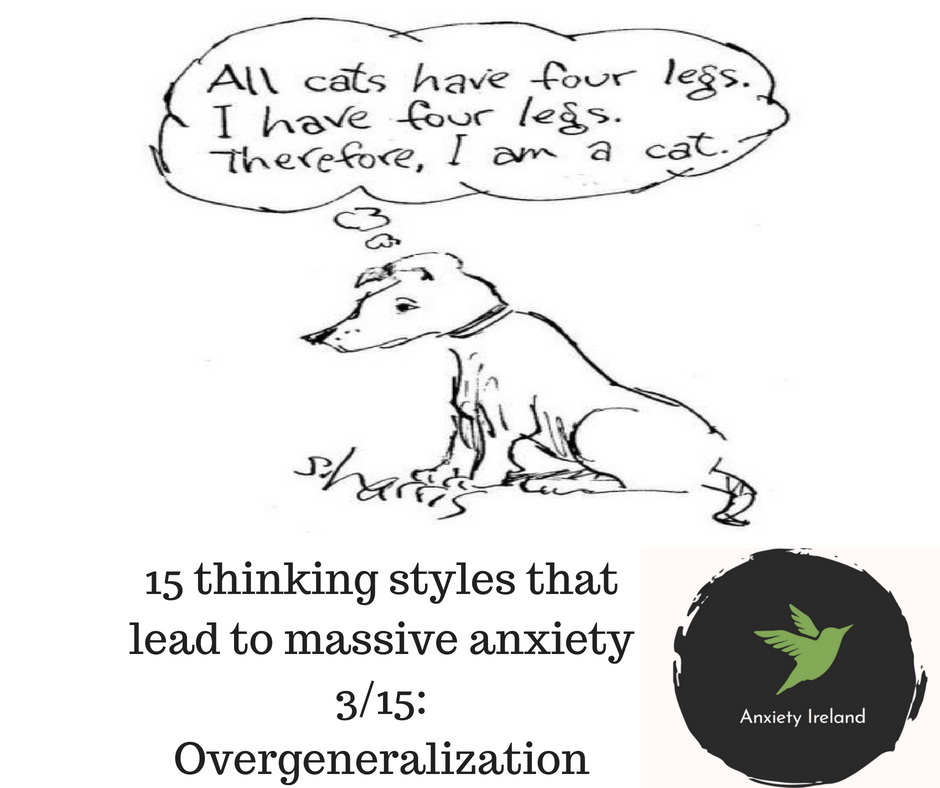
Overgeneralization is another one.
A cognitive distortion, that is.
& it is going to be the 2nd one we talk about on my blog!
I have decided to do an educational series on my blog. Every week, I will post in detail about one of the 15 most common cognitive distortions.
Why???
My rationale (& desire) for doing this is so we can all review our own thinking patterns as we move into the new year.
So often our society talks about how feelings are not facts. As someone who pursued her Masters in Psychology, I can assure you that thoughts are not always factual either.
That means it doesn’t matter if you fall into the blessed left-brained, cognitive, and analytical quantitative group or the less preferable, messy, colorful, creative, right-brained, emotionally overladen group. It means that we are all…essentially FUCKED.
It doesn’t matter whether we are heart people or brain people.
It doesn’t matter if we feel more than we analyze
It also doesn’t matter if we analyze more than we feel.
Feelings are not facts.
And neither are thoughts.
Both are subject to system error-aka, the “human” error.
Because of how diversely tough life can be on all of us, we are all prone to developing biases in our ways of thinking. Prejudices–of sorts.
Our brains, which are hard-wired to notice patterns, make associations in an attempt to ultimately, arrive to more calculated decision in a shorter amount of time…can adopt ways of thinking patterns, or cognitive distortions, that are simply not helpful or accurate.
This week’s topic is overgeneralization. So what is it? Why do we do it? How do we know we are doing it? When does it become unhelpful? How do we stop it?
Read on.
What?
Overgeneralization is one of the fifteen cognitive distortions that are emphasized in psychology. It consists of a faulty perception or belief that causes one to judge oneself and others inaccurately. Those prone to probably said things like:
“I never do anything right.”
“No one will ever understand me.”
“Nothing ever goes my way.”
“All people, regardless of gender or culture, will always screw you over.”
A lot of people practice overgeneralizing each day and are completely unaware of it. The problem is that it leads to unnecessary anxiety and fear, and prevents us from taking healthy risks or attempting new things. As a result, we end up living below our potential for the majority of our autopilot lives.
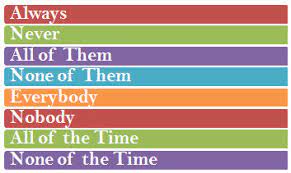
Victims of overgeneralization tend to use absolute terms in their vocabulary quite often. Some common ones include
always/never
forever/never
all/none
everyone/ no one
everything/nothing
When/Where?
We can tend to overgeneralize at anytime , anywhere. It is important to be mindful of what triggers this unhelpful and distorted way of thinking for you. Everyone is triggered differently. Most people tend to use cognitive distortions such as overgeneralization and polarized thinking when they feel fearful. Again, fear can encompass and disguise itself as a lot of secondary emotions. Most people essentially are most vulnerable to overgeneralization when they feel helpless, hopeless, attacked, vulnerable, exposed and cornered.
Who?
Overgeneralization belongs to the family of common cognitive distortions. Just like all other fifteen of its’ sisters, overgeneralization is not much different. All cognitive distortions, or unhelpful patterns of thinking, are usually a result of maladaptation to some degree. They are often seen in individuals dealing with traumatic events, unmanaged stress, and those diagnosed with anxiety disorders and depression.
How?
How do we stop it in its tracks when we find ourselves bound in its shackles?
Tip #1- Figure out your triggers.
Identify what triggers you.
A trigger can refer to anything— a person, place, sight, or sensation — that causes us to overgeneralize. The nuisance of triggers is that everyone has different ones. They are specific to each one of us and are heavily influenced by the feelings we have regarding our lives, self-esteem, others and environment. Another irritant is that we tend to engage in distorted ways of thinking, such as overgeneralization, when we are emotionally charged and feel cornered. Therefore, it is definitely difficult to recognize and become almost “meta-aware” of the fact that we may be clouded with our emotions. In highly charged emotional states, we are less likely to recognize the fact that we may be engaging in cognitive distortions. Despite how difficult it may be to catch ourselves engaging in unhelpful ways of thinking during highly emotional times, the rewards of becoming mindful and aware of our own shortcomings are multifold.
Tip #2- Become mindful of your vocabulary
When we find ourselves using overgeneralization as a defense mechanism, we often will use terms that are absolute. Absolute terms are rigid terms that do not allow any room for flexibility. When we catch ourselves using words like “all”, “none”, “no one”, “everyone”, “nothing” and “everything”, our emotions are usually looking for some validation from ourselves.
Tip #3- Practice reframing.
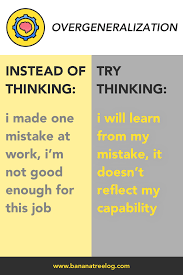
Reframing is a technique in psychology that encourages us to view a situation from a different angle. It’s an effective way to replace a negative thought with a more beneficial one. Reframing our thoughts pretty much consists of replacing our negative thoughts with positive ones instead. For example:
Instead of saying (and believing) things like “I suck at ______” or “I will never be good at _____”, try incorporating the terms “yet” & “and” instead of “but.” Practice saying (and believing) things like
I haven’ t been able to do it yet.
I haven’t solved that yet
I am not where I want to be, and I am not where I was.
I am not a saint, and I am not a sinner.
I am not perfect, and still worthy of love.
Reframing a situation can also mean taking more facts into account. It can look like choosing not to jump to conclusions. For example, instead of deducing that we can never do a specific task such as speak well in public, we can redirect our focus/thinking to more helpful questions
What was the reason for my “failing”? (Pressure, lack of preparation, etc.)
How can I improve?
What is the smallest thing I can do today to move in the direction towards improving?
What are the short-term steps I have to take to improve?
What are the long-term benefits to me taking time to change this about myself now so I don’t have to suffer later?
Through reframing, we often realize that most of your beliefs aren’t based in reality, which then opens up opportunities for positive change.
Tip #4- Keep practicing “positive” thinking.
Yes, I said what I said.
It is a practice.
It is a chore.
Congratulations Grumpy Cat.
So is everyone else’s if they don’t work on it actively.
It requires hard-work, and constant effort.
It is no means easy at first.
It takes time.
You will mess up.
Because so have I.
Some tips for encouraging our minds to more positive, helpful ways of thinking include
using positive affirmations
listening to uplifting messages (songs, sermons, lectures, books)
reading uplifting literature
watching funny videos
exercising
self-soothing
seeking therapy
learning adaptive coping strategies
keeping a gratitude list
surrounding ourselves with positive, optimistic individuals
getting out in the sun
taking a bath (for me)/something relaxing and nice for yourself that requires you to treat yourself.
calling a friend and to catch up
asking/noticing what we can do for those around us
…I start to feel more and more out of control and ironically, it makes me want to grasp onto any last straw of “control” I can imagine.
Human beings are quite the ironic creature. The more out of control and panicked we feel, the more we tighten our grasps around the very things that make us feel out of control. This just creates a negative feedback loop of B.S, that forces us to white knuckle our way through life instead of enjoying its dynamic ups and downs.
Eckhart Tolle, one of my favorite authors, stated:
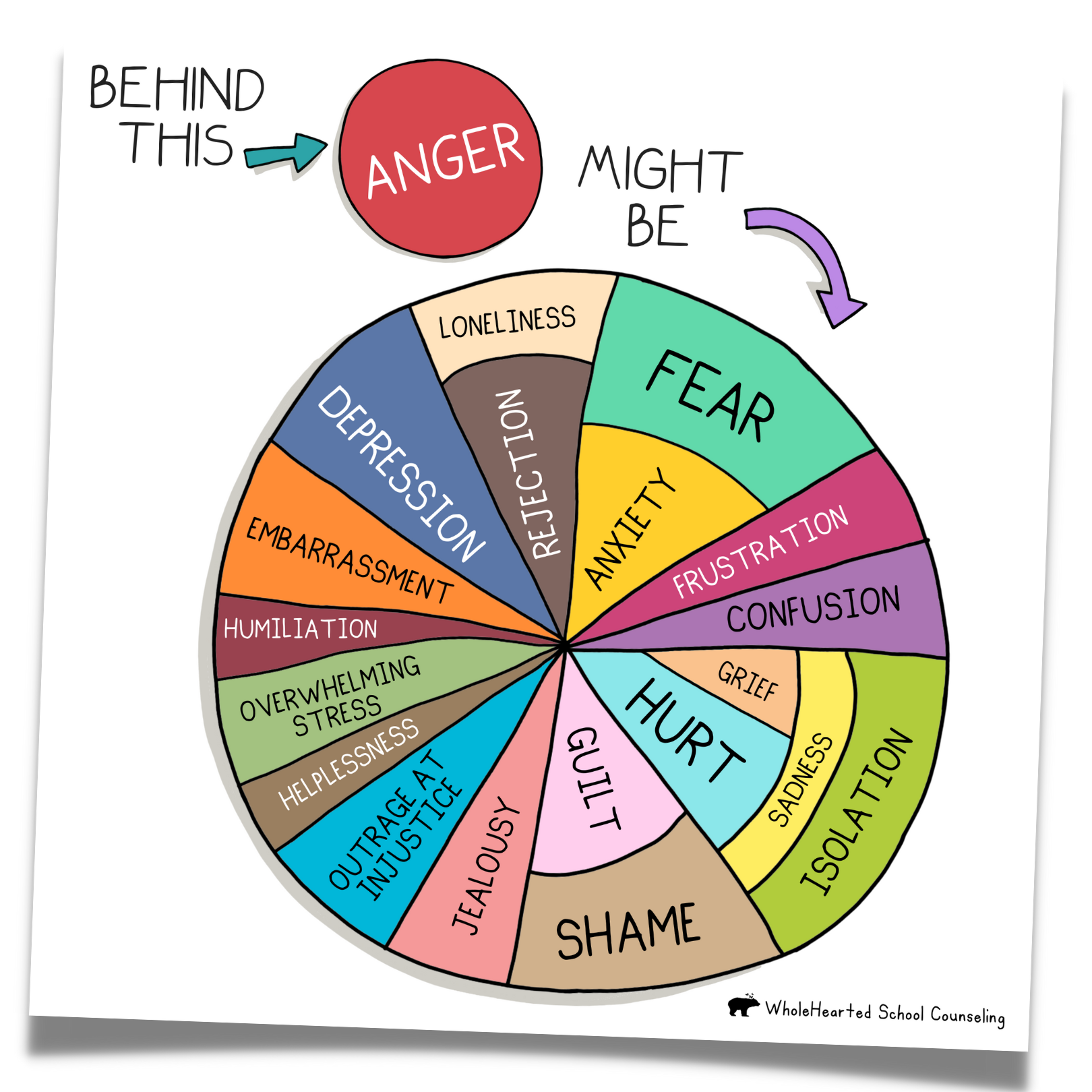
I just lost my anger on someone that has been a trigger to me. After the heightened verbal exchanges comes the tsunami of regret, remorse, and guilt. We have all been guilty of saying hurtful things at the peak of our anger. The thing I learned about anger in pursuing my masters in counseling psychology is that it is merely a secondary emotion.
What does that even mean?
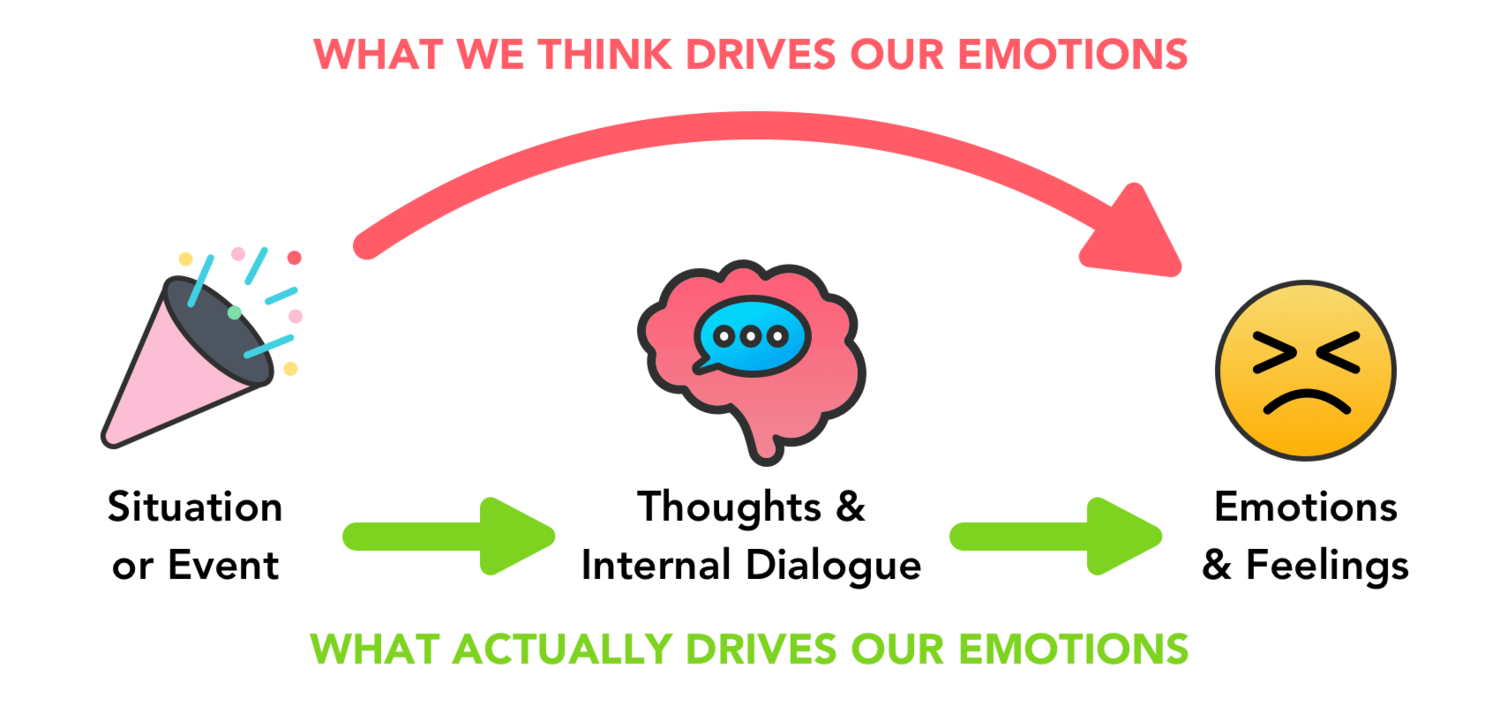
Anger is a secondary emotion , as it lends itself as a defensive approach to feeling some of the more vulnerable, scary primary emotions shown in the graphic above. Today, for me, the primary emotions were hurt, grief and helplessness. Let’s add a teaspoon of humiliation too.
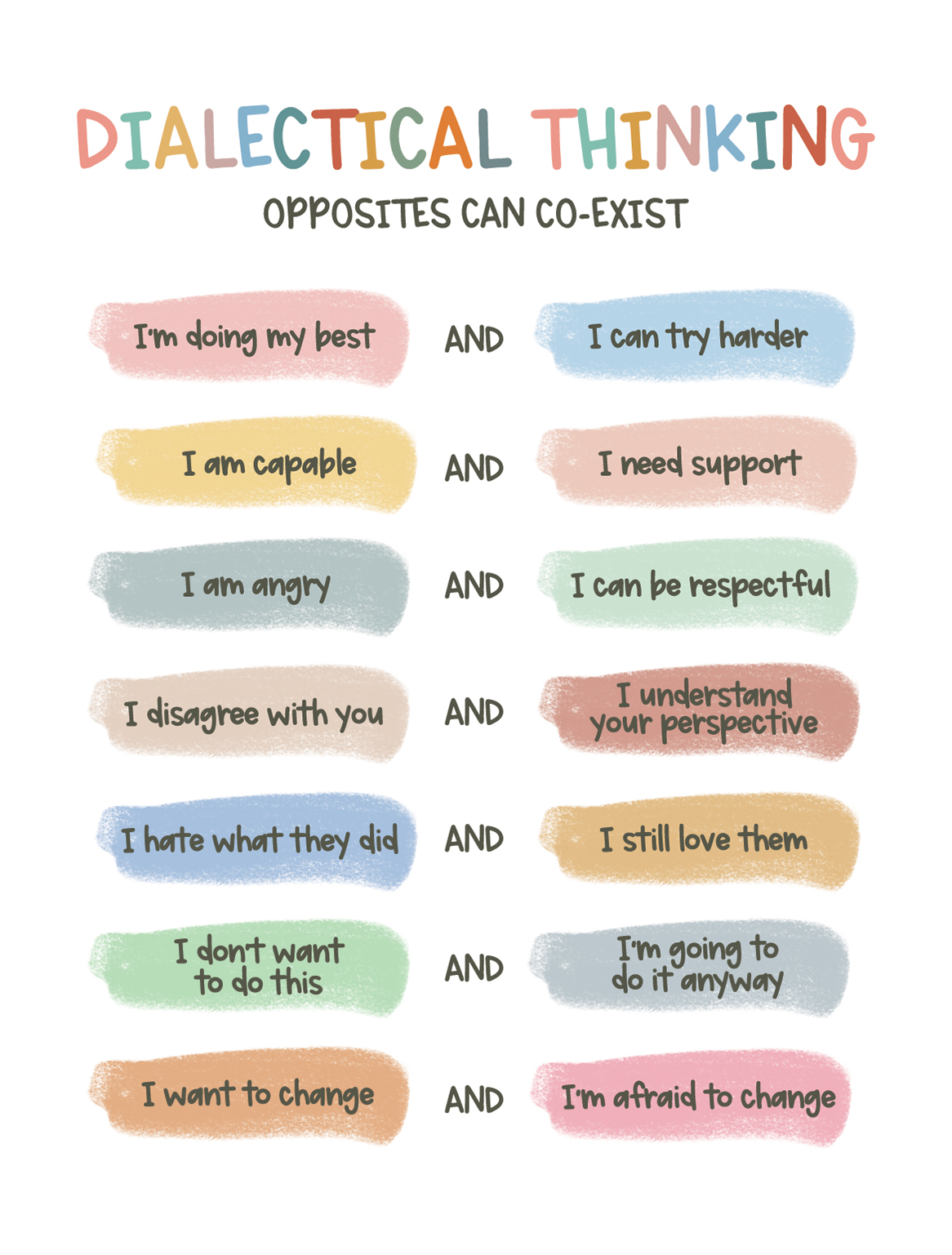
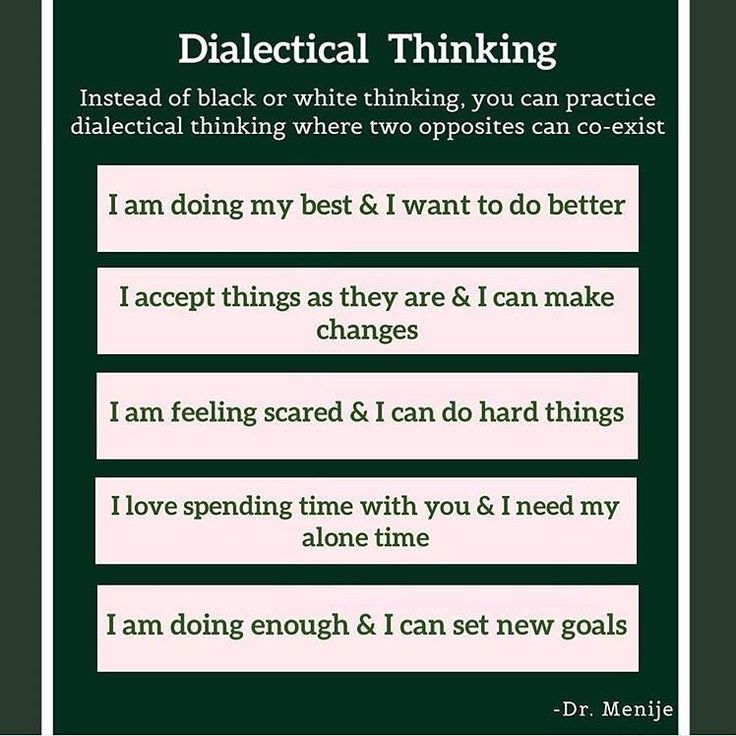
I want to talk about anger and acceptance today. They seem like they are so contradictory, however, if we can begin to think of our lives in a dialectical manner, we can begin to hold space for two seemingly opposing schemas within ourselves. It is possible for two things to be true.
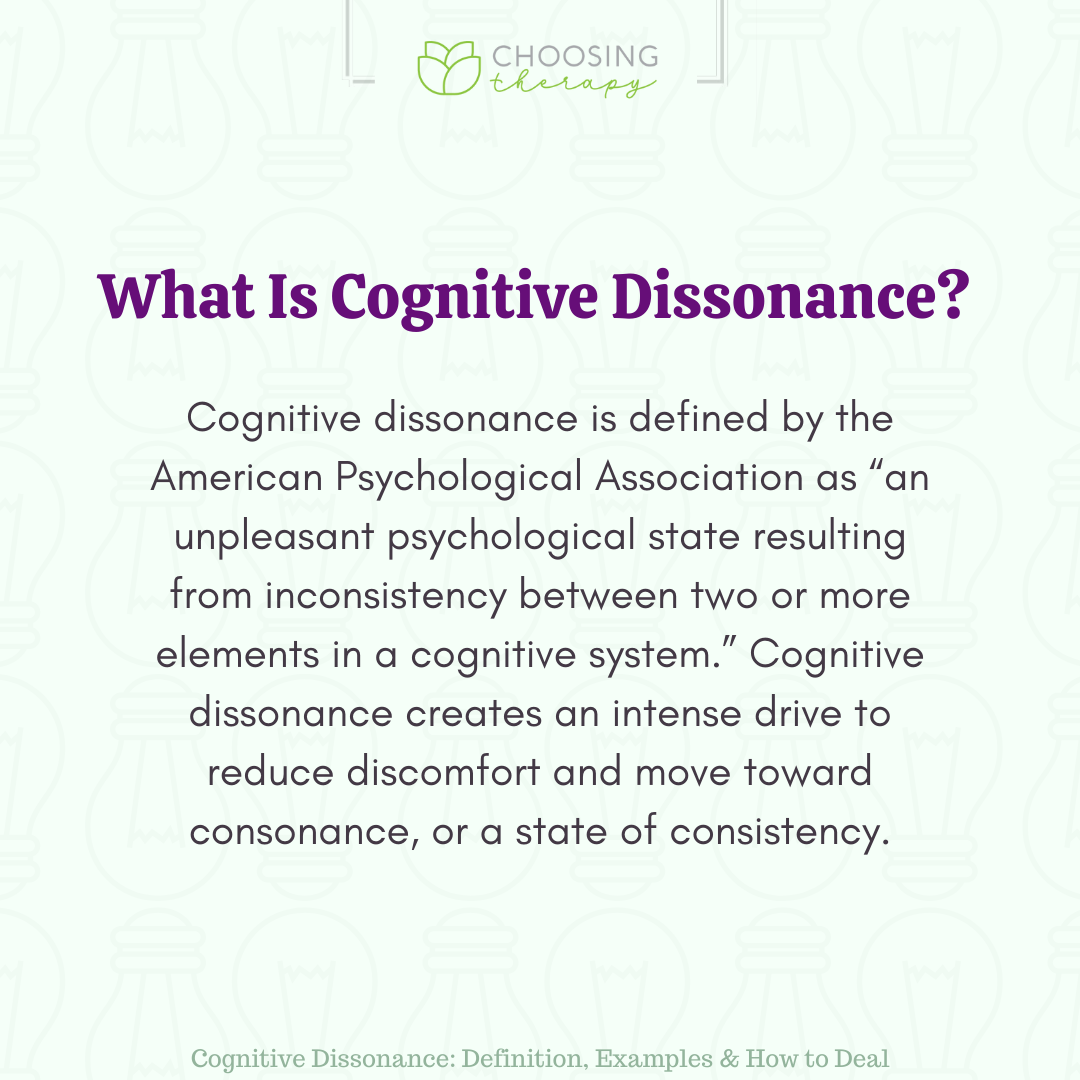
The reason it is so difficult for us average human beings to hold two seemingly paradoxical realities as true at the same time is because it creates tension in our psyche. In psychology, we refer to this tension as cognitive dissonance. This concept essentially outlines the natural stress and disharmony that result from trying to reconcile feelings or thoughts that simply do not align with one another.
Mankind has survived thus far due to his/her ability to view the world and start to view it in categories. Imagine being a child. There are so many overwhelming stimuli. In an attempt to understand the world around us, we begin to form associations, correlations through becoming aware of patterns.
This natural predilection only becomes problematic when we become too rigid in keeping all of our experiences boxed into neatly wrapped, homogenous compartments.
It does not feel comfortable to break out of those cute little patterns that have helped us make life more predictable.
This is “good” and that is “bad”. This is “right” and that is “wrong”. This is “satisfactory” and that is “unacceptable.” This type of rigidity leads to cognitive distortions.
Cognitive distortions involve negative thinking patterns that aren’t based on fact or reality. They often rely on faulty assumptions & unrelated associations that we have inaccurately made throughout our life.
The type of cognitive distortion I want to talk about today is called: Polarization.
Polarized thinking is an extreme simplification of reality. Things are either black or white, good or bad. We don’t see the nuances that exist between one extreme and another. People with this type of distortion feel comfortable placing reality between two extremes.
Why do we do it?
Viewing situations in extremes is something many of us do naturally. All human behavior is motivated by a self-serving need. Thinking in extremes allows us to narrow down experiences into simple categories. Essentially, it is an oversimplification technique that gives us the false feeling of “being in control.” For example, if we can define it in two absolute categories, life becomes a lot more predictable. Polarized thinking can help us simplify and process information as we receive it, allowing for easier understanding and faster decision making.
How do we avoid it?
In case you didn’t see this coming–surprise! Life is not black and white. Life is meant to be lived in all of its confusing colors. I know I sound like Pocahontas in my debut of “Colors of the Wind”, however, I do begrudgingly concur. There are just too many extraneous variables that affect everything we do, say, feel and think; we cannot oversimplify and attribute one thing with another without considering all factors. Read on for some helpful pointers when you find yourself stuck in black and white thinking.
Tip #1- Learn to view EVERYTHING on a spectrum
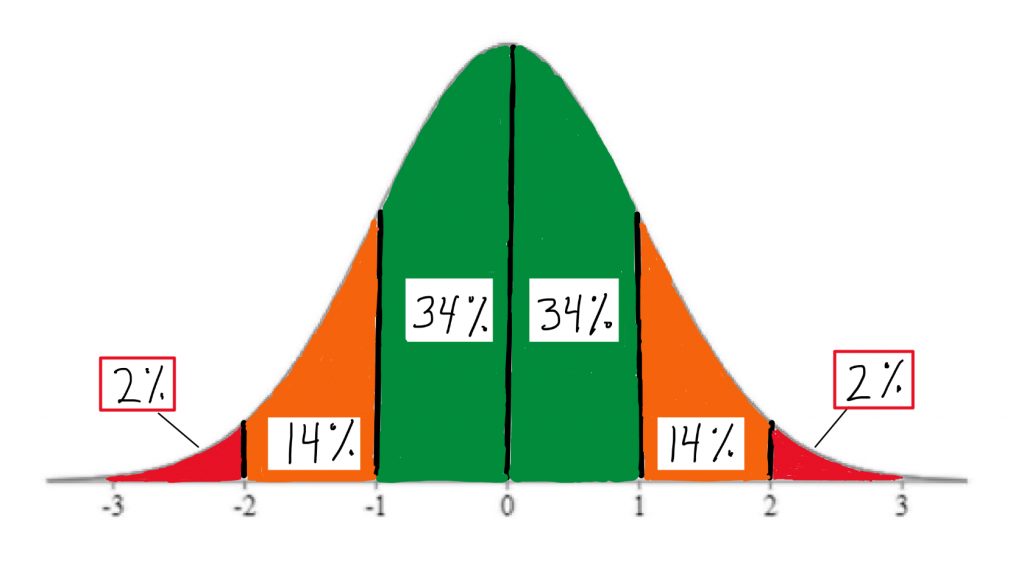
To those of you still traumatized by statistics, I’m sorry for the following diagram.
Every thing, person and situation falls within a spectrum. The above curve is called a “normal distribution” in statistics. Many of our pathopsychological issues arise when we move out of the green and orange zones into the red zone.
When we begin to view the world around us in absolutes, it leaves no room for change. As many spiritual practices and biological disciplines demonstrate–change is the only constant in life. What this essentially means is that the THE ONLY THING WE CAN COUNT ON FOR SURE IS THAT EVERY SINGLE THING IS SUBJECT TO CHANGE.
Stagnation is death; human beings, much like every other species in the cladogram of life learn, grow and adapt. Therefore, it is very simple-minded to speak of ourselves or others in absolutes. We all possess a range of complex emotional expression. Furthermore, this range is not fixed. It can be expanded through active pursuit of self-improvement.
Tip #2- Become aware of your vocabulary
Avoid using absolute terms such as “always” and “never”. Become aware of when you use them, and challenge your logic. Do you, without a reasonable doubt, have every single reason to believe that you are a failure? Probably not. Do you, without a reasonable doubt, have every single reason to believe that you are perfect and infallible? Probably not.
People often use the words “always” or “never” to emphasize what the statement they’re making. In reality, however, there are very few aspects of life where “always” or “never” are actually relevant and applicable.
Tip #3- Incorporate “and”, “yes”, & “yet” into your everyday vocabulary
Broadening binary thinking can improve cognitive flexibility. If you’re interested in learning how to stop polarized thinking, try to engage an extreme thought by exploring it with “yes, and.”
“Yes, I faced difficult things, and I also experienced good moments this week.”
“Yes, I’m a good person, and sometimes I make mistakes.”
“Yes, I’m not where I want to be and I’m also not where I was.”
“Yes, I am doing the best I can and I can continue to improve.”
“Yes, I struggle with _____ and I haven’t quite found a manageable solution yet.”
Tip #4- View yourself & others as holistic, inclusive beings.
Just like eating one salad didn’t make you immediately drop 3 jean sizes, missing one workout will not make you gain 4 back.
It’s an analogy. The point is that we did not become the way we are overnight. We have all lived unique lives with personalized experiences that have shaped our thoughts, feelings and behaviors. We are a collection–an amalgamation of ALL of our experiences, interactions and reflections.
When we begin to view ourselves through a more encompassing, broadened lens, we start fostering self-compassion, and acceptance. Adopting this type of view helps circumvent the pattern of thinking errors.
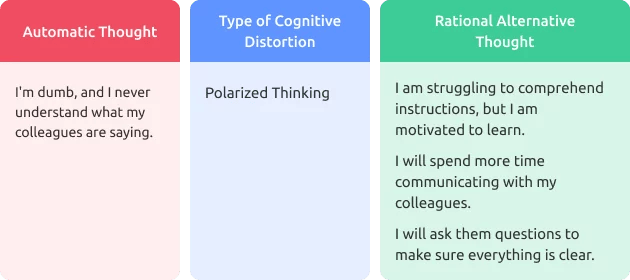
Tip #4- Triple Column Analysis
Begin to challenge your thoughts through a simple triple column analysis. Stanford University found statistically significant results in resilience and mood when comparing those who used this method and those who didn’t. Use the following example as a template for any emotionally overladen automatic belief/thought that arises for you ❤
































 abidmaham