
Alright ladies, get ready for a life long affair!
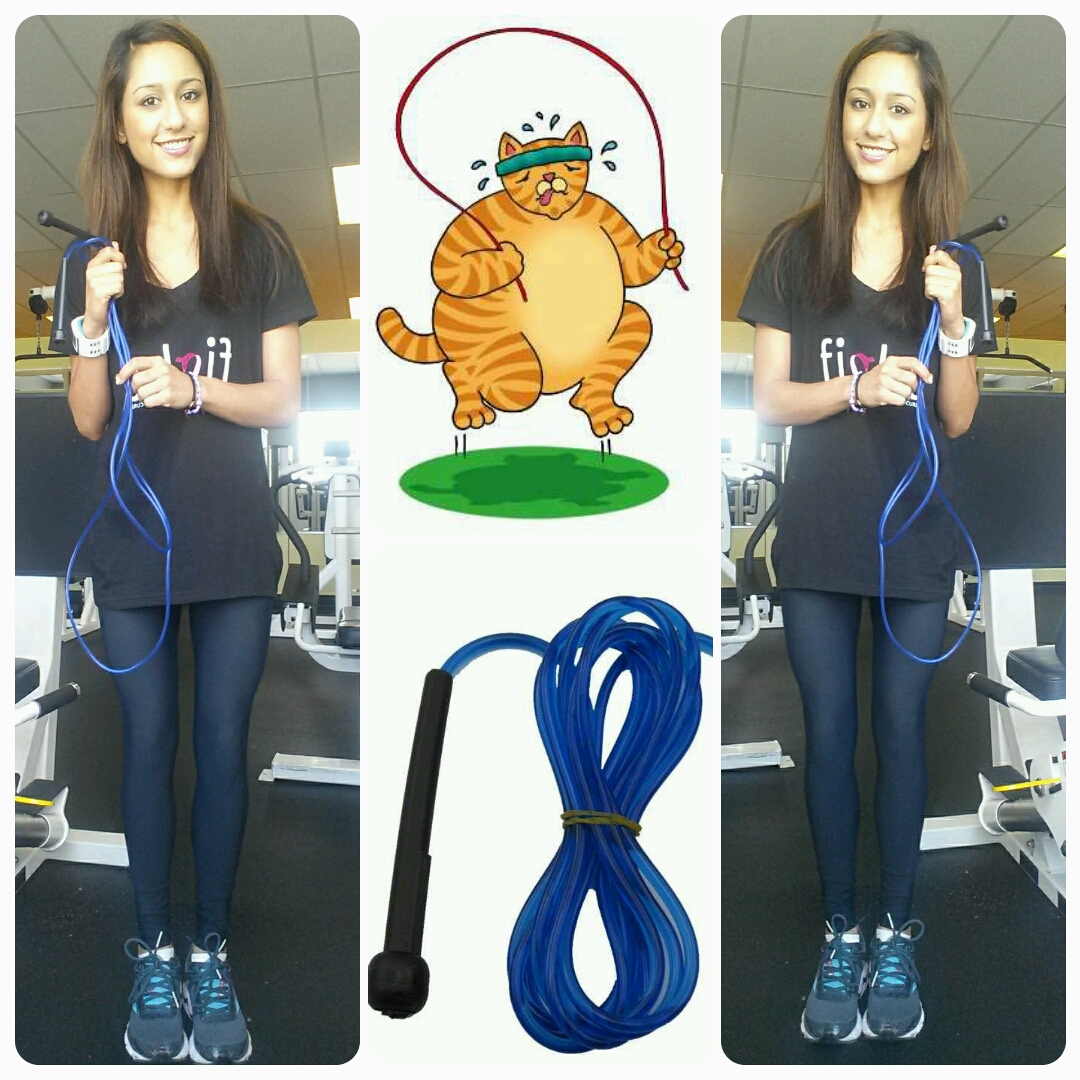
I absolutely love the jump rope. It is the most affordable and convenient workout gadget created in the history of EVER! If I could ever only do one form of cardio, I would choose jump roping!
Why do I love it so much? Well, according to Gray Cook, a Performance athlete, jumping rope is an exercise that is “self-limiting.” So, speak english woman. What does this mean?

It means that, poor technique will truly prevent you from performing the exercise! The rope will catch on your foot; you’ll whip yourself across the shins; you may even trip and fall on your face, but one thing is for sure: poor jumping techniques will NOT be reinforced. The rope will be your teacher. You simply cannot train effectively, if your technique is incorrect.
This brings me to another important point: injury prevention. A few of you have asked me how I’m able to do high intensity training at this frequency without getting an overuse injury? Shin splints? Fractures?Ligament tears?

The thing with injuries is that they are primarily caused by three major things:
1.Overuse.
2.Improper shoes
3.Poor form
So, for #1- I take adequate rest days. I also try to mix up what types of exercises I do when I perform high intensity training. I will not run two consecutive days in a row. If I ran on Monday, let’s say, I’ll do the elliptical on Tuesday, take a rest day on Wednesday, run on Thursday, jump rope on Friday and do the elliptical trainer again on Saturday! This way, I’ll be getting my cardio in, while putting more emphasis on slightly different muscular groups each day!
#2- Improper shoes. Ugh. I cringe when I write about this one, as I got an illiotibial band injury earlier this year, as a RESULT of improper shoe-wear. I couldn’t RUN for 3 months! 😦 (However, on the positive side, I got to discover lots of cool ways of cross training!) After I healed properly, I went to a rad running store where they videotaped me running on a treadmill, analyzed my foot patterns, and informed me that I naturally tend to over-protonate. So, long story short: I got fitted for proper shoes! This leads me to another one of my most frequently asked questions!
What shoes do I wear?
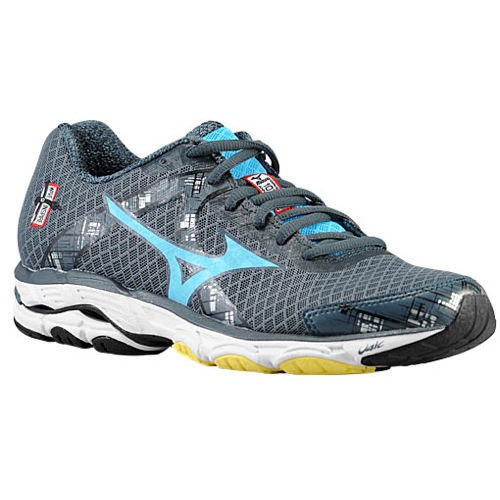
For cross-training and plyometric exercises, I wear the Mizuno wave inspire 10s.
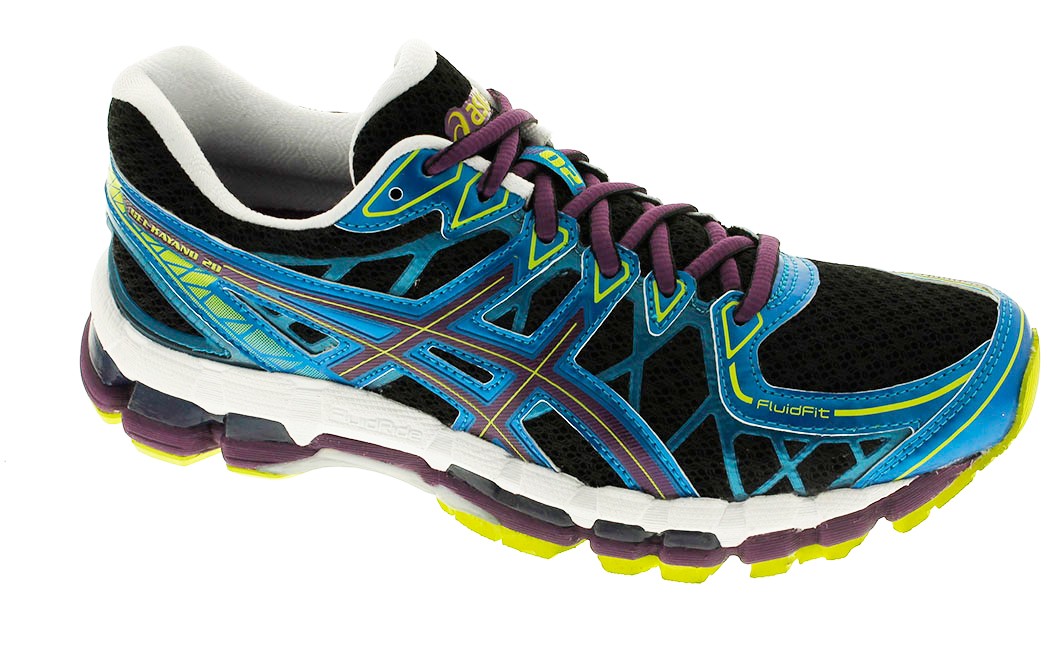
For running, jogging, jumping rope, and walking, I wear Asics Gel Kayano 20s.
 #3-Injury prevention. Now, this is where the jump-rope will become your best friend.
Other forms of endurance work such as running, cycling and using the elliptical training can reinforce poor form, without us ever realizing it! There are far too many uncontrollable variables (ie; chest posture, whether or not you’re landing on your toes or your heels, stride length, etc). THIS variability can lead to injuries! Jumping rope, on the other hand, does not ALLOW you to sacrifice technique. If you are able to jump rope for long periods of time, you’re probably doing it “right.”
Alright alright! So you get it. Jumping rope is awesome. You’re sold. Let’s get to the techniques and recommendations!
Material of rope: I recommend a PVC speed rope, with light, and long plastic handles. (Refer to the picture at the beginning of this blog!)
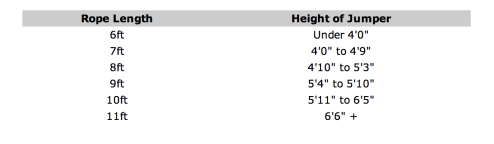
How to choose the rope length: Stand on the center of the cord. The handle tips should reach your armpits. When you jump over the rope, the rope should just brush the floor beneath your feet. If the cord doesn’t touch the floor, the rope is too short. If the cord hits the floor in front of your feet, the rope is too long and should be shortened.
Tips for beginners- Feet
- Stand tall with your feet together.
- When you jump and land, make sure there is a very slight bend in your knees to prevent locking out and injuries.
- Jump like a barbie. Yes, males, you as well! This means you should be jumping like you are wearing 6 inch stilettos. Heels should be lifted, and should NEVER make contact with the ground. Stay on your TIPPY TOES! Land on your tippy toes. Jump from your tippy toes. When in doubt, TIPPY TOES. Got it!?
- You should not be jumping mountain height. Okay? Let’s get real. This rope is a few cm’s in width. It really does not need 3 feet to get out from underneath your feet. Optimally, you should only be jumping an 1/8th of an inch off the ground!
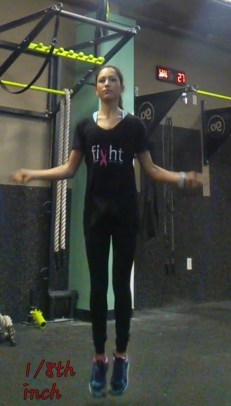
If you find that you are “hurting” while you jump, most likely: you are jumping too high or NOT staying on your tippy toes.
Tips for beginners- arms
- Keep your forearms not too near, and not too far from you. There should only be a few inches distance between your body and the position of your forearms.
- The movement that causes the rope to spin should originate from the WRISTS. Your forearms and upper arms should be, at best, stationary.
❤ INTERESTING FACT ❤
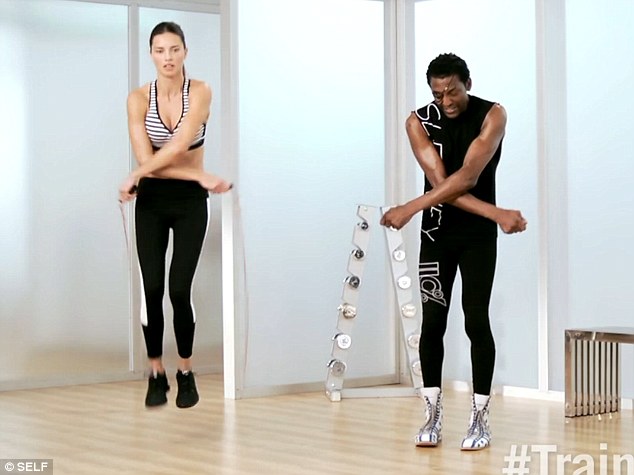
Victoria Secret trainer Michael Olijade Jr. swears by the jump rope to train his angels. So have no fear ladies! Jumping rope will NOT bulk your legs up.
Now, go jump away my little nymphs! I’ll be posting a video on my Instagram page that covers basic jump rope moves that you should start with, and master, prior to jumping around like a fool like me 😉
❤ ya’ll!
 abidmaham
I so damm want to be good at it!!!!
LikeLike
You will be!
LikeLike
Where did you buy your jump rope? I’ve read mixed reviews about so many ropes, I don’t know which to choose!
LikeLike
Hey honey. The information out there can be so confusing. The ones with heavy handles are usually recommended because they are more stable however they hurt my wrist because they are heavier. I like the lighter plastic handles.
LikeLike
Can you give us tips for a miss/hiit routine for jump rope? xoxo!
LikeLike
Thanks for this, it’s very useful! I’ve started jumping rope 3 weeks ago, and have been practicing every couple of days. I originally had a rubber jump rope but for the life of me I couldn’t use it. So I bought a cable jump rope that I can adjust. I can do around 100 on one time without tripping, but I wanted to know how did you get better at it. Did you just practiced until the rope tangled? Can you tell us about your training technique as a beginner? Thank you!
LikeLike
it’s really a tool to fitness for me 🙂
LikeLike